
Shipping Used Cars with Fixed Prices from China to Overseas Markets
Shipping used cars from China at fixed prices requires more than agreeing on a vehicle price with an exporter. The port of loading, inland transport distance, terminal capacity and shipping method all affect the final landed cost. Buyers comparing exporters through chinafactorymaps.com can use geographic location to assess these factors before requesting a quotation or committing to a shipment.
Choosing an Exporter by Port Access
China’s used vehicle exporters are distributed across several inland and coastal regions, and their access to export ports varies. An exporter in Guangdong may have practical access to Shenzhen Port, Guangzhou Port or other southern shipping facilities. Businesses in Jiangsu can assess routes to Shanghai Port, Ningbo-Zhoushan Port and Taicang Port. For exporters in Shandong, Qingdao Port and Rizhao Port are relevant coastal options. These connections matter because a vehicle must travel from the exporter’s storage or inspection location to the port before loading. A shorter route can reduce domestic transport expenditure and simplify delivery scheduling, although road conditions, vehicle collection arrangements and carrier availability also affect the result. Buyers should compare the actual loading port offered by each exporter rather than assuming that the nearest port will automatically be used. A directory showing exporter locations alongside port distances provides a useful starting point for this comparison.
Hubei exporters, including those in Wuhan, operate from an inland sourcing region where the choice of port requires particular attention. Shanghai Port, Ningbo-Zhoushan Port and other available coastal gateways may be considered depending on the exporter’s logistics arrangements. Chongqing exporters face a different geographical calculation, with inland movement and onward shipping arrangements influencing the total route. Exporters in Henan, including Zhengzhou, and Sichuan, including Neijiang, also need to account for the distance between vehicle storage facilities and the selected port. An exporter located farther inland is not necessarily a poor sourcing choice. A consolidated logistics arrangement may offset some of the additional distance. However, buyers should request the planned domestic transport route, identify who arranges vehicle delivery and establish whether inland freight is included in the quoted price. Comparing these details makes fixed-price quotations more meaningful across different sourcing regions.
RoRo or Container Shipping: The Port Changes the Calculation

Roll-on/roll-off shipping is commonly considered for complete vehicles because cars can be driven or moved onto a vessel’s vehicle deck. Its suitability depends on the vessel’s route, available RoRo service, booking arrangements and the receiving port’s facilities. RoRo berth availability and vehicle terminal capacity can influence departure schedules, especially when several units are being shipped together. A port may be geographically close to an exporter but offer fewer suitable sailing options for a particular destination. Buyers should therefore confirm the actual vessel service and expected loading window instead of relying only on a distance estimate. Container shipping offers another route. Vehicles are secured inside shipping containers, with the number that can be loaded depending on vehicle dimensions, container specifications, loading configuration and securing requirements. Sedans may allow different arrangements from large SUVs, MPVs or commercial vehicles. The exporter or freight forwarder should provide a proposed loading plan rather than an assumed unit capacity.

Loading method also affects the exposure of vehicles to handling and transit damage. RoRo operations involve vehicle movements through port facilities and onto vessel decks, while container loading requires suitable positioning, securing and unloading procedures. Neither method guarantees a damage-free journey. Buyers should establish how vehicles are inspected before loading, how existing scratches or dents are recorded and whether photographs are taken at key handover stages. Container shipments require particular attention to wheel restraints, tie-down points, clearance and the prevention of movement during transit. For RoRo shipments, the handover record and port condition report are useful evidence if a dispute arises. Marine insurance should be reviewed against the actual shipping arrangement, including its exclusions and claim requirements. The selected port’s vehicle-handling facilities matter as much as its distance from the exporter. A lower inland transport bill may not compensate for an unsuitable sailing schedule or an inefficient loading arrangement.
Fixed Pricing and the Export Route
A fixed quotation should identify exactly which parts of the export journey are covered. The vehicle price, inland collection, port handling, inspection, export documentation, freight and insurance may be quoted separately or combined, depending on the exporter’s arrangement. Buyers searching for used cars no haggle pricing should distinguish a fixed vehicle price from a fixed shipping price. The first does not automatically include the second. A written quotation should state the port of loading, shipping method, currency, payment schedule, quotation validity and any charges payable outside the quoted amount. It should also clarify responsibility for export licensing, customs declaration and pre-shipment inspection. China’s used vehicle exports operate through designated export pilot cities and require the relevant export procedures. Buyers should verify that the exporter can complete the required documentation for the shipment. Any change in loading port, shipping method or inland collection point should be reflected in an updated cost breakdown before payment.
Electric and new energy vehicles introduce additional transport considerations. Battery state of health is a purchasing issue, while battery classification and transport documentation are shipping issues. Buyers should request available battery inspection information, including the reported state of health, diagnostic results and supporting records where available. The freight forwarder must also confirm applicable battery transport requirements, documentation and vessel acceptance conditions before booking. These requirements can affect the choice of container or other permitted transport arrangements. An exporter near a suitable port may still face additional preparation or scheduling requirements for electric vehicles. Destination-market rules also need separate verification. Vehicle age restrictions, emissions requirements, drive-side compatibility and roadworthiness standards differ between countries and can change. Most Chinese domestic vehicles are left-hand drive, which excludes markets that accept only right-hand-drive vehicles. The buyer should confirm current import eligibility before paying for the vehicle or arranging shipment.

Geographic comparison is most useful when it connects exporter location with a realistic shipping plan. chinafactorymaps.com plots used vehicle exporters across Guangdong, Hubei, Chongqing, Jiangsu, Henan, Sichuan, Beijing, Hunan and Shandong, allowing buyers to examine sourcing clusters and their proximity to covered export ports. The directory covers complete sedans, SUVs, MPVs, commercial vehicles and new energy vehicles, rather than parts or dismantled components. A practical shortlist should consider vehicle availability, inspection arrangements, export capability, inland distance and the proposed port of loading together. Buyers can request comparable quotations from exporters in different regions and ask each to price the same destination, vehicle category and shipping method. This makes differences in logistics costs easier to identify. Before confirming an order, obtain the exporter’s written vehicle specification, available condition records, loading arrangements and shipping documentation responsibilities. A geographically convenient exporter is a useful starting point, but the final decision should reflect the complete route from vehicle handover to destination port.
FAQ
Q: Does choosing an exporter near a Chinese port always reduce shipping costs?
A: Not necessarily. Inland transport may be cheaper, but vessel availability, terminal handling charges and destination routes can make another port more economical.
Q: Is RoRo or container shipping better for exporting used cars from China?
A: RoRo is suitable for many complete vehicles when an appropriate service is available. Containers offer different loading and securing arrangements, with capacity depending on vehicle dimensions and container configuration.
Q: What should a fixed-price used car export quotation include?
A: It should identify the vehicle price, port of loading, inland transport, handling, inspection, documentation, freight and insurance coverage. Any excluded charges and additional destination costs should be stated separately.
Related Articles
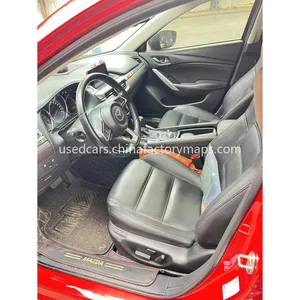
Featured Exporters
Verified premium exporters on our map.
 Guangzhou JH auto co,ltd
Guangzhou, Guangdong
Nearest port: Guangzhou Port · 23 km
Guangzhou JH Auto Co., Ltd (JH Auto) buys used, left-hand-drive Chinese cars in China, inspects and documents …
 JH Auto Group
Guangzhou, Guangdong
Nearest port: Guangzhou Port · 24 km
At jh-usedcar.com, we’re more than just a seller; we’re your partner in finding exceptional value. We combine …