
Used Auto Dealers: Diesel or Petrol and LHD or RHD?
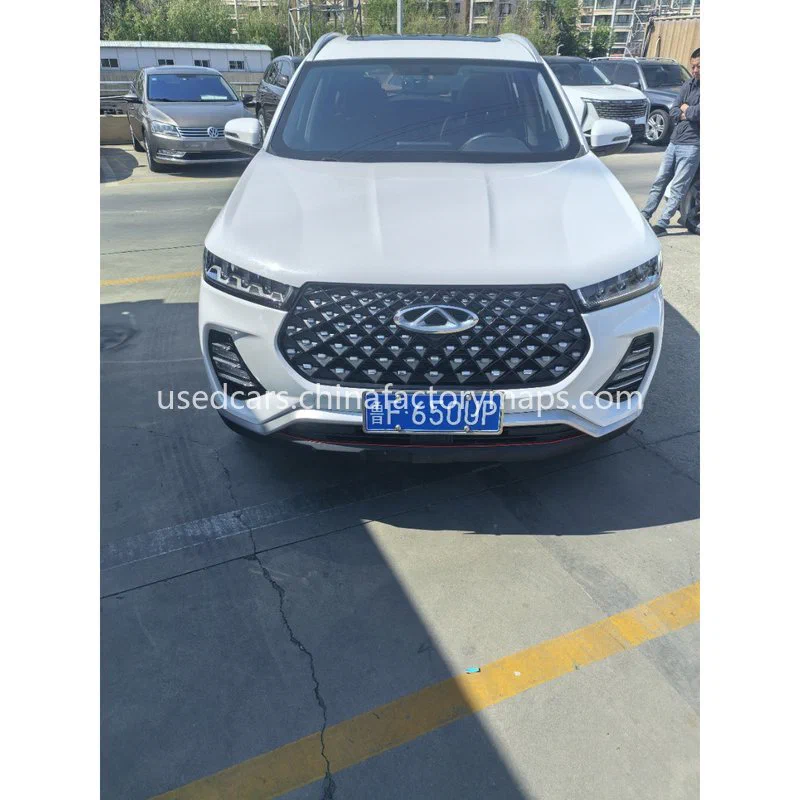
China’s used vehicle export market offers diesel and petrol models, left-hand-drive and right-hand-drive configurations, and an expanding range of electric vehicles. For overseas buyers sourcing through used auto dealers, the choice depends on destination regulations, operating conditions, maintenance infrastructure and the vehicle’s intended use. These factors should be assessed before selecting an exporter or arranging shipment.
Diesel or Petrol: Powertrain Selection for Export
Diesel engines are commonly considered for commercial vehicles, larger SUVs and applications involving frequent long-distance driving or heavy loads. Their lower-speed pulling characteristics can suit demanding operating conditions, while fuel consumption may be advantageous on routes involving sustained highway travel. However, diesel vehicles require closer attention to emissions equipment, including diesel particulate filters and selective catalytic reduction systems where fitted. These components can create maintenance requirements that buyers need to evaluate against the technical capabilities of workshops in the destination market.
Petrol vehicles generally offer a different ownership profile. They can be suitable for urban passenger transport, private use and markets where petrol is more readily available than diesel. Their engines often have fewer diesel-specific emissions components, although modern petrol vehicles also use increasingly complex exhaust after-treatment systems. Fuel economy, engine displacement, transmission type and service requirements all influence operating costs. A petrol sedan intended for city use should not automatically be considered more suitable than a diesel equivalent; the intended duty cycle and local fuel economics remain important.

Emission compliance is a separate consideration from engine preference. A vehicle that operates normally in China may not satisfy the import or registration requirements of its destination. Different countries apply different rules concerning vehicle age, emissions classification, testing procedures and permitted modifications. Some markets also distinguish between standards originally assigned to a vehicle and standards demonstrated through subsequent testing. Buyers should establish the applicable requirements before confirming a purchase, rather than assuming that a particular model year or engine type will qualify. The exporter should provide available registration documents, emissions information and vehicle identification details for independent verification.
Left-Hand Drive or Right-Hand Drive: Market Compatibility
Drive configuration can determine whether an otherwise suitable vehicle is commercially viable. Most vehicles produced for China’s domestic market are left-hand drive (LHD), with the steering wheel positioned on the left and traffic circulation generally designed around right-side driving. This configuration suits many overseas markets, but it creates a fundamental limitation for destinations that require right-hand-drive vehicles. A buyer targeting a purely right-hand-drive market should not assume that a Chinese domestic-market vehicle can be registered simply because its mechanical specifications are acceptable.
Right-hand-drive (RHD) vehicles have the steering wheel on the right and are designed for markets where traffic normally keeps to the left. Their suitability depends on the destination’s registration framework and the specific vehicle’s original configuration. Converting an LHD vehicle to RHD is not a straightforward solution. Steering assemblies, dashboard components, pedal arrangements, lighting and other safety-related systems may require substantial changes. Approval for such conversions varies, and the resulting vehicle may face additional inspection requirements. Original factory configuration is generally the more practical starting point.

Parts availability also affects the choice between configurations. Popular models may share engines, transmissions and suspension components across different markets, but body panels, steering components, dashboard assemblies, lighting units and certain electronic systems can vary. This distinction matters when sourcing sedans, SUVs, MPVs and commercial vehicles in volume. Buyers should compare the exact model code, engine designation and production specification against local parts catalogues. A familiar model name does not necessarily indicate identical components. Maintenance records, diagnostic compatibility and access to replacement modules should also be checked before selecting a vehicle for a market with limited dealer support.
Electric Vehicles and Export Logistics
New energy vehicles introduce additional technical considerations. Battery state of health (SOH) is one of the most important indicators when evaluating a used electric vehicle. It describes the battery’s remaining capacity relative to its original condition, but a displayed percentage alone does not establish the battery’s complete condition. Buyers should request available battery diagnostic records and examine cell voltage consistency, fault history, charging behaviour and thermal management performance where the information is accessible. Range estimates should be interpreted cautiously because temperature, driving conditions, battery age and software settings influence actual performance.
Charging compatibility requires separate verification. Chinese-market electric vehicles may use charging connectors and communication protocols that differ from those supported in the destination country. The vehicle’s charging inlet, AC charging capability, DC fast-charging protocol and supported voltage should be compared with local infrastructure. An adapter does not necessarily resolve differences in communication, charging speed or electrical compatibility. Software region settings, navigation services and connected-car functions may also affect usability after export. Buyers should establish whether local charging stations can support the exact vehicle configuration before placing an order.
Export location is another practical factor. The directory maps exporters across Guangdong, Hubei, Chongqing, Jiangsu, Henan, Sichuan, Beijing, Hunan and Shandong, allowing buyers to compare geographic clusters and their distance from covered export ports. Relevant shipping gateways include Shanghai Port, Ningbo-Zhoushan Port, Shenzhen Port, Qingdao Port, Guangzhou Port and Tianjin Port. Other mapped ports include Xiamen Port, Taicang Port, Beibu Gulf Port, Rizhao Port, Lianyungang Port and Yingkou Port. China’s used vehicle exports operate through designated export pilot cities and require the applicable export licensing, customs declaration and pre-shipment inspection procedures. Vehicles may be shipped by roll-on/roll-off (RoRo) or loaded into containers, depending on the shipment arrangement. Used EVs require additional attention to battery condition, dangerous-goods documentation where applicable and carrier acceptance requirements. Buyers should compare the complete logistics arrangement rather than distance alone, and verify that the exporter can support the required documentation and inspection process.
FAQ
Q: Is diesel or petrol better for used vehicle exports?
A: Neither powertrain is universally preferable. Diesel may suit heavy-duty and long-distance applications, while petrol can be practical for passenger vehicles and urban use. Destination emissions rules and local fuel availability should determine the selection.
Q: Can left-hand-drive vehicles from China be exported to right-hand-drive markets?
A: Export may be possible, but destination registration rules can restrict or prohibit LHD vehicles. Buyers should confirm steering configuration requirements before purchasing because conversion may not be accepted.
Q: What should buyers check when exporting a used electric vehicle from China?
A: Verify battery state of health, charging connector compatibility, charging protocols, diagnostic records and software functionality. Battery transport requirements and carrier acceptance should also be confirmed before shipment.
Related Articles
Featured Exporters
Verified premium exporters on our map.
 JH Auto Group
Guangzhou, Guangdong
Nearest port: Guangzhou Port · 24 km
At jh-usedcar.com, we’re more than just a seller; we’re your partner in finding exceptional value. We combine …
 Guangzhou JH auto co,ltd
Guangzhou, Guangdong
Nearest port: Guangzhou Port · 23 km
Guangzhou JH Auto Co., Ltd (JH Auto) buys used, left-hand-drive Chinese cars in China, inspects and documents …