
Above-Ground Pool Deck Ideas for Compact Backyards and Cooler Climates
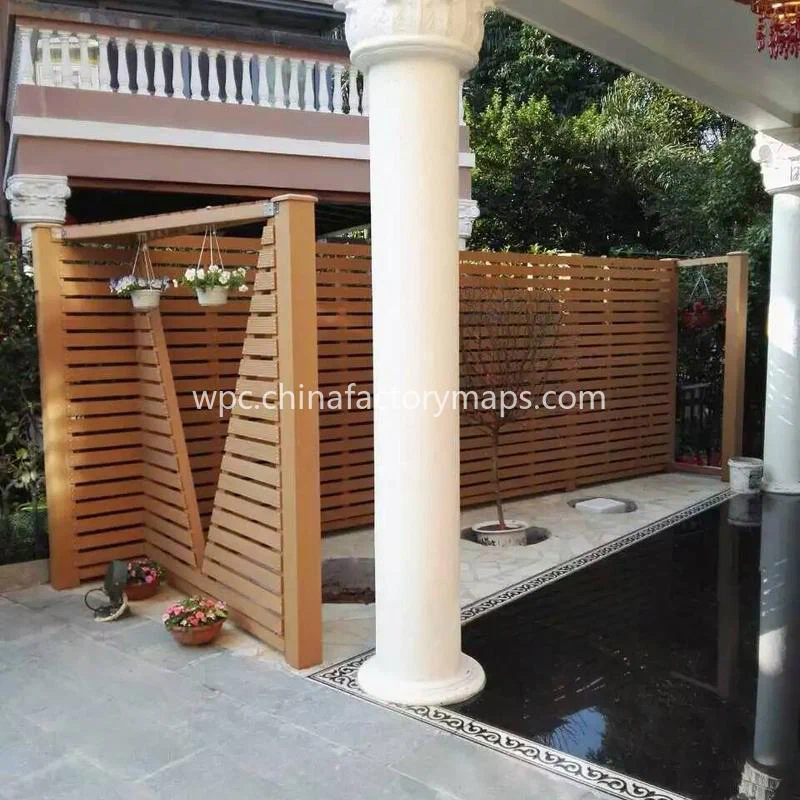
Above-ground pools in compact backyards need decking that makes efficient use of limited space without obstructing access to the pool or creating difficult maintenance areas. In cooler climates, the material must also accommodate seasonal temperature changes, moisture exposure and freeze-thaw cycles. For overseas buyers sourcing from China, the specification should reflect the installation environment rather than appearance alone.
Designing a Deck for a Small Above-Ground Pool
A compact pool deck works best when it serves several purposes without occupying the entire yard. A narrow perimeter walkway provides access for cleaning and inspection, while a small platform beside the ladder creates space for entering and exiting the pool. Where the yard allows, a single seating area can be added without extending the structure around the full pool circumference. These above ground pool composite deck ideas favour modular layouts that can be adapted to different pool diameters and available ground space. Buyers should ask suppliers about board lengths, cutting tolerances, edge finishing and the availability of matching stair or railing components. Shorter board runs may simplify installation around curved pool walls, but the supporting frame still needs careful planning.
Wood-plastic composite (WPC) decking is a practical option where regular moisture exposure makes conventional timber maintenance demanding. Its wood fibres and polymer content help resist moisture damage and insect attack, although the material is not indestructible or completely waterproof. Pool splash, standing water and wet debris can still affect the deck and its supporting structure. In cooler regions, water trapped beneath boards may freeze and contribute to movement or damage around poorly designed joints. A suitable installation therefore needs drainage, ventilation beneath the deck and manufacturer-specified expansion gaps. The substructure, fixings and ground preparation matter as much as the surface boards, particularly when the deck is close to the pool wall or positioned over soil that becomes saturated during winter.
Material Specifications for Seasonal and Coastal Exposure
Temperature movement deserves particular attention in climates with cold winters and warm summers. WPC boards expand and contract as temperatures change, so buyers should request installation guidance covering end gaps, perimeter clearances, fixing methods and joist spacing. The required dimensions depend on the product formulation, board profile and local temperature range. Freeze-thaw exposure also makes drainage and ventilation essential; a tightly enclosed deck can retain moisture where it is hardest to inspect. For heavy foot traffic, ask about the board’s load requirements, surface wear characteristics and slip performance when wet. Textured finishes may improve traction, but they should be assessed using relevant test data rather than appearance alone.

Coastal installations introduce another set of purchasing considerations. Salt-laden air can accelerate corrosion in metal fixings and substructure components, even when the composite boards themselves resist moisture. Buyers should specify corrosion-appropriate hardware and ask for evidence supporting any claims about UV resistance, colour retention or slip performance. Sustained sunlight can fade WPC colours, and darker boards may become hot underfoot in direct sun. For elevated platforms, stairs and narrow access routes, compatible railing components and secure connections also deserve attention. A supplier’s technical documentation should identify intended applications and installation limitations, rather than relying solely on general outdoor-use claims.
Sourcing Regions and Supplier Checks in China

China’s mapped WPC supplier clusters provide several starting points for comparing manufacturers. Guangdong has the largest listed cluster on chinafactorymaps.com, including Foshan, Guangzhou and Zhuhai. Anhui suppliers include those in Xuancheng, Suzhou and Guangde, while Shandong listings cover Zibo, Linyi and Qingdao. Zhejiang’s mapped locations include Huzhou, Jiaxing and Hangzhou; additional suppliers are listed in Shanghai and Jiangsu, including Nanjing. These locations identify where listed factories are situated, not proof that a particular factory specialises in pool decking or cold-climate projects. Buyers should confirm product range, manufacturing capability and experience with the intended installation conditions directly.

Port distance can help narrow the shortlist, especially for buyers balancing inland transport against export handling. The directory maps suppliers in relation to major export ports, including Shanghai Port, Ningbo-Zhoushan Port, Shenzhen Port, Qingdao Port and Guangzhou Port. The nearest port on a map is not necessarily the lowest-cost shipping route, so freight arrangements and inland transport should be checked separately. Before requesting a bulk quotation, prepare a concise specification covering climate exposure, board dimensions, surface texture, colour, substructure requirements, fixings, packaging and destination port. Request technical data and installation instructions for the exact product being quoted. Comparing suppliers against the same requirements makes differences in suitability easier to identify.
FAQ
Q: Is WPC decking suitable for an above-ground pool in a cold climate?
A: It can be suitable when the product is specified for outdoor exposure and installed with adequate drainage, ventilation and expansion gaps. The supporting structure and fixings must also accommodate local winter conditions.
Q: Which Chinese regions should buyers compare for WPC pool decking?
A: Guangdong, Anhui, Shandong and Zhejiang are useful starting points within the mapped supplier directory, alongside listings in Shanghai and Jiangsu. Buyers should verify each factory’s relevant product range and export arrangements before selecting a supplier.
Featured Suppliers
Verified premium suppliers on our map.
