
Buying White Composite Decking: Questions to Ask Before Ordering
White composite decking requires closer specification checks than a standard wood-tone board. For overseas buyers sourcing from China, the main issues are colour consistency, surface performance, board construction and export handling. Supplier selection also matters: a factory that manufactures its own boards offers a different level of control from a trading company sourcing products from multiple workshops.
1. Define the white finish before requesting quotations
White is not a single, consistent colour specification. Suppliers may describe products as white, ivory, off-white, cream or light grey, and these descriptions do not guarantee a matching finish. A board that looks white in a catalogue photograph may appear warmer or darker under natural light. Buyers should request physical samples and confirm the intended colour against a reference sample before approving production.
Ask whether the colour is produced throughout the board material or applied through a surface layer. This distinction affects how scratches, cuts and exposed edges look. Some products use a capped construction, with an outer layer covering the composite core. Others have an uncapped surface. The two constructions should not be treated as interchangeable. Request a cross-section sample and ask for an explanation of the material layers, surface treatment and colour composition. For composite decking white specifications, these details are more useful than a catalogue colour name alone.

Colour consistency between production batches also needs attention. A supplier should explain how it controls pigment dosing, raw material mixing and production conditions. Ask whether retained samples are kept for comparison and whether the factory can match an approved reference when repeat orders are placed. This is particularly important for projects involving several delivery batches.
2. Establish who actually manufactures the boards
China’s mapped WPC supplier clusters are concentrated in Guangdong, Anhui, Shandong and Zhejiang, with additional listings in Shanghai and Jiangsu. These locations provide useful starting points for supplier research, but geographic proximity does not establish manufacturing capability. A business listed in an industrial cluster may be a factory, an export trading company or an intermediary working with several producers.
The distinction becomes clear when buyers ask specific production questions. Can the supplier show its own extrusion equipment? Does it control raw material preparation, board forming, cooling and finishing? Which production stages are outsourced? Can it provide photographs or a live inspection of the manufacturing floor? Answers should be consistent with the products offered and the company’s stated production capabilities.
Ask for the factory’s registered business details and compare them with the name on quotations, contracts and commercial invoices. Different company names are not automatically a problem, but the relationship should be explained before payment. Buyers should also establish who handles quality complaints, replacement boards and production delays. A trading company can be a legitimate sourcing partner, but its role should be transparent.
3. Check performance and installation requirements
White boards are often selected for their appearance, but the supporting technical specification determines whether they suit the intended site. Request information about the composite formulation, board profile, dimensions, wall thickness and internal structure. Ask for technical data on load performance, water absorption, slip resistance and resistance to weather exposure where these properties matter to the project.
WPC resists moisture and insect damage better than untreated timber, but it is not indestructible or absolutely waterproof. Sustained ultraviolet exposure can also cause colour fading. Light finishes may show dirt, surface marks and changes in appearance differently from darker boards. Buyers should ask whether the supplier has outdoor exposure data and how the tested product compares with the proposed white finish.
Installation details must be confirmed before ordering. Composite boards expand and contract as temperatures change. The installation specification should therefore state the required end gaps, side gaps, fixing method and permitted joist spacing. The substructure must allow ventilation and drainage rather than trapping moisture beneath the deck. A supplier unable to provide clear installation guidance may create problems after delivery, even if the boards themselves meet the agreed specification.
4. Compare factory locations with export arrangements
The directory maps suppliers against major Chinese export ports, allowing buyers to assess geographic relationships before approaching manufacturers. Guangdong listings include Foshan, Guangzhou and Zhuhai, with Shenzhen Port and Guangzhou Port among the relevant export gateways. Anhui suppliers include locations such as Xuancheng, Suzhou and Guangde. For these businesses, inland transport arrangements and the chosen port deserve particular attention.
Shandong listings cover Zibo, Linyi and Qingdao, while Zhejiang suppliers include Huzhou, Jiaxing and Hangzhou. Shanghai Port, Ningbo-Zhoushan Port and Qingdao Port are among the major gateways covered by the directory. A factory’s nearest mapped port is a useful screening reference, not proof that it ships through that port. The actual route depends on the supplier’s logistics arrangements, cargo requirements and shipping schedule.
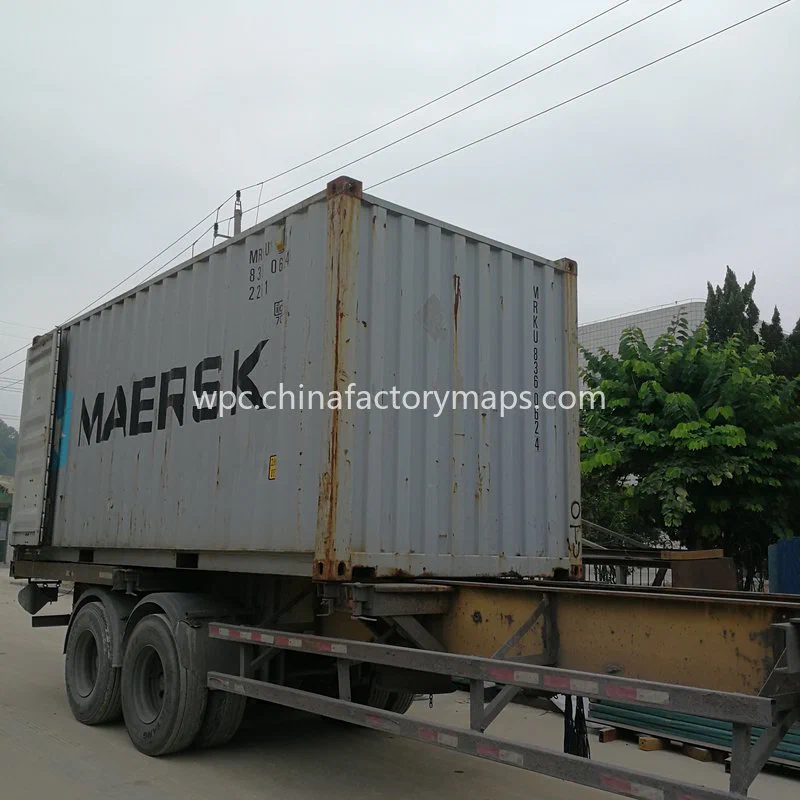
Ask each supplier to identify the factory dispatch location, proposed loading port and party responsible for inland transport. Confirm whether the quotation includes factory loading, export packing and port delivery. Buyers should also request estimated production lead times separately from transit times. Comparing suppliers on the same delivery basis prevents a low factory quotation from obscuring additional logistics costs.
5. Approve samples and production controls before placing an order

A sample approval should cover more than colour. Check the board dimensions, surface texture, edge finish, profile, rigidity and consistency between pieces. If the product will be installed outdoors, inspect the sample under natural light and consider how its surface appears when wet. Keep an approved reference sample and record the agreed product specification in the purchase contract.
Before production begins, request confirmation of the manufacturing tolerances and the inspection procedure. Ask whether checks take place during extrusion or only after boards are finished. A final inspection should cover dimensions, visible defects, colour variation, packaging and order quantities. Buyers can also arrange an independent pre-shipment inspection when the order value or project requirements justify it.
Packaging deserves attention because long-distance transport can expose boards to abrasion, bending and impact. Confirm how boards are supported, separated and protected inside the shipment. Ask for photographs of the actual packing method rather than relying solely on a catalogue image. Contract documents should identify the approved sample, board specification, packaging requirements and procedure for handling non-conforming goods.
FAQ
Q: Is white WPC decking suitable for outdoor installations?
A: Yes, provided the product is specified for outdoor exposure and installed correctly. Buyers should account for UV-related fading, temperature movement, drainage and ventilation.
Q: How can buyers identify a genuine Chinese WPC decking manufacturer?
A: Request evidence of owned production equipment, manufacturing processes, factory business details and quality inspection procedures. Verify that the contracting company and the actual production facility have a clearly explained relationship.
Featured Suppliers
Verified premium suppliers on our map.
