
Buying Wood Plastic Composite Fencing: Supplier Checks That Matter
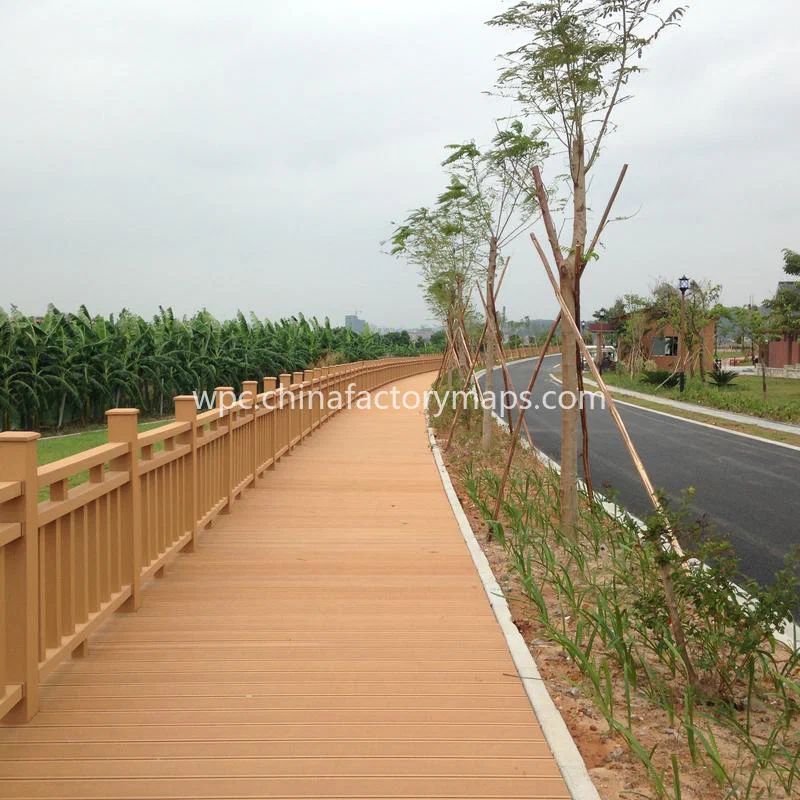
A wood plastic composite fence should be evaluated as a complete outdoor system, not simply as a set of boards. For overseas buyers sourcing from China, the important checks include material composition, profile consistency, manufacturing capability, installation requirements and export logistics. Differences between suppliers can affect how the fence performs after installation, even when product photographs look similar.
The first check is the material formulation. WPC fencing generally combines wood fibre or wood flour with thermoplastics and additives, but the proportions and processing methods vary. A higher wood content does not automatically mean better quality, just as a higher plastic content does not guarantee better weather resistance. Ask suppliers to identify the main polymer used, the type of wood filler and whether recycled materials are included. The manufacturer should also explain how additives are selected to improve UV resistance, colour stability and resistance to moisture. Request a technical datasheet for the exact fencing profile under consideration. Generic information covering an entire product catalogue is less useful. If a supplier cannot explain its formulation in practical terms, that is a reason to investigate further.
Profile construction deserves separate attention. Some factories produce solid sections, while others use hollow profiles with internal chambers or reinforcing structures. These designs affect weight, material consumption, handling and installation. Hollow boards can reduce shipping weight, but wall thickness and internal geometry matter. Ask for cross-sectional drawings rather than relying on exterior photographs. Check the dimensions, wall thickness, connection details and tolerances. For a panel system, examine how the boards fit into posts and whether the fixing arrangement allows for thermal movement. A supplier should be able to provide samples that match the proposed production specification. Compare samples from different suppliers by measuring them, inspecting cut edges and checking for uneven extrusion or inconsistent surface finishes. A visually attractive sample is not sufficient evidence of consistent mass production.
The distinction between a manufacturer and a trading company is another important sourcing consideration. A trading company may provide access to several product ranges, coordinate export documents and communicate effectively in English. That does not automatically make it unsuitable. However, buyers should understand who controls production and quality. Ask for the factory’s registered business details, production address and a description of its extrusion equipment. Request recent production-floor photographs or arrange a live video inspection. Questions about extrusion capacity, mould availability, raw-material purchasing and in-process inspection can reveal whether the supplier understands the manufacturing process directly. It is also useful to ask whether the same facility produces the posts, rails and fencing boards. If different components come from subcontractors, clarify how dimensional compatibility and quality responsibility are managed. The commercial contract should identify the actual manufacturing and exporting parties.

China’s mapped WPC supplier clusters offer different geographical starting points for supplier screening. Guangdong has the largest listed concentration, including Foshan, Guangzhou and Zhuhai. Anhui has suppliers around Xuancheng, Suzhou and Guangde, while Shandong includes Zibo, Linyi and Qingdao. Zhejiang’s mapped locations include Huzhou, Jiaxing and Hangzhou. Shanghai and Jiangsu, including Nanjing, provide additional sourcing locations. These clusters are useful for organising enquiries, but location alone does not establish product quality or factory capability. Buyers should compare the distance from each supplier to the relevant export port, rather than assuming the nearest factory offers the simplest shipping arrangement. Shanghai Port, Ningbo-Zhoushan Port, Shenzhen Port, Qingdao Port and Guangzhou Port are among the ports covered by the directory. Inland transport, container availability and the supplier’s established export arrangements can all influence the practical choice.
Quality verification should focus on performance characteristics that affect outdoor service life. WPC expands and contracts with temperature changes, so the fencing system needs suitable gaps and installation clearances. Ask the supplier for recommended spacing, fixing methods and guidance on post foundations. The supporting structure also needs adequate ventilation and drainage. Moisture resistance and resistance to insects are advantages over untreated timber, but composite material is not indestructible. Prolonged exposure to sunlight can cause colour fading, and poorly designed profiles may deform under unsuitable installation conditions. Buyers should request information about UV exposure testing, water absorption, dimensional stability and mechanical performance where available. Check whether the test results relate to the actual proposed product. A report for a different board formulation or profile should not be treated as proof of equivalent performance. Independent inspection of a production batch can provide further assurance before shipment.
Common purchasing problems often begin with an unclear specification. A sample may have a particular colour, surface texture and dimensional tolerance, while the bulk order uses a slightly different production setting or material formulation. To reduce this risk, establish a written specification covering profile dimensions, colour reference, surface finish, component compatibility, packaging and acceptable tolerances. Confirm whether colours are produced throughout the material or applied as a surface treatment. For co-extruded products, clarify the construction of the outer layer and its relationship to the core. Buyers should also agree on how defects, damaged packaging and dimensional deviations will be assessed. Before approving production, request a pre-production sample and retain an approved reference sample. Inspection should take place against that agreed reference, not simply against the supplier’s latest catalogue images. Packaging matters too. Long fencing profiles need protection against impact, abrasion and bending during container handling and inland transport.

Export preparation is the final practical check. Fencing profiles can occupy substantial container space relative to their weight, making packing efficiency an important part of landed-cost calculations. Ask for the proposed packing dimensions, bundle arrangement and estimated container loading plan. Confirm the shipping port, inland transport responsibility, export documentation arrangements and who bears responsibility for damage before loading. A factory close to Guangzhou or Shenzhen may offer a different transport arrangement from one located near Qingdao or Shanghai, but the best option depends on the destination and available shipping services. Buyers should also establish whether replacement components can be supplied if posts, rails or individual boards are damaged during transit. Payment milestones should be linked to clearly defined production and inspection stages. A supplier that provides consistent technical documentation, accepts measurable quality requirements and explains its export arrangements is easier to assess than one offering only attractive catalogue images and broad assurances.

FAQ
Q: How can an overseas buyer confirm that a Chinese WPC fencing supplier is a real manufacturer?
A: Check its registered business details, production address, extrusion equipment and manufacturing processes. A live factory inspection and discussion of quality-control procedures can help establish whether production is handled in-house.
Q: Does WPC fencing require expansion gaps during installation?
A: Yes. WPC expands and contracts with temperature changes, so suitable gaps, fixing clearances and ventilation beneath the supporting structure are necessary.
Related Articles
Featured Suppliers
Verified premium suppliers on our map.
