
Calculating Composite Decking Materials for Large Residential Projects
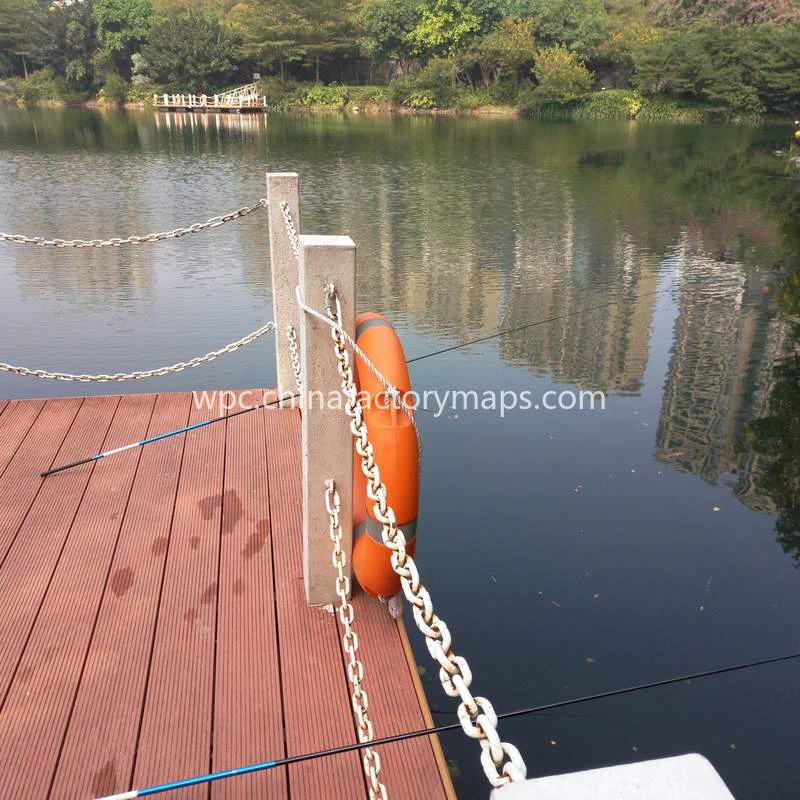
Large residential composite decking projects require material calculations that account for more than the total deck area. Shared terraces, apartment courtyards, rooftop amenities, pool surrounds and residential walkways each impose different demands on board performance, installation spacing and supporting structures. For overseas buyers sourcing from China, the initial specification should reflect the project’s climate, traffic levels and maintenance requirements.
The first calculation is the actual deck surface area, measured separately for each installation zone. Large residential developments often combine rectangular terraces with narrow access paths, stepped platforms, curved edges and communal seating areas. These features create different cutting and fitting requirements. A composite decking material calculator can establish an initial board quantity from the total surface area and selected board dimensions, but it cannot account accurately for every site condition. Buyers should add a project-specific allowance for cutting waste, perimeter trimming and replacement stock. Board length also matters. Longer boards can reduce end joints across open terraces, while shorter lengths may suit smaller balconies and irregular layouts. The final take-off should distinguish usable surface coverage from the additional material required for installation details.

Climate determines which product specifications deserve attention. Coastal residential developments face salt exposure, wind-driven moisture and frequent wetting. WPC resists moisture and insect damage better than untreated timber, but it is not completely waterproof or immune to environmental deterioration. Buyers should request information on the formulation, surface treatment, drainage requirements and performance in prolonged outdoor exposure. Projects in colder regions need particular attention to freeze-thaw conditions. Composite boards expand and contract as temperatures change, so the installation design must provide suitable end gaps and perimeter clearance. A ventilated substructure is equally important because trapped moisture can affect the supporting system. In areas with sustained high UV exposure, colour stability becomes a purchasing consideration. Ask suppliers for documented weathering information rather than relying on descriptions such as fade-proof. For heavy foot traffic in shared residential spaces, surface wear, slip resistance when wet and resistance to localised loading should also form part of the specification.

China’s mapped WPC manufacturing clusters provide several sourcing routes for these applications. Guangdong, with listed suppliers in Foshan, Guangzhou and Zhuhai, is a relevant starting point for projects requiring products for humid and high-UV environments. Its geographic relationship with Shenzhen Port and Guangzhou Port can also be useful when assessing export logistics. Zhejiang, including Huzhou, Jiaxing and Hangzhou, offers another supplier cluster to investigate for residential decking requirements, with Ningbo-Zhoushan Port and Shanghai Port among the relevant export gateways. Shandong, particularly the mapped manufacturing locations around Zibo, Linyi and Qingdao, is worth including when sourcing for projects exposed to colder seasonal conditions; Qingdao Port is an important logistics reference. Anhui, including Xuancheng, Suzhou and Guangde, adds further supplier options. These regional groupings are useful for building a shortlist, not proof that every factory has experience with a particular climate or project scale.

Supplier comparisons should therefore begin with a common technical brief. Specify the deck area, board profile, required lengths, installation pattern, substructure material, expected traffic and site exposure. Request technical data covering dimensional tolerances, expansion behaviour, recommended joist spacing, fastening methods and surface slip performance. Ask whether the product is solid or hollow and whether it uses a capped or uncapped construction, since these differences affect weight, installation and surface characteristics. Buyers should also request installation instructions and samples from the actual production range under consideration. For large residential orders, production consistency across batches matters because visible colour variation can become apparent across connected communal areas. Finally, compare the factory’s location with the nearest suitable export port, while checking inland transport, loading arrangements and production capacity separately. A lower freight distance does not compensate for a board specification that is unsuitable for the installation environment.

FAQ
Q: How much extra composite decking material should a large residential project order?
A: The allowance depends on board length, layout complexity, cutting patterns and installation details. Calculate waste separately for each deck zone rather than applying one assumption to the entire development.
Q: Is WPC decking suitable for coastal residential developments?
A: Yes, provided the product and installation system are specified for the exposure conditions. Buyers should assess moisture resistance, drainage, ventilation, fasteners and UV performance.
Q: Which Chinese regions should buyers compare for large WPC decking orders?
A: Guangdong, Zhejiang, Shandong and Anhui are useful starting points within the mapped supplier network. Compare individual factory capabilities, technical documentation and export-port access before selecting a supplier.
Related Articles
Featured Suppliers
Verified premium suppliers on our map.
