
Can Composite Decking Be Used for Raised Garden Beds?
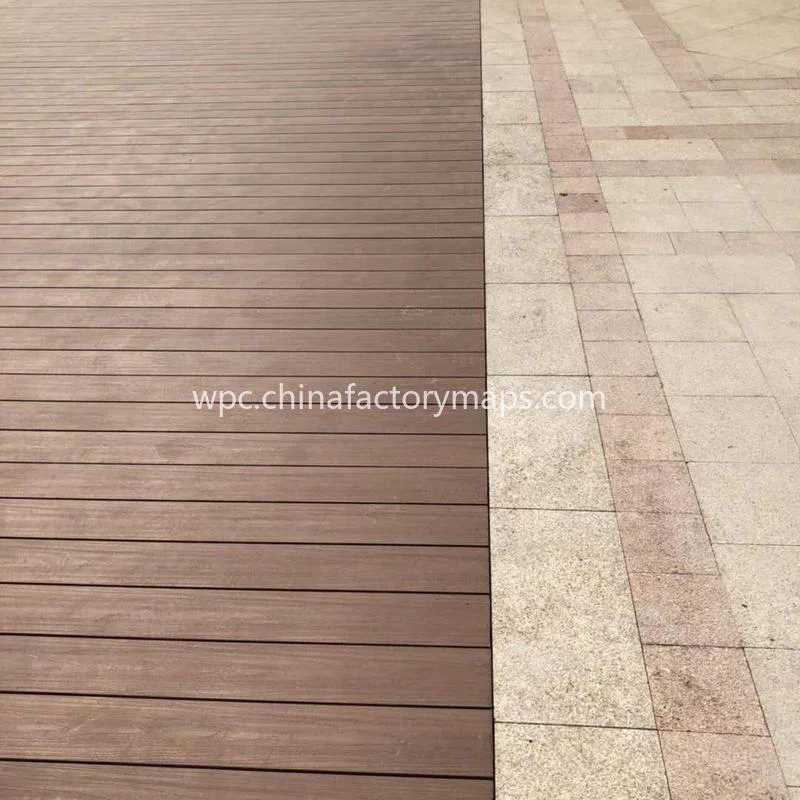
Composite decking can be used for raised garden beds, provided the boards are suitable for ground-contact conditions and the structure is designed to support the weight of wet soil. It resists moisture and insect damage better than many untreated wood products, but its suitability depends on the material formulation, board strength, intended growing use, and installation details.
For buyers considering composite decking for raised garden beds, the main decision is whether standard decking boards can perform as retaining walls or whether purpose-made composite lumber is a better fit. Decking is manufactured primarily for horizontal surfaces, so its ability to span between supports does not automatically make it suitable for holding back soil. A raised bed creates sustained lateral pressure, particularly when the soil is wet. Board thickness, reinforcement, corner connections, and bed height all affect performance. Composite material can be a practical option for decorative and functional garden structures, but the design must account for the loads rather than relying on the appearance or nominal strength of the boards.
Material suitability and growing conditions

Wood-plastic composite (WPC) typically combines wood fibres or flour with a polymer matrix and additives. This composition helps limit moisture absorption and reduces susceptibility to insect attack compared with untreated timber. However, formulations vary, and not every decking product is intended for continuous contact with damp soil. Hollow-core decking boards may also be less suitable for retaining pressure than solid profiles or purpose-designed structural boards. Buyers should request technical information on the intended application, profile construction, load limitations, and recommended fixing method. The product specification should also clarify whether the material is suitable for use around edible crops. A general statement that a board is weather resistant does not establish that every ingredient or additive is appropriate for direct contact with growing media.
The growing environment matters as much as the board itself. Soil remains damp after watering, while fertilisers and organic matter can create conditions different from those on an exposed deck. WPC resists moisture but is not completely impervious to water, and repeated wetting can affect components, joints, and the surrounding structure. Composite boards may also expand and contract as temperatures change. A long, rigid wall fixed tightly at both ends can develop stress, distort, or place excess load on its fasteners. The installation therefore needs the clearances specified by the manufacturer, secure corner details, and a supporting frame that accommodates movement. Where the product documentation does not cover garden-bed use, buyers should seek written confirmation of suitability before specifying it for a permanent installation.
Construction, drainage, and service life
A raised bed needs more than boards that stay intact. Soil exerts outward pressure on the sides, and that pressure increases with bed depth, moisture, and the weight of the growing medium. Taller beds may require stronger posts, closer support spacing, or a different wall system. Corner joints must resist separation, while fasteners need to be compatible with the board composition and exposure conditions. Decking screws and ordinary deck joist layouts should not be assumed suitable for a soil-retaining structure. A competent installer should assess the proposed height, board profile, support arrangement, and drainage before construction begins.
Drainage and ventilation also deserve attention. The bed should allow excess water to escape instead of trapping it against the boards or accumulating around the supporting structure. A ventilated substructure is important where the design includes a framed base or enclosed cavity, although the exact arrangement depends on the system. Avoid burying unsupported board ends or sealing the entire assembly in a way that conflicts with the manufacturer’s instructions. The ground beneath the bed should be stable, and the finished structure should remain level as soil settles. Composite surfaces can fade under sustained ultraviolet exposure, particularly in sunny locations. Cleaning is generally straightforward, but abrasive methods and unsuitable chemicals can damage the surface. Periodic inspection of joints, supports, and drainage remains necessary.
For a buyer comparing suppliers, the best specification is one that describes the actual application rather than simply requesting outdoor decking. Ask whether the manufacturer has tested or approved the selected profile for raised-bed walls, whether solid or hollow boards are recommended, and what support spacing and fixing details apply. Request available technical data and guidance on temperature-related movement, UV exposure, and cleaning. If vegetables or herbs will be grown, ask for material information relevant to contact with edible-crop growing environments instead of assuming that all WPC formulations are equivalent. Sample boards can help assess colour and finish, but they cannot establish structural suitability. A drawing showing the proposed bed dimensions and support positions gives suppliers a clearer basis for recommending a product.
Sourcing WPC suppliers in China
Chinafactorymaps.com plots WPC factories by geographic location, allowing overseas buyers to compare supplier clusters and consider their distance from export ports. The directory currently maps suppliers in Guangdong, Anhui, Shandong, Zhejiang, Shanghai, and Jiangsu. Guangdong has the largest listed cluster, including Foshan, Guangzhou, and Zhuhai, while Anhui includes Xuancheng, Suzhou, and Guangde. Other mapped locations include Zibo, Linyi, and Qingdao in Shandong, as well as Huzhou, Jiaxing, and Hangzhou in Zhejiang. These locations provide a starting point for sourcing enquiries, not proof that a factory manufactures boards suitable for retaining soil.
Port proximity is one factor in comparing potential suppliers. Shanghai Port, Ningbo-Zhoushan Port, Shenzhen Port, Qingdao Port, and Guangzhou Port are among the export gateways covered by the directory. A factory’s distance from a port can affect inland transport planning, but the shortest route does not necessarily produce the lowest total landed cost. Buyers should also compare product specifications, packaging requirements, production capabilities, documentation, and shipping arrangements. For raised garden beds, the decisive question is whether the supplier can substantiate the proposed material’s suitability for the application. A supplier that primarily produces decking for open-air floors may need to recommend a different profile or confirm that additional structural support is required. Final selection should follow technical review, not location alone.

FAQ
Q: Is composite decking safe for vegetable raised beds?
A: It depends on the formulation and intended use. Ask the manufacturer for material information relevant to contact with edible-crop growing media before selecting the boards.
Q: Do composite boards need gaps in a raised garden bed?
A: Yes, the installation must accommodate temperature-related expansion and contraction according to the manufacturer’s instructions. Drainage and any required substructure ventilation must also be maintained.
Q: Are hollow composite decking boards suitable for retaining soil?
A: Not necessarily. Hollow profiles may require closer support or may be unsuitable for sustained soil pressure, so confirm the profile’s intended use and structural requirements with the manufacturer.
Featured Suppliers
Verified premium suppliers on our map.
