
Capped Composite Decking: What Buyers Should Verify Before Ordering
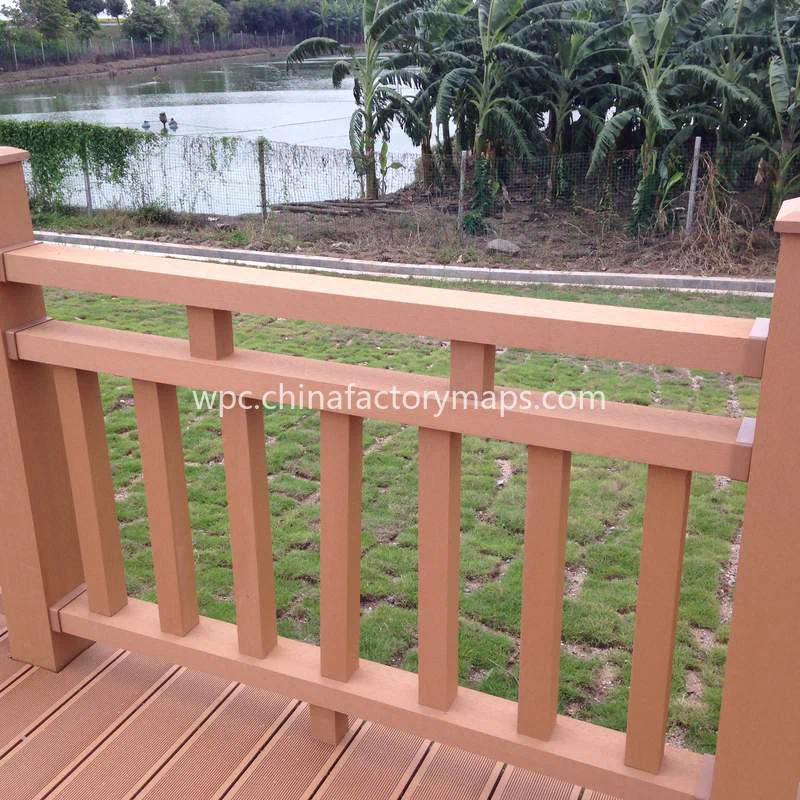
Capped composite decking uses a wood-plastic composite core covered by a protective polymer layer. For overseas buyers sourcing from China, the key checks are the cap structure, board performance, production consistency, and the supplier’s actual manufacturing role. A map-based directory can help narrow the search by factory location and distance to an export port, but product claims still need to be verified directly.
Check the Cap, Core and Board Specifications

The word “capped” does not guarantee identical construction across suppliers. Buyers should establish whether the protective layer covers the exposed faces and edges, how it bonds to the composite core, and whether the proposed board is co-extruded. The cap material and thickness, core formulation, board profile, dimensions, surface texture, and colour should all be documented before samples are approved.
Ask for a technical data sheet and physical samples from the product intended for bulk production. Inspect the cap for uneven coverage, visible defects, and weak bonding around edges. Request evidence of performance under moisture exposure, UV radiation, temperature changes, and repeated foot traffic where relevant to the installation. Capped boards generally resist moisture and insect damage better than untreated wood, but they are not indestructible. Colours may fade under sustained sunlight, and temperature changes cause expansion and contraction. Installation therefore requires suitable gaps and a ventilated substructure.
A sample is only useful if it represents the product that will be shipped. Confirm the production specification in writing, including acceptable colour variation, surface finish, dimensional tolerances, packaging, and inspection criteria. Where several colours or profiles are ordered, identify each separately to reduce the risk of substitutions or mixed batches.
Verify the Factory and Export Route

China’s WPC suppliers are distributed across several manufacturing regions, and location can affect inland transport arrangements and port access. The directory maps suppliers in Guangdong, Anhui, Shandong, Zhejiang, Shanghai, and Jiangsu, with locations including Foshan, Xuancheng, Linyi, Huzhou, and Nanjing. Buyers can compare mapped factory positions with nearby export routes rather than assuming that a supplier’s registered city is also its production site.
To distinguish a manufacturer from a trading company, ask for the production address, a live or recorded factory walkthrough, and details of the equipment used for extrusion, co-extrusion, finishing, and quality inspection. Request photographs or records showing the production process for the specific board type under consideration. Confirm which stages are performed in-house and which are subcontracted. A trading company can still manage a legitimate order, but buyers should understand who controls production and who is responsible for defects.

Port distance is one part of landed-cost planning, not a complete measure of logistics efficiency. Compare the factory’s inland transport arrangements with access to relevant ports, such as Shenzhen Port, Guangzhou Port, Shanghai Port, Ningbo-Zhoushan Port, or Qingdao Port. Ask for the proposed shipping route, packaging dimensions, loading arrangements, and export documentation requirements. A nearby port does not automatically mean a lower total freight cost.
Before placing a bulk order, agree on sample approval, production lead time, inspection timing, defect handling, and remedies for specification deviations. Check that the commercial contract identifies the actual seller and the party responsible for manufacturing quality. These details matter when a shipment arrives with inconsistent colour, damaged cap layers, incorrect dimensions, or boards that differ from the approved sample.
FAQ
Q: Does capped composite decking eliminate maintenance?
A: No. The cap helps resist moisture and staining, but boards still need cleaning and inspection. UV exposure can fade colour, and surface damage remains possible.
Q: How can buyers compare Chinese WPC factories before requesting a quotation?
A: Compare mapped locations, port access, production capabilities, and evidence that the supplier makes the specified product. Then request matching samples, technical documentation, and written quality-control terms.
Related Articles
Featured Suppliers
Verified premium suppliers on our map.
