
Capped vs Uncapped Composite Flooring for Outdoor Decks
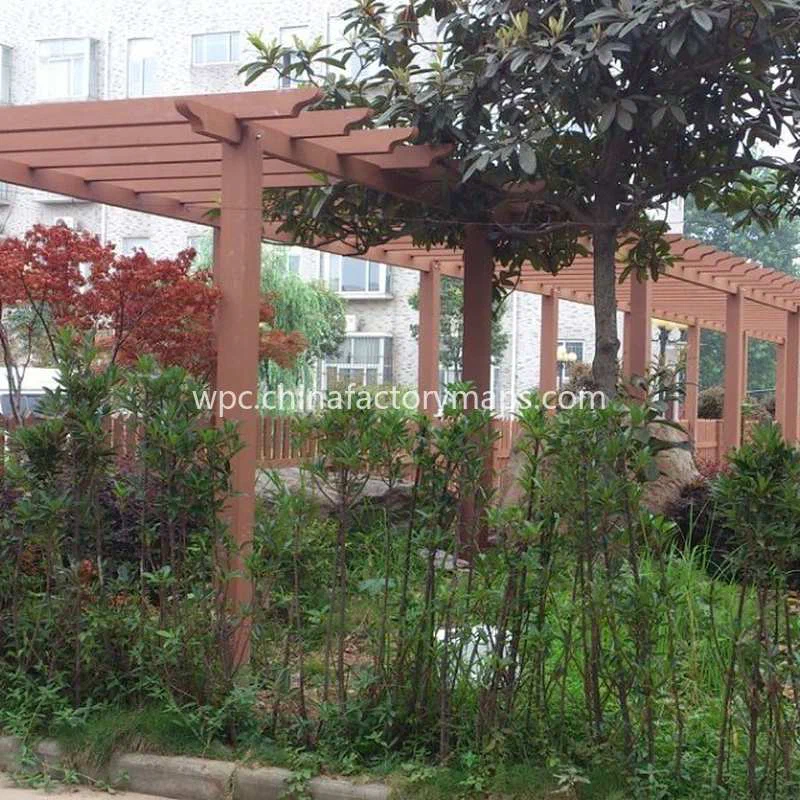
Capped and uncapped WPC decking differ mainly in their surface construction, which affects moisture exposure, UV performance, appearance and installation requirements. For buyers sourcing composite flooring for decks, the distinction matters when matching board specifications to the intended climate, traffic level and maintenance expectations. Neither construction eliminates the need for correct substructure design or allowance for thermal movement.
Construction differences and surface protection
Uncapped WPC boards are generally manufactured from a wood-fibre and polymer mixture, with the same composite material forming the board throughout its cross-section. The exposed surface has no additional polymer protective shell. This construction is relatively straightforward, and the colour and texture extend through the board rather than relying on a separate outer layer. Scratches may therefore be less visually pronounced than on some capped products, although the exposed surface remains susceptible to staining, moisture absorption and gradual weathering.

Capped WPC decking uses a similar composite core but adds an outer polymer layer, commonly formed through co-extrusion during manufacturing. The cap surrounds the exposed surfaces, with the exact coverage depending on the board profile and production method. This layer provides an additional barrier against moisture penetration, surface staining and UV exposure. It can also support more consistent surface colours and textures. However, a cap does not make the board indestructible. Deep scratches, damaged edges and poorly formed joints can compromise its protective function. Buyers should establish whether the cap covers the full perimeter or only selected faces, particularly where boards will be cut during installation.
The core composition still matters in both categories. Wood-fibre content, polymer type, additives, density and extrusion control influence dimensional stability and mechanical performance. A capped board with a poorly controlled core is not automatically a better product than a well-manufactured uncapped board. Procurement specifications should therefore distinguish between surface construction and the underlying material formulation.
Application, installation and sourcing considerations
Uncapped boards can suit sheltered outdoor areas, covered terraces and projects where initial material cost and a consistent through-colour profile are priorities. They may also be appropriate for buyers targeting moderate exposure conditions with an established cleaning and inspection routine. Their limitations become more relevant in locations subject to frequent rainfall, persistent humidity, standing water or heavy outdoor use. Moisture resistance varies with formulation and manufacturing quality, so an uncapped profile should not be treated as unsuitable solely because it lacks a protective shell.
Capped boards are often considered for exposed decks, poolside areas and commercial outdoor spaces where surface staining and weather exposure are greater concerns. Their protective layer can reduce moisture-related surface deterioration, but drainage remains essential. Neither capped nor uncapped WPC is absolutely waterproof. Both expand and contract as temperatures change, and installers must follow the manufacturer’s specified end gaps, side clearances and fixing requirements. A ventilated substructure helps manage moisture beneath the deck and supports more consistent temperature conditions. Restricted airflow, inadequate drainage and incorrect joist spacing can contribute to installation problems regardless of the surface type.

Fastening systems also affect the final result. Hidden clips can provide a consistent appearance and maintain board spacing, while face screws may be required for certain profiles, perimeter details or stair applications. The selected fixing method must be compatible with the board geometry and its expected thermal movement. Over-tightening fasteners or fixing boards without adequate expansion allowances can cause buckling, distortion or joint failure. Colour deserves separate consideration: capped surfaces generally offer better UV protection, but sustained sunlight can still cause fading. Uncapped surfaces may show weathering more visibly, especially where exposure is uneven.

For overseas buyers comparing Chinese suppliers, geographical sourcing provides another useful procurement check. The directory currently maps WPC manufacturers across Guangdong, Anhui, Shandong, Zhejiang, Shanghai and Jiangsu. Guangdong has the largest listed supplier cluster, while Anhui and Shandong also have multiple mapped production locations. Buyers can compare factory locations with access to Shanghai Port, Ningbo-Zhoushan Port, Shenzhen Port, Qingdao Port and other covered export ports. Port proximity is relevant to inland transport planning, but it does not establish factory capacity, product quality or export readiness. Supplier enquiries should request cross-sectional samples, surface-layer specifications, technical data sheets, installation instructions and evidence of UV and weathering performance. Comparing capped and uncapped samples under the same inspection conditions gives buyers a clearer basis for evaluating the actual surface finish and manufacturing consistency.
FAQ
Q: Does capped WPC decking last longer than uncapped decking?
A: Capped boards generally provide better surface protection against moisture, stains and UV exposure. Actual service life also depends on core formulation, manufacturing quality, installation and environmental conditions.
Q: Can uncapped WPC decking be installed around swimming pools?
A: It can be suitable for some poolside applications, provided the product specification supports the intended exposure. Drainage, ventilation, surface slip performance and regular cleaning should be assessed before selection.
Q: Is capped WPC decking completely waterproof and fade-proof?
A: No. The protective shell reduces surface moisture penetration and UV-related deterioration, but joints, cut edges and prolonged exposure remain relevant. Colour can still fade under sustained sunlight.
Related Articles
Featured Suppliers
Verified premium suppliers on our map.
