
Chinese Composite Decking Boards Shift with Export Demand
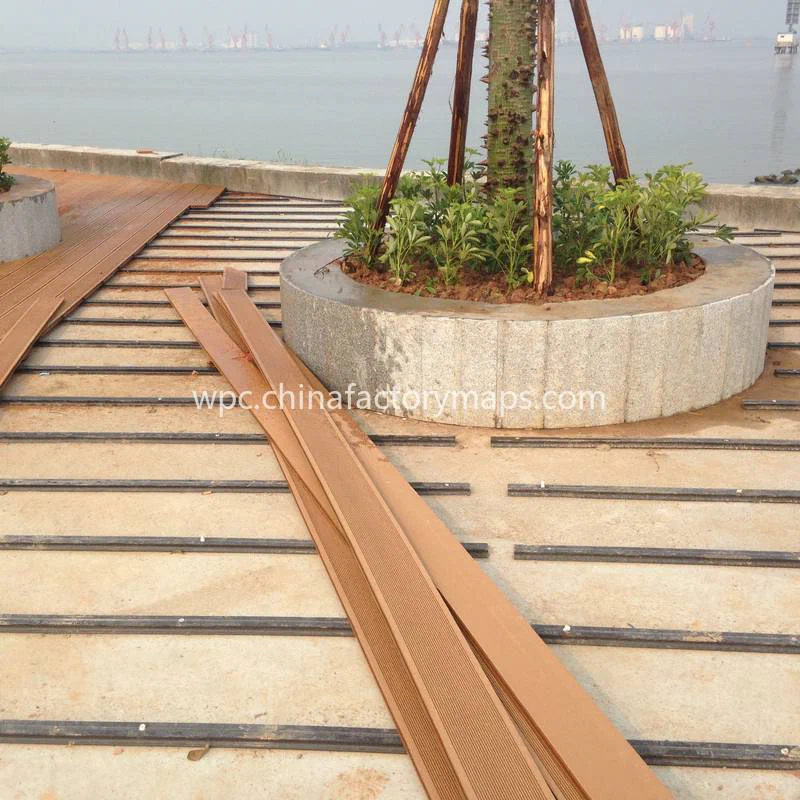
Chinese WPC decking manufacturers are adjusting product specifications, production priorities, and export logistics as overseas buyers place greater emphasis on application requirements and delivery planning. For sourcing teams, the shift is less about a single new material and more about matching factory capabilities, product construction, and shipping routes to the needs of each market. Chinafactorymaps.com plots suppliers by location, helping buyers compare manufacturing clusters and their proximity to major export ports.
Export demand is changing product priorities
The WPC decking segment serves several distinct requirements, from residential terraces and balconies to commercial walkways and outdoor leisure areas. Buyers increasingly need to distinguish between products that look similar in a catalogue but differ in surface finish, internal structure, profile dimensions, and installation requirements. These details affect how a board performs after installation and how easily it can be specified for a particular project.
For Chinese manufacturers, export orders require more than reproducing a standard profile. A buyer may request a particular colour range, a capped surface, a hollow or solid profile, or a finish designed to improve grip underfoot. Each variation can affect tooling, material consumption, quality checks, and production scheduling. The relevant shift is toward more specific product matching rather than treating all composite boards for decking as interchangeable. Buyers comparing suppliers should establish which specifications are standard production options and which require a separate development or production run.
Demand also places greater weight on consistency between samples and bulk shipments. Colour variation, dimensional tolerances, surface texture, and profile geometry all matter when boards are installed across a large area. A supplier’s ability to document specifications and maintain production controls is therefore as important as the appearance of an initial sample. Buyers should request representative samples and confirm the agreed tolerances before approving an order.
Regional clusters and export logistics
The geographic distribution of Chinese WPC factories creates several starting points for supplier research. Guangdong has the largest mapped cluster on Chinafactorymaps.com, with 22 listed suppliers, including factories in Foshan, Guangzhou, and Zhuhai. Anhui has nine listed suppliers, including locations in Xuancheng, Suzhou, and Guangde. Shandong has seven, with mapped locations including Zibo, Linyi, and Qingdao. Zhejiang has six, including Huzhou, Jiaxing, and Hangzhou, while Shanghai has three and Jiangsu has two, including Nanjing. These figures describe the directory’s current mapped coverage, not the total number of factories operating in each province.
The clusters offer a practical framework for organising searches, but location alone does not establish manufacturing capability or commercial suitability. A factory near a major export port may have a different inland transport profile from one located farther away, and the final logistics calculation depends on the shipment’s destination, container arrangements, and inland collection point. Guangdong suppliers can be assessed against routes involving Shenzhen Port and Guangzhou Port. Suppliers in the Shanghai, Zhejiang, and Jiangsu areas can be compared with access to Shanghai Port, Ningbo-Zhoushan Port, and Taicang Port. For Shandong, Qingdao Port and Rizhao Port are relevant reference points.
Distance to port is a screening factor, not a complete freight quote. Buyers should confirm the factory’s actual dispatch location, the port used for the proposed shipment, local transport costs, and the availability of suitable export handling. Other ports covered by the directory include Tianjin Port, Xiamen Port, Beibu Gulf Port, Lianyungang Port, and Yingkou Port. Mapping these relationships helps narrow a supplier search before requesting quotations and production details.

Specification, quality, and order planning
Material composition remains central to product performance. WPC boards generally combine wood-based material with polymers and additives, but the proportions and formulation vary by manufacturer and product line. These differences can influence stiffness, surface appearance, dimensional stability, and resistance to moisture. Buyers should avoid relying on a generic WPC description as proof that two products will perform identically. Technical data should be reviewed against the intended use, expected exposure, and local building requirements.

Installation conditions deserve equal attention. WPC expands and contracts as temperatures change, so the installation instructions must specify appropriate gaps, fixing methods, and substructure arrangements. The supporting structure needs adequate ventilation and drainage. Although WPC resists moisture and insect damage better than untreated wood in many applications, it is not indestructible, and prolonged exposure to ultraviolet radiation can cause colour fading. Surface wear, staining, and damage from unsuitable cleaning methods are also possible. Buyers should establish the manufacturer’s maintenance guidance and any stated limitations before selecting a board for exposed locations.
Order planning is another point where supplier differences become visible. A factory may offer a broad catalogue but maintain only a narrower range of profiles or colours as regular production items. Custom finishes and non-standard dimensions can require additional preparation, while changes after production begins may disrupt scheduling. Before placing a bulk order, buyers should confirm the final drawings, colour reference, profile dimensions, packaging method, labelling requirements, and inspection process. They should also ask how replacement boards will be handled if a shipment contains damaged or non-conforming material. These checks reduce the risk of resolving specification disputes after goods have left the factory.
What buyers should compare now
The current sourcing task is to identify suppliers whose production capabilities and shipping arrangements fit the order, rather than selecting a factory solely by province or apparent proximity to a port. A useful shortlist separates technical suitability from logistics and commercial terms. Each factory should be assessed against the same specification so that differences in quotation reflect meaningful differences in product, packaging, and delivery arrangements.
Chinafactorymaps.com supports the initial geographic stage by plotting mapped Chinese WPC suppliers and showing their relationship to export ports. Buyers can use that view to compare regional options, identify potential alternatives, and decide which factories warrant direct technical enquiries. The map does not replace factory audits, sample testing, or freight confirmation. Its value is in making the search more structured before those costs are incurred.

For projects with recurring demand, supplier selection should also consider continuity. Confirm whether the factory can maintain the approved specification across repeat orders, how changes in raw materials are managed, and whether the same profile and colour can be produced consistently over time. For first-time orders, a clearly documented sample approval and pre-shipment inspection plan can provide a reference for later shipments. These controls are especially useful when sourcing from multiple factories or supplying several installation projects under a common specification.
FAQ
Q: Which Chinese regions should buyers compare when sourcing WPC decking?
A: The directory maps suppliers in Guangdong, Anhui, Shandong, Zhejiang, Shanghai, and Jiangsu. The appropriate starting point depends on product requirements, factory capabilities, and the export route.
Q: Does a factory closer to an export port necessarily offer lower shipping costs?
A: No. Inland transport, port selection, shipment arrangements, and handling charges all affect the total cost. Buyers should obtain a route-specific logistics quotation.
Q: What should be confirmed before ordering composite decking boards in bulk?
A: Confirm the material and profile specifications, colour, dimensional tolerances, installation guidance, packaging, inspection process, and delivery terms. Approved samples and written specifications help reduce disputes over repeat shipments.
Related Articles
Featured Suppliers
Verified premium suppliers on our map.
