
Choosing a Composite Manufacturer for Large Commercial Projects
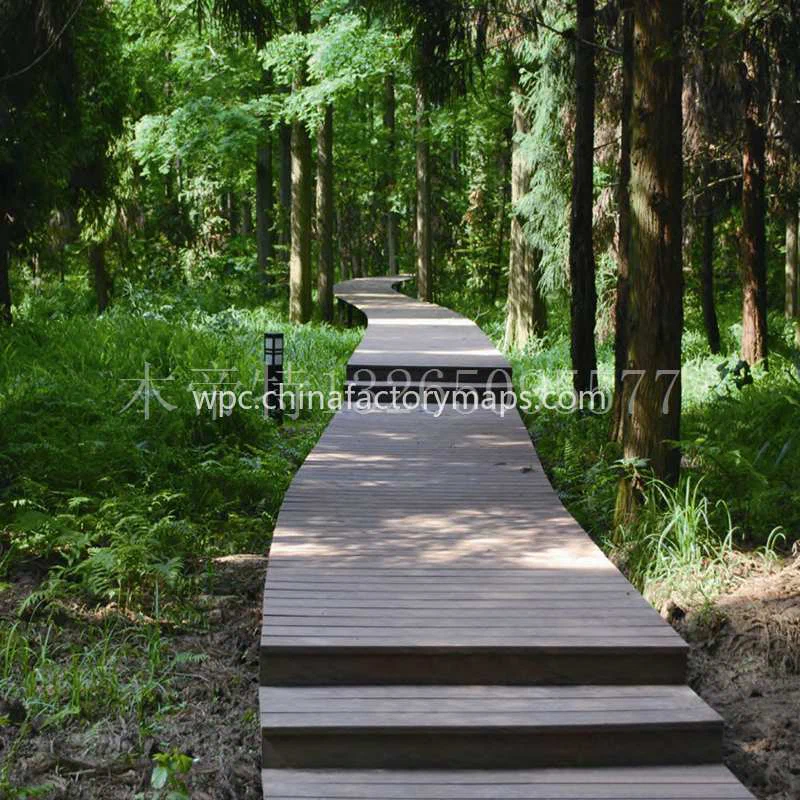
Large commercial WPC projects place different demands on composite decking than residential installations. Shopping centres, hotels, waterfront developments and public walkways require products specified for sustained traffic, local climate and the conditions of the supporting structure. Selecting a composite manufacturer therefore starts with the intended application, not simply the appearance or quoted board dimensions.
For coastal promenades, marina facilities and waterfront hospitality projects, salt exposure and persistent moisture deserve close attention. WPC resists moisture and insect damage, but it is not immune to deterioration. Buyers should request details of the polymer and wood-fibre composition, surface protection, drainage requirements and performance under prolonged outdoor exposure. In high-UV locations, colour stability matters. Ask for documented weathering test results and clarify whether the product uses a co-extruded protective layer. Public walkways and commercial terraces also need an appropriate slip-resistant surface, particularly around pools and frequently washed areas. Heavy foot traffic changes the specification further: board thickness alone does not establish load capacity. The buyer should check recommended joist spacing, allowable spans, fixing methods and the manufacturer’s tested load data. Edge details and replacement access matter on large installations, where local repairs may be preferable to removing extensive sections. For freeze-thaw environments, request evidence of performance after repeated temperature and moisture cycles rather than relying on general claims of weather resistance.

Installation conditions can determine whether a suitable board performs as expected. Composite boards expand and contract with temperature, so the specification must include end gaps, side clearances and suitable fixing arrangements. A ventilated substructure is essential; trapped moisture and restricted airflow can create problems even when the boards themselves resist water absorption. Large commercial sites should also establish who is responsible for checking subframe design, drainage falls, expansion allowances and transitions between composite surfaces and concrete or metal structures. Buyers should request installation drawings and maintenance instructions before approving production samples. Colour variation between batches, surface texture and dimensional tolerances deserve attention when orders cover several buildings or construction phases. A sample approved without checking batch consistency may not represent the finished installation. Fire performance requirements should be confirmed against the project’s local building regulations, with supporting test documentation requested where applicable.
China’s mapped WPC production clusters offer several sourcing routes for these project requirements. Guangdong has the largest listed concentration, with suppliers across Foshan, Guangzhou and Zhuhai. Its position makes the region relevant to buyers comparing coastal project specifications and export access through Shenzhen Port and Guangzhou Port. Anhui, including Xuancheng, Suzhou and Guangde, provides another established supplier cluster for buyers assessing inland production options. Shandong’s mapped suppliers are concentrated around Zibo, Linyi and Qingdao, making Qingdao Port a relevant reference for export planning. Zhejiang, including Huzhou, Jiaxing and Hangzhou, offers another manufacturing area to compare, with Ningbo-Zhoushan Port among the relevant shipping gateways. Shanghai and Jiangsu add further options, including access to Shanghai Port and Taicang Port. These geographic relationships help narrow a supplier shortlist, but proximity to a port does not establish factory capacity, product suitability or shipping cost. Buyers should compare actual factory locations, request project-specific technical documents and confirm production consistency before placing a large order.

FAQ
Q: What technical information should buyers request for commercial WPC decking?
A: Request load-test data, recommended joist spacing, slip-resistance results, UV weathering information and installation specifications. Fire performance documentation may also be necessary under local building regulations.
Q: Does choosing a factory near an export port guarantee lower shipping costs?
A: No. Inland transport, container availability, cargo dimensions and the selected shipping route also affect total logistics costs. Factory-to-port distance is a useful comparison factor, not a complete freight quotation.
Featured Suppliers
Verified premium suppliers on our map.
