
Choosing Composite Deck Materials for Large Commercial Terraces
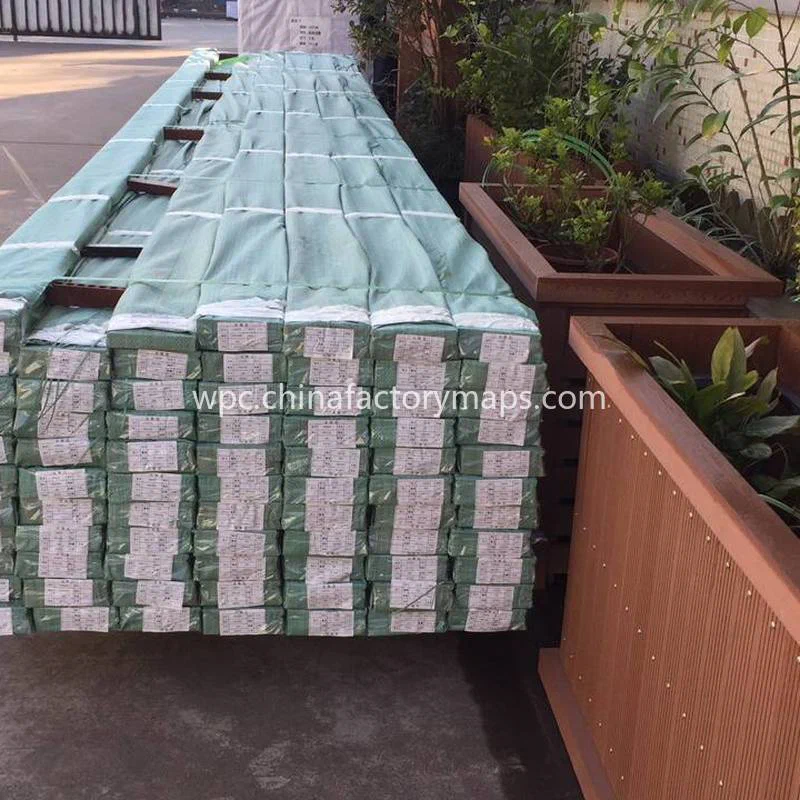
Large commercial terraces place different demands on composite deck materials than residential patios. Restaurants, hotels, shopping centres and public buildings need decking that can handle sustained foot traffic, exposure to weather and repeated cleaning. The specification must account for the site environment, structural support and expected maintenance requirements, not just board appearance.
Match the specification to site conditions

Coastal terraces require particular attention to salt exposure and moisture. WPC resists moisture better than untreated timber, but it is not completely waterproof or immune to environmental damage. Buyers should request information on the resin and wood-fibre composition, water absorption, edge protection and resistance to corrosion around fixing components. Stainless steel fasteners and compatible substructure materials are important where salt-laden air is present. Drainage also matters. Standing water can create maintenance problems even when the decking itself has good moisture resistance.
Projects in colder climates need a different set of checks. Freeze-thaw cycles place repeated stress on materials exposed to water, particularly around joints, cut edges and fixing points. Buyers should request relevant temperature-cycle test data and installation guidance covering expansion gaps. WPC expands and contracts as temperatures change. A board that performs well in a controlled test may still develop movement problems if installed without adequate spacing or ventilation. The supporting frame must allow drainage and airflow beneath the deck.
Specify for traffic, sunlight and installation
Heavy foot traffic changes the priorities for restaurants, hotel podiums and public terraces. Surface abrasion, slip resistance and board deflection deserve attention. Buyers should ask for test results covering abrasion and slip performance, including the conditions under which those results were measured. A textured surface may improve grip, but its performance can change with water, grease or accumulated dirt. For commercial projects, the specification should also address cleaning methods and the availability of replacement boards. Consistent dimensions and colour batches can simplify phased installation and later repairs.
High UV exposure is another major consideration, particularly on open terraces with little shade. WPC colour can fade under sustained sunlight, and darker finishes may experience greater surface heating. Buyers should request weathering data, colour-retention information and samples that have been exposed to outdoor conditions. Co-extruded products may provide an additional protective surface layer, but performance depends on the actual construction and quality of the cap layer. Product descriptions alone are not sufficient evidence.

China’s mapped supplier clusters offer several regional starting points for sourcing. Guangdong has the largest listed group, with suppliers in Foshan, Guangzhou and Zhuhai. Its coastal manufacturing environment makes the province relevant for buyers evaluating products for humid and salt-exposed projects. Anhui, including Xuancheng, Suzhou and Guangde, is another substantial cluster. Shandong, with suppliers around Zibo, Linyi and Qingdao, provides a further sourcing area for projects requiring attention to seasonal temperature variation. Zhejiang’s Huzhou, Jiaxing and Hangzhou cluster is also worth comparing. These locations indicate where mapped suppliers are concentrated, not proof that every factory has experience with large commercial installations.

Supplier location should be considered alongside export logistics and technical evidence. Guangdong factories can be compared by distance to Shenzhen Port and Guangzhou Port, while Zhejiang suppliers can be assessed in relation to Ningbo-Zhoushan Port. Shandong buyers may examine access to Qingdao Port, and Anhui suppliers can be evaluated against their available routes to Shanghai Port. Shanghai and Jiangsu suppliers also provide options around Shanghai Port and Taicang Port. Before requesting quotations, buyers should establish the intended board profile, substructure requirements, fire-performance expectations where applicable, testing documentation and project volume. Factory capability should be verified directly, especially for projects involving multiple installation phases.
FAQ
Q: Is WPC decking suitable for large coastal terraces?
A: Yes, provided the product is specified for the exposure conditions. Buyers should verify moisture performance, fixing-system corrosion resistance, drainage and maintenance requirements.
Q: What should buyers check for commercial decking in cold climates?
A: Request freeze-thaw performance data, temperature-related expansion guidance and installation details covering joint spacing and substructure ventilation.
Q: Which Chinese regions should buyers compare when sourcing WPC decking?
A: Guangdong, Anhui, Shandong and Zhejiang are useful starting points among the mapped clusters. Factory selection should depend on verified technical capabilities and export-port access.
Featured Suppliers
Verified premium suppliers on our map.
