
Choosing Composite Decking End Caps for Fit, Finish and Weather Exposure
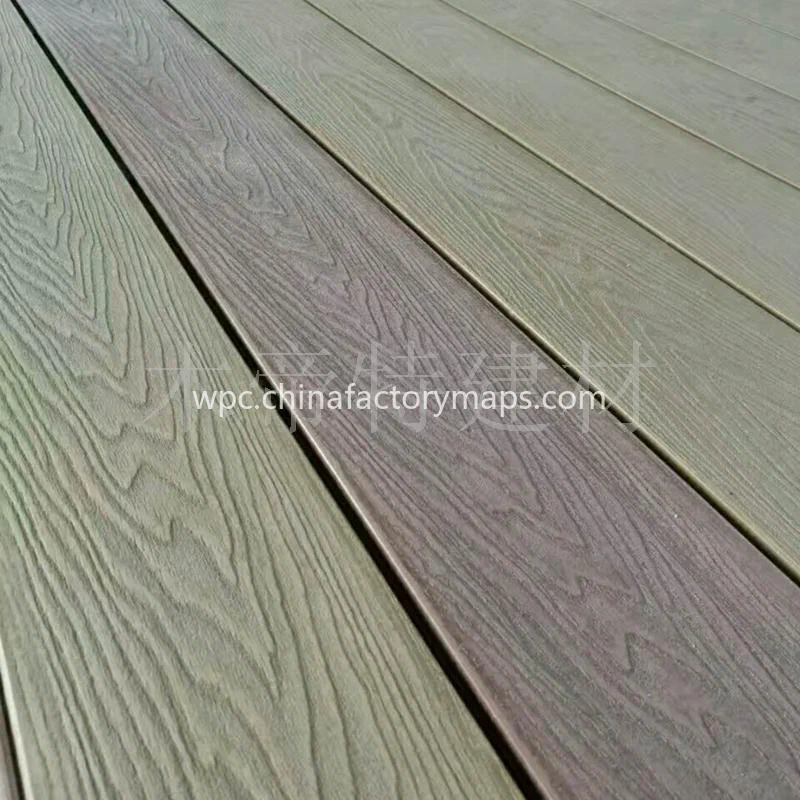
Composite decking end caps are small components, but their fit and material quality affect the finished appearance and long-term performance of a deck. For overseas buyers sourcing from China, supplier selection should cover dimensions, attachment methods, colour consistency, weather exposure and production capability. A map-based directory can help narrow the search by factory location and distance to an export port, while product checks establish whether a supplier can meet the actual specification.
1. Match the end cap to the decking profile
The first requirement is dimensional compatibility. End caps are commonly designed for a particular board profile, and products that look similar in catalogue photographs may differ in internal width, depth, wall thickness or retaining features. A cap that fits loosely can work free during use, while an overly tight design may be difficult to install or may crack under pressure. Buyers should request dimensioned drawings and confirm whether the component is intended for a solid board, a hollow-core profile or a specific co-extruded design. Measurements should include tolerances, not just nominal dimensions.
The attachment method also matters. Some caps use a press fit, while others rely on screws, adhesive or another specified fixing arrangement. Each approach has different implications for installation time, replacement and resistance to movement. Ask whether the cap is supplied as part of a matched decking system or as a separate accessory compatible with several profiles. If the boards are already selected, send a physical sample or an accurate cross-section drawing before approving production. For new projects, evaluate the cap and board together rather than treating the end fitting as an interchangeable finishing piece.
2. Specify material, colour and outdoor performance
The material must suit the intended exposure. WPC end caps may be produced from plastic compounds or other materials selected for compatibility with the decking system. Buyers should establish the exact material, whether additives or colourants are incorporated, and whether the cap is intended for outdoor use. A generic description such as weather-resistant is not a substitute for technical information about the finished component.
Colour matching deserves a separate check. The cap may be made from a different compound or production process than the board, so matching a catalogue colour name does not guarantee a uniform appearance. Request samples alongside the actual decking colour, preferably from the same intended production specification. Assess them in daylight and under the lighting conditions relevant to the project. Sustained ultraviolet exposure can fade colours, and different materials may change at different rates. Ask what performance evidence the supplier can provide and whether the cap’s colour is expected to age similarly to the board.
Thermal movement is another consideration. WPC decking expands and contracts as temperatures change, so end caps must accommodate the movement expected in the installed system. The correct clearance and fixing arrangement depend on the product design and installation instructions. Caps should not be assumed to seal a board completely against water. Moisture can still enter through joints or other openings, and trapped water may cause problems if the assembly lacks suitable drainage and ventilation. Buyers should check how the end fitting works with the specified substructure, board spacing and site conditions.

3. Verify the factory and the shipping route
China’s mapped WPC supplier clusters provide several starting points for sourcing. Guangdong has the largest listed group, including suppliers in Foshan, Guangzhou and Zhuhai. Anhui includes Xuancheng, Suzhou and Guangde, while Shandong includes Zibo, Linyi and Qingdao. Zhejiang, Shanghai and Jiangsu offer additional locations. These clusters help buyers build a shortlist, but geography alone does not establish manufacturing capability or product quality.
A map-based search becomes more useful when factory distance is considered alongside the export route. Depending on the supplier’s location and shipping arrangements, relevant ports may include Shenzhen Port, Guangzhou Port, Shanghai Port, Ningbo-Zhoushan Port or Qingdao Port. Other covered options include Tianjin Port, Xiamen Port, Taicang Port, Beibu Gulf Port, Rizhao Port, Lianyungang Port and Yingkou Port. Distance to a port is only one part of the logistics calculation: inland transport, consolidation, export handling and sailing schedules also affect the final arrangement. Request the factory address, the proposed shipping port and the party responsible for inland transport. Compare suppliers using the same delivery assumptions rather than choosing solely by the nearest port.

Before treating a directory listing as a manufacturer, ask who actually makes the end caps. A factory should be able to explain its production process, tooling arrangements, material sourcing, inspection procedures and capacity for repeat orders. Ask for photographs or a live video of the relevant production and quality-control areas, and confirm whether the displayed facility belongs to the contracting business. A trading company may still offer useful coordination and export services, but buyers should understand which entity controls production and who handles defects or replacements. Company registration, product documentation and payment details should be consistent with the proposed contractual relationship.
4. Check samples, tolerances and order controls
Sampling should test more than appearance. Fit the cap to the intended board, check for rocking or gaps, and examine whether installation damages the retaining edges. If the design uses fasteners, confirm that the holes and fixing method match the instructions. For hollow boards, inspect whether the cap covers the opening as intended without obstructing any required drainage path. A successful sample is evidence of compatibility, not proof that every production batch will match it.
Before placing a bulk order, agree on an approved sample, a dimensioned specification and the inspection criteria. Clarify acceptable variation in colour, dimensions and surface finish, as well as how defective pieces will be identified and handled. Ask whether production lots can be traced and whether the supplier can retain a reference sample for repeat orders. Packaging needs attention too: caps can become scratched, bent or mixed between colours during handling. Specify separation, protection and labelling appropriate to the product, and verify that carton quantities and part identification support receiving and stock control.
Common sourcing failures often begin with an incomplete specification. A cap may fit the sample board but not a later production batch, or a colour may match under factory lighting yet look different outdoors. Another risk is assuming that a supplier producing WPC boards also manufactures the matching accessories. Confirm the actual source of the end caps, the approval process for material substitutions and the procedure for handling dimensional changes. These checks give overseas buyers a clearer basis for comparing factories across the directory and reduce the risk of receiving components that cannot be installed as planned.
FAQ
Q: Can one end cap fit different WPC decking boards?
A: Not necessarily. Internal dimensions, board profile and attachment design vary, so compatibility should be confirmed against the exact board specification or a physical sample.
Q: What should buyers request before ordering composite decking end caps in bulk?
A: Request dimensioned drawings, material details, colour samples, installation instructions and agreed inspection criteria. Approve a sample fitted to the intended decking profile before production.
Q: Does the nearest export port always provide the lowest shipping cost?
A: No. Inland transport, cargo consolidation, handling charges and sailing schedules also affect total logistics costs. Compare complete shipping arrangements rather than port distance alone.
Related Articles
Featured Suppliers
Verified premium suppliers on our map.
