
Choosing WPC Suppliers for Composite Steps: Samples, Profiles and Fit
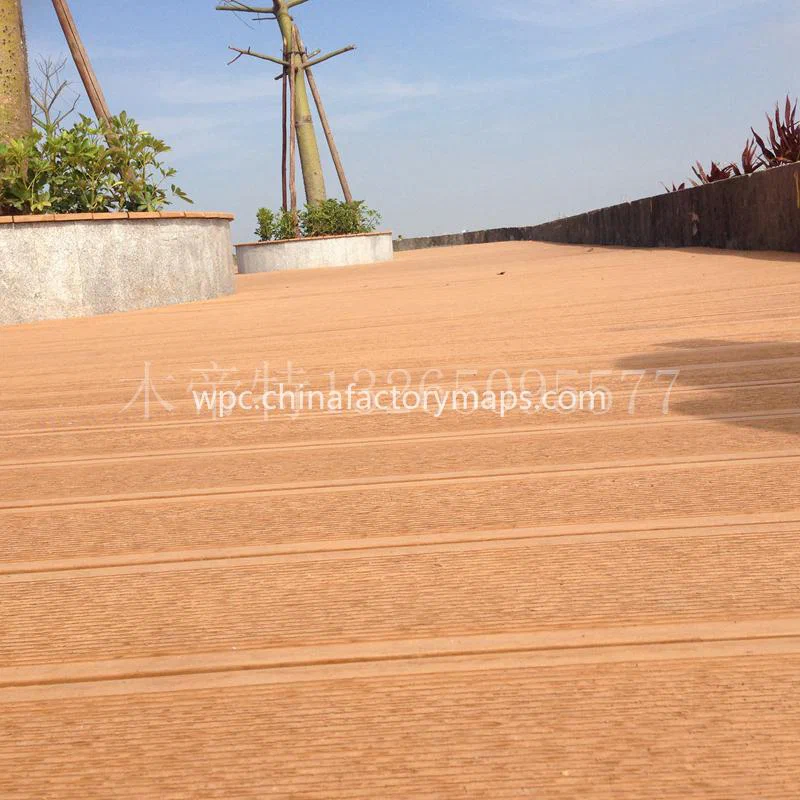
Composite steps place different demands on WPC suppliers than standard decking boards. Buyers need to assess step profiles, surface grip, dimensional consistency and compatibility with the supporting structure before narrowing a shortlist. Chinafactorymaps.com helps overseas buyers compare mapped factory locations and their proximity to export ports, providing a geographic starting point for supplier qualification.
Start with geography, then assess product fit

The location of a WPC factory affects freight planning, sample handling and the practical cost of moving finished goods to an export port. Guangdong has the largest mapped cluster, with 22 listed suppliers across Foshan, Guangzhou and Zhuhai. Anhui has nine, Shandong seven, Zhejiang six, Shanghai three and Jiangsu two. These concentrations help buyers identify where to begin their search, but supplier counts alone do not establish manufacturing quality or suitability for composite steps.

Port proximity adds another filter. A factory near Shanghai may suit shipments routed through Shanghai Port, while suppliers in Guangdong may warrant comparison against Shenzhen Port or Guangzhou Port. Zhejiang suppliers can be assessed in relation to Ningbo-Zhoushan Port, and Shandong factories against Qingdao Port. Actual transit arrangements depend on the factory address, inland transport, carrier schedules and the chosen route. A map distance is a useful screening measure, not a complete freight quotation.
Regional clustering can also help structure supplier research. A concentration of mapped factories gives buyers more opportunities to compare product specifications and sample results within a geographic area. It does not prove that neighbouring factories share equipment, raw-material sources or production standards. Anhui, for example, provides a distinct group of locations to investigate, while Zhejiang and Jiangsu offer other options for comparison. Treat cluster membership as a way to organise enquiries, then verify each factory’s own capabilities.
Vet profiles, samples and installation compatibility
The first technical check is whether the supplier manufactures components suitable for steps rather than only supplying general-purpose decking boards. Ask for drawings and dimensions covering board width, thickness, profile shape, edge treatment and available nosing or finishing components. Confirm whether the proposed design can accommodate the intended stair width and support arrangement. A supplier’s ability to produce a flat decking board does not automatically establish that it can provide a suitable step assembly.

Samples should be assessed against the intended installation conditions. Examine the surface texture, finish consistency, edge quality and visible variation between boards. If slip resistance is important, request relevant test documentation and clarify the test method and conditions rather than relying on a textured appearance. Check whether the colour and surface finish are consistent across the components required for one project. WPC can resist moisture and insect damage, but it is not indestructible; prolonged ultraviolet exposure can fade its colour, and performance varies with formulation and construction.
Installation compatibility requires equal attention. Buyers researching how to install composite decking steps should establish the required substructure, fixing method, support spacing and expansion gaps before approving a profile. WPC expands and contracts as temperatures change, so installation details must allow for movement. The supporting structure also needs suitable ventilation and drainage. Ask the supplier for written installation instructions and confirm whether the proposed fasteners, clips and finishing parts are compatible with the selected boards. These details should be settled before production, not after the shipment arrives.
Use the map to build a verifiable shortlist
Chinafactorymaps.com is most useful at the initial sourcing stage. Buyers can compare mapped locations, identify regional supplier clusters and consider distance to the export ports covered by the directory. The listed ports include Shanghai Port, Ningbo-Zhoushan Port, Shenzhen Port, Qingdao Port, Guangzhou Port and other gateways. Once a region looks practical, shortlist individual factories and request the same information from each. This creates a more meaningful comparison than selecting a supplier solely because its map pin is close to a port.
During vetting, confirm the manufacturing address, whether production is performed in-house, and which parts are outsourced. Request technical data sheets, profile drawings, sample availability and details of the factory’s quality-control process. Ask how production batches are checked for dimensions, appearance and consistency, and what inspection records can be provided before shipment. Confirm export experience for the destination market where relevant, along with packaging arrangements that protect board edges and finished surfaces during handling. The directory establishes a starting point for research; it does not replace independent verification or factory-level checks.
A practical shortlist should balance product fit against logistics rather than treating either as decisive on its own. A geographically convenient supplier may lack the required step profile, while a technically suitable factory may involve a less direct inland route to the port. Compare sample results, documented specifications, communication quality and transport arrangements before requesting a formal quotation. Confirm the quotation’s scope, including accessories, packaging and any tooling or custom-profile requirements. The final choice should be based on evidence that the supplier can make the specified components and ship them under agreed conditions.
FAQ
Q: Does a factory near an export port always offer lower shipping costs?
A: No. Inland distance is only one factor; container availability, handling, routing and carrier schedules also affect total transport costs. Obtain a route-specific quotation before making the decision.
Q: What should buyers request before ordering composite steps?
A: Request profile drawings, physical samples, relevant performance documentation and written installation guidance. Confirm expansion gaps, support requirements, fixing compatibility and the availability of matching finishing components.
Related Articles
Featured Suppliers
Verified premium suppliers on our map.
