
Comparing Chinese Poly Lumber Suppliers Before Requesting Samples
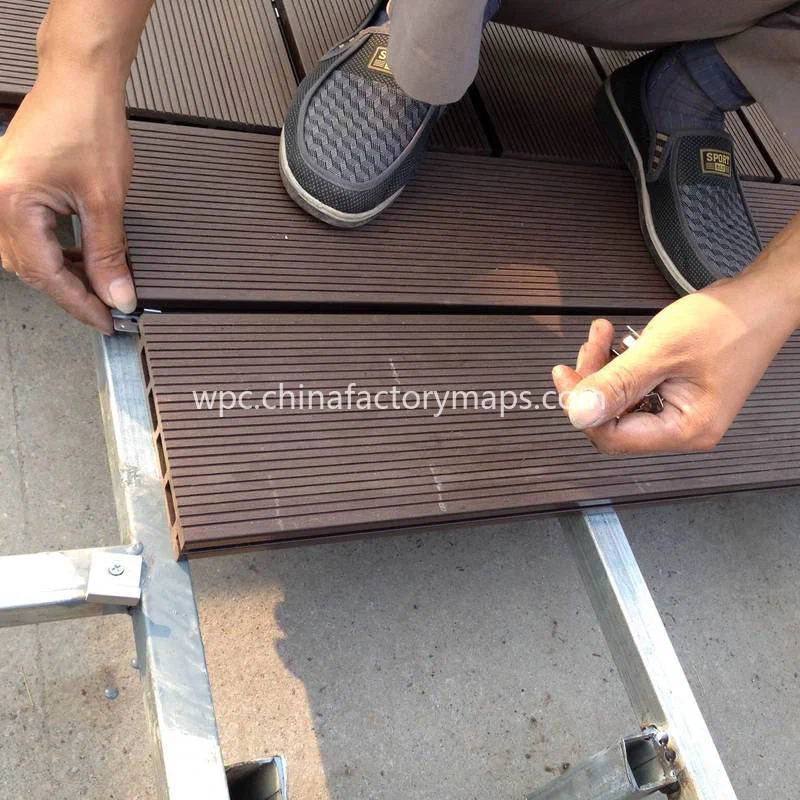
Comparing Chinese poly lumber suppliers starts with narrowing the search by geography, then checking whether each factory can meet the intended product specification. Chinafactorymaps.com maps WPC suppliers across six provincial-level regions and Shanghai, allowing overseas buyers to compare factory locations and distances to export ports before requesting samples.
Using Geography to Narrow the Supplier List
The location of a WPC factory provides useful context for supplier selection. It identifies the industrial region in which a manufacturer operates, indicates which export ports may be practical, and helps buyers organise an initial shortlist. Geography is not proof of manufacturing capability, but it makes the first stage of sourcing more systematic.
Guangdong has the largest mapped supplier cluster, with 22 listed suppliers, including factories in Foshan, Guangzhou and Zhuhai. This concentration gives buyers several geographically related manufacturers to investigate. It also makes side-by-side enquiries practical. However, suppliers in the same province should not automatically be treated as equivalent. Their production equipment, material formulations, product ranges and export experience still require individual checks.

Anhui has nine listed suppliers, including locations in Xuancheng, Suzhou and Guangde. Shandong has seven, with mapped locations including Zibo, Linyi and Qingdao. Zhejiang accounts for six suppliers, including Huzhou, Jiaxing and Hangzhou. Shanghai has three, while Jiangsu has two, including Nanjing. These clusters provide alternative starting points when a buyer wants to compare suppliers outside the largest concentration. A smaller cluster does not necessarily indicate weaker production capacity, just as a larger cluster does not establish better quality.

What Factory Location Signals About Export Logistics
Port distance is a practical screening factor, particularly for buyers arranging container shipments. A factory located near a suitable export gateway may offer a simpler inland transport route, but the nearest port on a map is not automatically the best shipping option. The relevant comparison includes the factory’s actual dispatch location, inland transport arrangements, available services and the destination requirements of the shipment.
The directory covers Shanghai Port, Ningbo-Zhoushan Port, Shenzhen Port, Qingdao Port, Guangzhou Port, Tianjin Port, Xiamen Port, Taicang Port, Beibu Gulf Port, Rizhao Port, Lianyungang Port and Yingkou Port. These locations allow buyers to assess potential export routes against the mapped supplier clusters. For example, a Guangdong factory can be compared in relation to Shenzhen Port or Guangzhou Port, while suppliers in Shandong can be assessed against Qingdao Port and Rizhao Port. Zhejiang suppliers may warrant comparison with Ningbo-Zhoushan Port.
The distance shown by a map should be treated as an initial logistics indicator, not a confirmed freight quotation or transit time. Road access, warehouse location, port congestion, shipping schedules and carrier arrangements all affect the final route. Buyers should ask suppliers for the precise factory or loading address and confirm which port they normally use for export. A factory’s registered address may differ from its actual production site.
Vetting Before Requesting Samples
Once geography has reduced the candidate list, technical verification becomes the more important task. Buyers sourcing poly lumber should establish exactly what the supplier manufactures rather than relying on broad descriptions such as composite timber or outdoor building materials. WPC products vary in polymer content, wood-fibre composition, additives, extrusion processes and intended applications. Decking boards, fencing profiles and structural-looking components may have different performance requirements.
The initial enquiry should request product specifications, available profile drawings, dimensions, surface finishes and information about the material formulation. Ask whether the factory produces solid or hollow profiles and whether the products use a capped co-extrusion structure. Where colour consistency matters, request details of available colours and production controls. Buyers should also establish whether the supplier manufactures the requested profile in-house or sources some components from another producer. This distinction affects production control and the ability to accommodate changes.
Performance claims need supporting evidence. WPC generally resists moisture and insect damage better than untreated wood, but it is not indestructible or absolutely waterproof. Temperature changes cause expansion and contraction, so installation requires suitable gaps and a ventilated supporting substructure. Sustained ultraviolet exposure can also cause colour fading. Buyers should therefore request relevant test reports, installation guidance and warranty terms, checking that the documentation applies to the actual product being sampled rather than a different product in the supplier’s catalogue.
Samples should follow a defined comparison process. Request equivalent profiles and finishes from shortlisted factories, then assess dimensions, surface consistency, colour, edge quality and visible manufacturing defects. Where practical, compare samples under the same lighting conditions. Record the product specification supplied with each sample so that differences in appearance can be traced to material or production variations. A sample is evidence of a particular production result, not a guarantee that every future batch will match it.
Applying the Map Directory to the Sourcing Workflow
Chinafactorymaps.com fits into the early supplier-screening stage. Buyers can use the mapped 49 suppliers to identify regional clusters, compare factory locations and shortlist manufacturers according to their proximity to relevant export ports. This reduces the need to begin with an unstructured list of unrelated supplier names.
A practical workflow is to select the required WPC product category, identify suitable manufacturing regions, and compare the mapped locations against likely shipping gateways. The next step is direct supplier verification. Buyers should request factory details, technical documents, production information and sample arrangements before making commercial commitments. Any supplier shortlist should retain the source of each specification and the date of the latest confirmation.
Geographic comparison is most useful when combined with consistent technical questions. Sending the same specification sheet to several factories makes differences easier to identify. It also helps separate manufacturers that can produce the required profile from those offering only similar catalogue products. For larger procurement projects, buyers can add production scheduling, packaging, container loading and quality inspection arrangements to the evaluation. The map establishes where to investigate; factory-level evidence establishes whether a supplier is suitable.

FAQ
Q: Does a larger WPC supplier cluster mean better product quality?
A: No. Cluster size indicates the number of mapped suppliers in a region, not their individual production standards or product performance.
Q: Should buyers always choose the factory closest to an export port?
A: No. Port proximity is a logistics screening factor. The actual shipping route, inland transport arrangements and service availability should also be confirmed.
Q: What should buyers check before requesting WPC samples?
A: Confirm the product profile, dimensions, material structure, surface finish and relevant performance documentation. Request samples that match the intended specification so different suppliers can be compared fairly.
Related Articles

Featured Suppliers
Verified premium suppliers on our map.
