
Composite Deck Design: Solid Boards Compared With Hollow Profiles
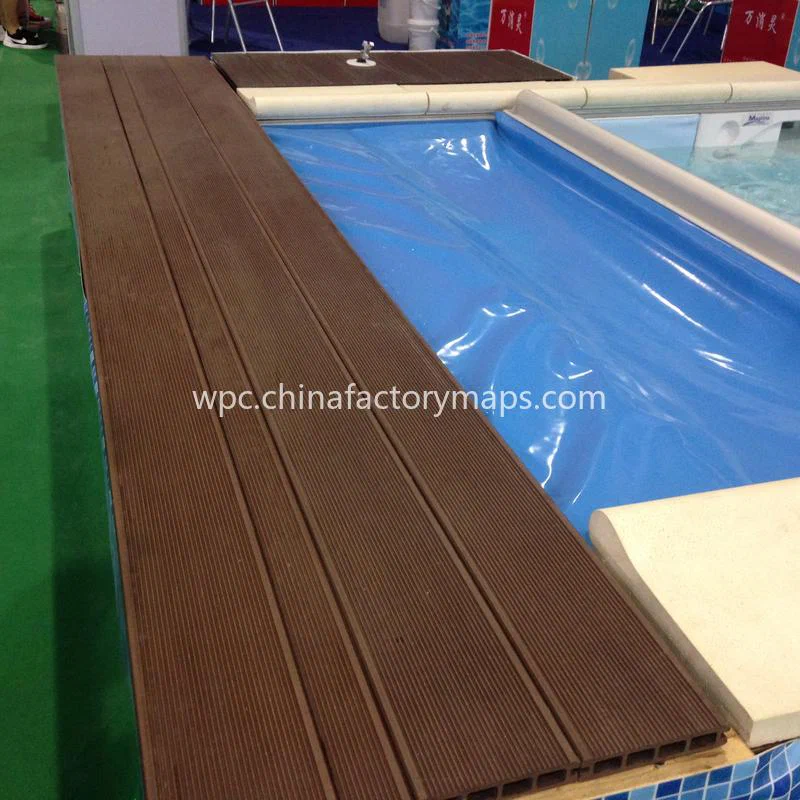
Solid and hollow WPC boards differ in internal structure, weight, material consumption and installation requirements. These differences affect how a composite deck performs under foot traffic, handles temperature changes and fits different outdoor applications. For overseas buyers, understanding the profile is also important when comparing factory specifications and sourcing options in China.
1. Construction Differences Between Solid and Hollow Boards
Solid WPC decking has a relatively dense cross-section, with material extending throughout the board. Hollow profiles contain internal cavities, usually formed as parallel chambers running along the board. The external surface may look similar, but the internal construction changes the board’s weight, stiffness and response to concentrated loads.
Solid boards generally provide greater resistance to local impact and concentrated loading when dimensions and material formulations are comparable. This makes them suitable for areas where furniture, equipment or frequent foot traffic may place pressure on individual boards. Their greater material content also increases board weight, which affects handling, transportation and the quantity of material used in production.
Hollow boards reduce material consumption through their internal cavities. They are often easier to handle over large installation areas and can reduce the weight of the finished deck. However, the cavity arrangement matters. Wall thickness, chamber shape and the spacing between internal supports influence bending performance. A hollow board with thin internal walls should not be assumed to perform like a heavier profile simply because its external dimensions are similar.
Buyers reviewing composite deck design ideas should therefore compare cross-sectional drawings rather than relying on product photographs. A profile drawing reveals the number of chambers, wall thickness and overall geometry. These details provide a more useful starting point for evaluating structural suitability.
2. Performance, Installation and Application

The choice between solid and hollow profiles depends partly on how the deck will be used. Solid boards are often considered for public walkways, commercial terraces and other locations where heavier use is expected. They can also be useful where the board ends or edges remain visible, since a solid cross-section does not expose internal chambers.
Hollow profiles are commonly used for residential balconies, garden platforms and other outdoor spaces with ordinary pedestrian traffic. Their lower weight can simplify handling, particularly on projects involving elevated platforms or extensive board coverage. They may also suit projects where material efficiency is an important purchasing consideration. However, hollow construction is not automatically appropriate for every elevated or high-load application. The supporting structure and the manufacturer’s tested load limits remain decisive.
Neither profile eliminates the need for a properly designed substructure. WPC expands and contracts as temperatures change. Installers must leave the specified gaps between boards and at fixed boundaries, allowing for movement without causing buckling or excessive pressure. End gaps also matter, especially on long runs exposed to direct sunlight.
Ventilation beneath the decking is equally important. A suitable joist arrangement should allow air to circulate and water to drain rather than trapping moisture below the boards. Solid boards do not make poor drainage acceptable, while hollow boards require attention to their internal openings and exposed ends. Depending on the profile, end caps or other finishing components may be needed to limit debris and insect access.
Fastening methods should match the board design. Some products use concealed clips fitted into side grooves, while others permit face fastening with specified screws. Solid boards may offer more flexibility for certain edge or stair details, but screw positions and embedment requirements still need to follow the manufacturer’s instructions. Hollow boards require particular attention to clip compatibility and the location of supporting joists. Fasteners should not be selected solely by appearance or price.
3. Climate, Surface Performance and Supplier Evaluation
Climate exposure introduces another set of differences. WPC contains wood-based material and a polymer component, so it generally resists moisture-related deterioration and insect attack better than untreated timber. It is not indestructible or completely waterproof. Water can collect around poorly detailed joints, trapped debris or inadequately ventilated structures. Correct installation remains essential in humid and rainy locations.

Sustained ultraviolet exposure can also change the appearance of either profile. Colour fading is possible, particularly during prolonged exposure to strong sunlight. Capped or co-extruded products may provide additional surface protection, depending on their construction, but they should not be treated as immune to weathering. Buyers should request information about the surface layer, colour stability testing and the conditions covered by any product warranty.
For sourcing, China’s mapped WPC manufacturing clusters provide several geographical starting points. Guangdong has the largest listed group, with suppliers mapped around Foshan, Guangzhou and Zhuhai. Anhui includes Xuancheng, Suzhou and Guangde, while Shandong’s mapped locations include Zibo, Linyi and Qingdao. Zhejiang covers Huzhou, Jiaxing and Hangzhou. Shanghai and Jiangsu, including Nanjing, provide additional mapped options.
Factory location is relevant to logistics, but it does not establish product quality. The directory maps suppliers against nearby export ports, including Shanghai Port, Ningbo-Zhoushan Port, Shenzhen Port, Qingdao Port and Guangzhou Port. Buyers can use this information to compare potential inland transport routes and port access before requesting quotations.
A useful supplier comparison should include more than the quoted board dimensions. Request cross-sectional drawings, material composition, board weight per unit length, bending or load-test results and installation specifications. Ask whether the quoted product is solid, hollow or co-extruded, and whether the test data applies to the exact profile under consideration. Samples can help assess surface texture, colour consistency and machining quality. Production consistency should also be checked across batches.
The final specification should reflect the intended application rather than a general preference for one construction type. Solid profiles offer an advantage where concentrated loading, exposed edges or heavier-duty details are important. Hollow profiles can suit lighter residential applications where reduced material use and easier handling matter. In both cases, the quality of the formulation, profile geometry, fastening system and supporting structure determines whether the finished deck performs as intended.
FAQ
Q: Are solid WPC decking boards stronger than hollow boards?
A: Solid boards generally offer better resistance to concentrated loads when comparable materials and dimensions are used. Actual performance depends on board geometry, formulation and supporting joist spacing.
Q: Are hollow WPC decking boards suitable for balconies?
A: Yes, hollow profiles can suit residential balconies when their load ratings, fastening requirements and installation specifications match the project. Adequate drainage and ventilation beneath the deck are essential.
Q: Should buyers choose solid or hollow boards for outdoor commercial projects?
A: Solid boards are often worth evaluating for areas with heavier foot traffic or concentrated loads. Buyers should compare tested load capacity, profile dimensions and installation requirements before selecting a product.
Related Articles
Featured Suppliers
Verified premium suppliers on our map.
