
Composite Deck Pricing for Coastal and Waterfront Projects
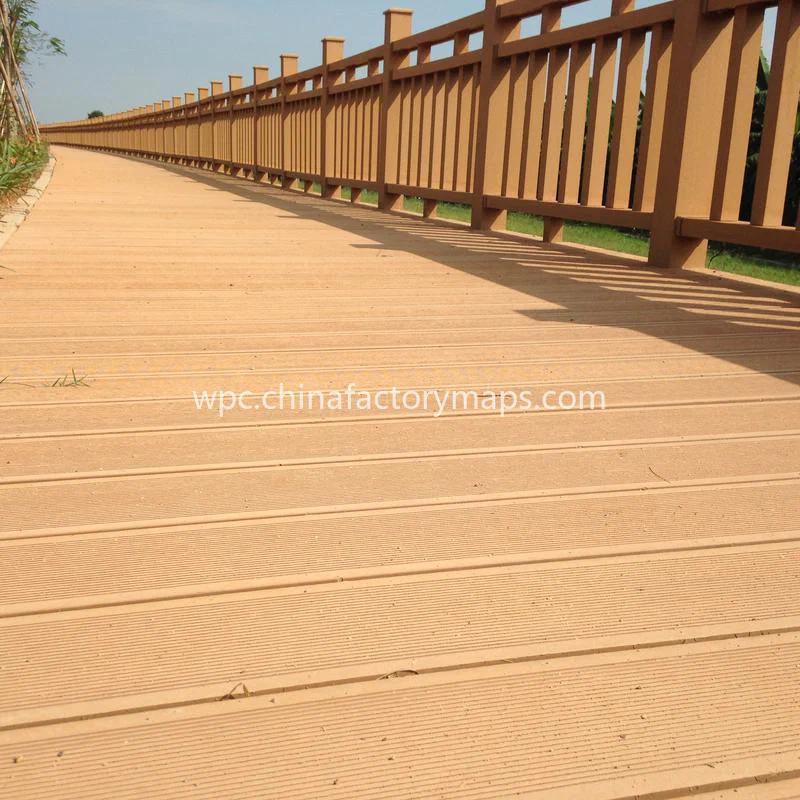
Coastal and waterfront decking is exposed to conditions that can shorten the service life of ordinary outdoor materials. Salt carried by sea air, persistent moisture, strong ultraviolet radiation and heavy pedestrian use all affect product selection. For buyers comparing composite deck pricing, the relevant question is not simply the cost per board, but how the specification performs in its intended environment.
What coastal exposure means for decking specifications
Salt air creates a demanding environment for outdoor structures. Although wood-plastic composite (WPC) does not corrode like untreated metal, its polymer and wood-fibre composition still requires careful specification. Prolonged exposure to moisture, airborne salt and temperature changes can affect the surface and the supporting installation. Buyers should request information about the formulation, surface finish and intended exposure conditions rather than relying on a general weather-resistant description.
Waterfront promenades, marina facilities and hotel terraces also experience frequent wetting. WPC offers resistance to moisture and insect damage compared with conventional timber, but it is not completely waterproof or immune to deterioration. Standing water, poorly drained joints and inadequate ventilation beneath the deck can create problems. A suitable specification should identify drainage requirements, substructure materials and the recommended installation clearance. These details matter as much as the board itself.

Temperature variation introduces another consideration. Composite boards expand and contract as temperatures change, making correct spacing essential. Coastal locations with significant seasonal temperature differences require installation guidance that accounts for both summer heat and cooler conditions. Buyers should request the manufacturer’s expansion allowances, recommended joist spacing, fastening method and maximum unsupported span. A board that performs well in a mild climate may require a different installation arrangement in a location exposed to seasonal extremes.
Matching board performance to project conditions
Freeze-thaw exposure changes the requirements further. Waterfront developments in colder climates need decking that can tolerate repeated wetting and freezing without developing surface damage or structural weakness. Buyers should ask suppliers for relevant cold-weather performance information and clarify whether testing reflects the intended installation environment. Water absorption, dimensional stability and the behaviour of the surface after repeated temperature cycling deserve attention. Installation must also prevent trapped water from accumulating around the supporting structure.
High UV exposure is particularly relevant to open waterfront terraces, piers and poolside areas. Sustained sunlight can cause composite colours to fade, especially during the early stages of outdoor exposure. Capped co-extrusion products may offer additional surface protection, depending on their construction and formulation. However, a protective cap does not eliminate colour change. Procurement teams should request outdoor weathering information, available colour samples and details of the surface layer before specifying boards for large, visually consistent installations.

Foot traffic determines another part of the specification. Public waterfront walkways, restaurant terraces and resort facilities face more frequent use than private residential decks. Surface texture, slip resistance when wet, abrasion performance and board stiffness should therefore receive particular attention. Buyers should request test information for slip resistance under relevant wet conditions rather than treating a textured finish as proof of safety. For commercial projects, replacement access and consistency between production batches can also affect long-term maintenance planning.
Comparing Chinese production regions and export access

China’s mapped WPC supplier base offers several regional sourcing options. Guangdong has the largest listed cluster, with suppliers around Foshan, Guangzhou and Zhuhai. Its position is relevant to buyers sourcing outdoor products for coastal developments and export-oriented projects. Shenzhen Port and Guangzhou Port provide important shipping reference points when comparing factory locations. Guangdong suppliers are worth including in enquiries for capped decking, outdoor surface products and projects requiring coordination with other exterior building materials.
Anhui has another substantial supplier cluster, including Xuancheng, Suzhou and Guangde. Buyers can compare these manufacturers with suppliers in Guangdong when assessing board construction, production capabilities and logistics. Shandong, with mapped suppliers around Zibo, Linyi and Qingdao, is another relevant sourcing region. Qingdao Port and Rizhao Port are useful export reference points for northern suppliers. Zhejiang, including Huzhou, Jiaxing and Hangzhou, adds further options, with Ningbo-Zhoushan Port and Shanghai Port relevant to shipping comparisons. Jiangsu and Shanghai also appear in the directory, giving buyers additional locations to assess against Taicang Port and Shanghai Port.

Building a comparable procurement enquiry
A useful supplier enquiry should describe the project before requesting a quotation. Specify whether the decking is intended for a marina, public promenade, hotel terrace, poolside area or private waterfront property. Include the expected exposure to salt air, UV radiation, freezing temperatures and pedestrian traffic. Ask manufacturers to identify the board composition, profile dimensions, surface treatment, colour options and whether the product uses a capped or uncapped construction. This makes quotations easier to compare on an equivalent technical basis.
The commercial comparison should cover more than the ex-factory board price. Request separate information on packaging, accessories, fastening systems, installation instructions and export arrangements. Shipping distance to the nearest suitable port can influence the landed cost, particularly for bulky decking orders. A geographically convenient factory is not automatically the best technical match, and a lower board quotation may exclude components needed for installation. Comparing mapped supplier locations with product specifications helps procurement teams establish a more realistic shortlist before requesting samples or negotiating order terms.
FAQ
Q: Is WPC decking suitable for coastal and waterfront projects?
A: Yes, provided the product and installation are specified for the exposure conditions. Buyers should assess moisture resistance, UV performance, drainage, ventilation and the suitability of the supporting structure.
Q: Which Chinese regions should buyers compare when sourcing coastal composite decking?
A: Guangdong, Anhui, Shandong and Zhejiang have the largest mapped supplier clusters. Factory distance to ports such as Shenzhen, Guangzhou, Qingdao, Ningbo-Zhoushan and Shanghai can help buyers assess export logistics.
Related Articles
Featured Suppliers
Verified premium suppliers on our map.
