
Composite Deck vs Concrete Patio: Comparing Installation Methods
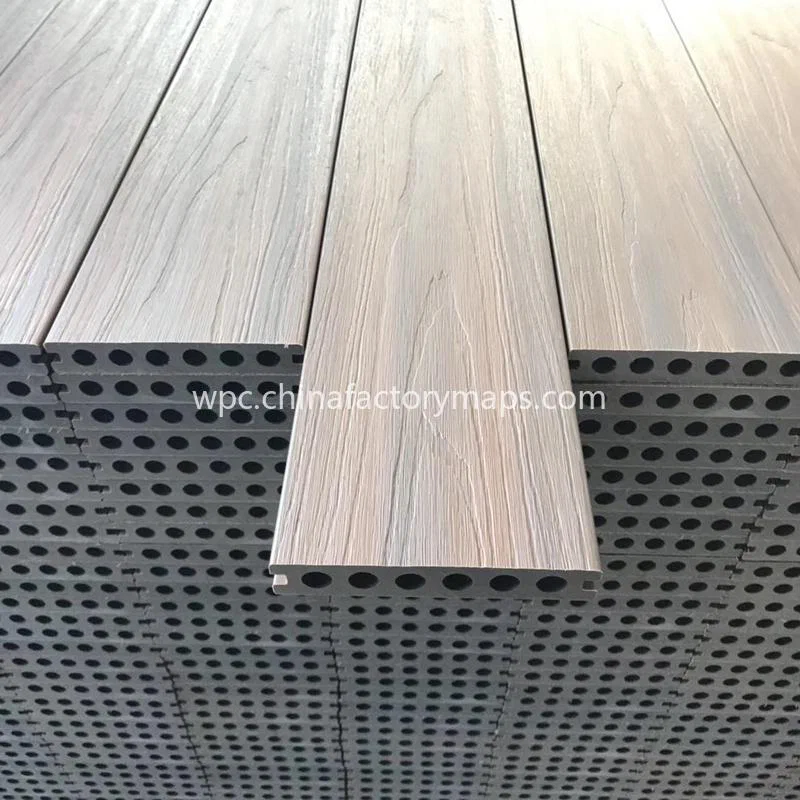
Composite decking and concrete patios use different structural systems, so their installation requirements and site constraints are not interchangeable. The choice affects ground preparation, drainage, thermal movement, fastening methods and the work required before the finished surface can be used.
1. Different structural systems, different preparation
A WPC composite deck is generally installed as a raised or ground-level board system supported by joists, bearers or an engineered substructure. The boards form the walking surface, while the supporting frame transfers loads to the ground or supporting structure. Concrete patios use a different approach: a prepared base supports a poured concrete slab, which becomes both the structural element and the finished surface. These differences determine how each option responds to uneven ground, changes in moisture and settlement.
For composite decking, site preparation must account for the supporting frame as well as the boards. The ground needs adequate drainage and a stable bearing surface. Where the deck is close to ground level, sufficient clearance and ventilation beneath the boards help prevent moisture from remaining trapped around the substructure. Concrete installation requires excavation, compaction and preparation of a suitable base before pouring. The slab also needs appropriate thickness, reinforcement where specified, and control joints to accommodate shrinkage and movement. Poor preparation can cause problems in either system, but the failure points differ.
2. Installation methods and material behaviour
Composite boards are typically fixed to joists using manufacturer-specified clips, screws or other fastening systems. Hidden clips can create a consistent gap between boards, while face fixing may be required in certain locations or for particular board profiles. Fastener selection matters because the fixing must suit the board material and supporting frame. Incorrect screw placement, insufficient edge clearance or excessive tightening can restrict movement or damage the board. Installation instructions should also specify joist spacing, end-to-end gaps and the treatment of board ends.

Thermal movement is a central consideration. WPC expands and contracts as temperatures change, so installers must allow for movement at board ends, edges and fixed boundaries. The required clearance depends on the product composition, board dimensions and installation temperature. Concrete behaves differently. It undergoes drying shrinkage and can develop cracks if joints, curing and base preparation are poorly managed. It does not require board-to-board expansion gaps, but its larger continuous surface needs planned movement and control joints. Both systems therefore require dimensional planning before installation rather than adjustments after the surface is complete.
Drainage also affects the installation method. Composite decking is not automatically waterproof. Water can pass through board gaps, but the supporting area must provide a route for runoff and prevent standing water. A ventilated substructure is particularly important in damp locations. Concrete patios generally use a designed surface fall to direct rainwater away from buildings and prevent pooling. The finished surface must also connect properly with adjacent thresholds, drains and landscaping. Neither material compensates for an incorrectly designed drainage system.
3. Comparing cost, suitability and long-term performance
The composite deck vs concrete patio cost comparison should include more than the visible surface material. Composite installation involves boards, supporting joists, clips or screws, edge finishing and any required substructure. Raised installations may also need additional support, access steps or perimeter detailing. Concrete costs are influenced by excavation, base preparation, formwork, reinforcement, concrete placement, finishing and curing. Difficult access or extensive ground preparation can change the relative cost substantially. A straightforward slab may require less component assembly, while a raised deck can solve site-level problems without extensive concrete work.
The site itself often determines which method is more practical. Composite decking suits elevated outdoor spaces, balconies with suitable structural capacity, poolside areas and locations where a board-based finish is preferred. Its relatively open surface allows water to drain between boards, although the supporting structure still needs appropriate drainage and ventilation. Concrete patios suit ground-supported areas where a continuous, firm surface is required, including spaces intended for heavy fixed furniture or equipment. They also provide flexibility in surface texture and finish. However, concrete is heavy, and its use on balconies or other elevated structures requires specific structural assessment.
Long-term performance depends on exposure and maintenance conditions. WPC resists moisture-related deterioration and insect attack better than untreated timber, but prolonged water exposure, poor ventilation and unsuitable installation can still cause problems. Sustained UV exposure can fade board colour, with the degree of change depending on formulation and surface treatment. Concrete does not have the same board movement or UV-related colour behaviour, but it can crack, stain, develop surface wear or suffer damage from freeze-thaw exposure where relevant. Cleaning requirements vary with the finish and surrounding environment. Neither option should be treated as maintenance-free.

For overseas buyers sourcing WPC products, factory location can also affect procurement planning. Chinafactorymaps.com plots suppliers across Guangdong, Anhui, Shandong, Zhejiang, Shanghai and Jiangsu, allowing buyers to compare manufacturing locations with nearby export ports. Guangdong has the largest mapped supplier cluster, including Foshan, Guangzhou and Zhuhai, while Anhui includes Xuancheng, Suzhou and Guangde. Shandong listings include Zibo, Linyi and Qingdao; Zhejiang includes Huzhou, Jiaxing and Hangzhou. Shanghai and Jiangsu are also represented. Port proximity is relevant to freight planning, but it does not establish product suitability or installation quality. Buyers should request technical data covering board dimensions, joist requirements, fastening compatibility, thermal expansion allowances, UV performance and recommended applications before comparing quotations.

FAQ
Q: Is composite decking easier to install than a concrete patio?
A: Composite decking avoids concrete pouring and curing, but requires accurate substructure installation, fastening and expansion gaps. The easier method depends on ground conditions, access and the finished layout.
Q: Can WPC decking be installed directly on concrete?
A: Yes, where the concrete base is stable, adequately drained and suitable for the proposed support system. The installation must still provide the specified ventilation, drainage clearance and board expansion gaps.
Related Articles
Featured Suppliers
Verified premium suppliers on our map.
