
Composite Decking Clearance: Comparing End Profiles and Cut Edges
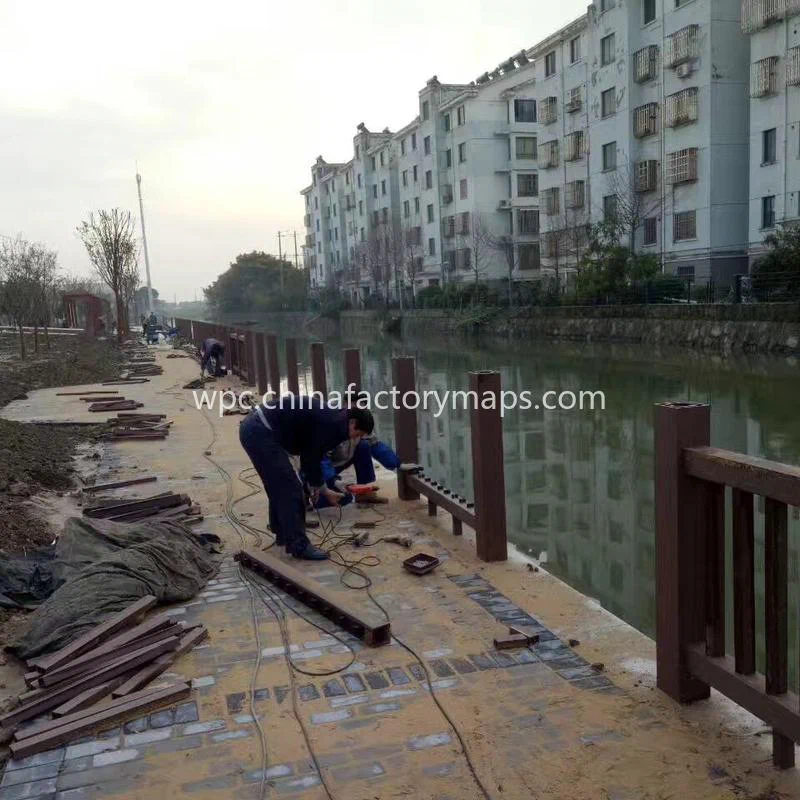
Composite decking clearance decisions depend on more than board price or visible finish. The end profile, exposed cut edge and installation method affect appearance, moisture exposure and long-term movement. For overseas buyers comparing Chinese WPC suppliers, these details help distinguish boards suited to exposed edges from those designed for concealed or finished perimeter applications.
Solid and hollow WPC boards present different trade-offs at the ends. Solid profiles provide more material for trimming and can simplify certain edge details, but they are generally heavier and use more material per board. Hollow profiles reduce weight and material consumption, yet their open cavities require deliberate treatment at exposed ends. Matching end caps can cover the openings and create a consistent finish, while compatible fascia boards can conceal the perimeter of a deck. These components must match the board geometry and allow for the product’s movement. A cap that fits tightly at installation may become stressed as temperatures change. Buyers should confirm whether the supplier offers matching caps, fascia, corner pieces or other finishing components, and whether these are designed for the exact profile being quoted. A clean factory-cut edge is not automatically a finished edge, particularly where hollow chambers remain visible.

Cut-edge quality also depends on the board’s composition and surface construction. Conventional uncapped WPC exposes its wood-plastic mixture at the cut, while capped or co-extruded decking has a protective outer layer over the core. Cutting through that layer exposes the underlying material, so the end may differ in colour and texture from the finished face. Co-extruded products can improve resistance to surface staining and moisture penetration, but the cap does not make every cut edge impervious to water or eliminate the need for suitable detailing. WPC resists moisture and insect damage better than untreated timber in many outdoor applications, yet prolonged water retention, poor drainage and unsuitable installation can still cause problems. Thermal expansion and contraction must also be allowed for through the specified end gaps, perimeter clearances and fastening method. A ventilated substructure helps drainage and drying, while fasteners and clips should follow the board manufacturer’s requirements. Sustained UV exposure can fade colour, including on capped surfaces, so cut edges and replacement boards may become more noticeable over time.

For sourcing, compare complete edge-treatment systems rather than board profiles alone. Ask for cross-sectional drawings, end-cap dimensions, installation instructions and photographs of finished deck perimeters. Confirm whether the quoted product is solid, hollow, capped or uncapped, and whether the supplier’s cutting guidance permits exposed ends or requires additional finishing. Buyers using chinafactorymaps.com can compare mapped WPC suppliers across Guangdong, Anhui, Shandong, Zhejiang, Shanghai and Jiangsu, then assess distance to relevant export ports such as Shenzhen Port, Shanghai Port or Ningbo-Zhoushan Port. Port proximity can inform freight planning, but it does not establish product quality or compatibility. The practical comparison is whether the proposed profile, finishing accessories and installation details work together under the project’s climate and layout. This makes composite decking clearance a specification check, not simply a search for discounted boards.

FAQ
Q: Are hollow WPC decking boards suitable for exposed deck edges?
A: Yes, provided the open chambers are finished with compatible end caps or another approved detail. Check that the treatment accommodates thermal movement and does not obstruct drainage.
Q: Does capped WPC decking eliminate the need to finish cut edges?
A: No. Cutting exposes the core beneath the cap, so the edge may need a matching finishing component or another manufacturer-approved treatment.
Related Articles
Featured Suppliers
Verified premium suppliers on our map.
