
Composite Decking Gates: Comparing Frame and Slat Construction
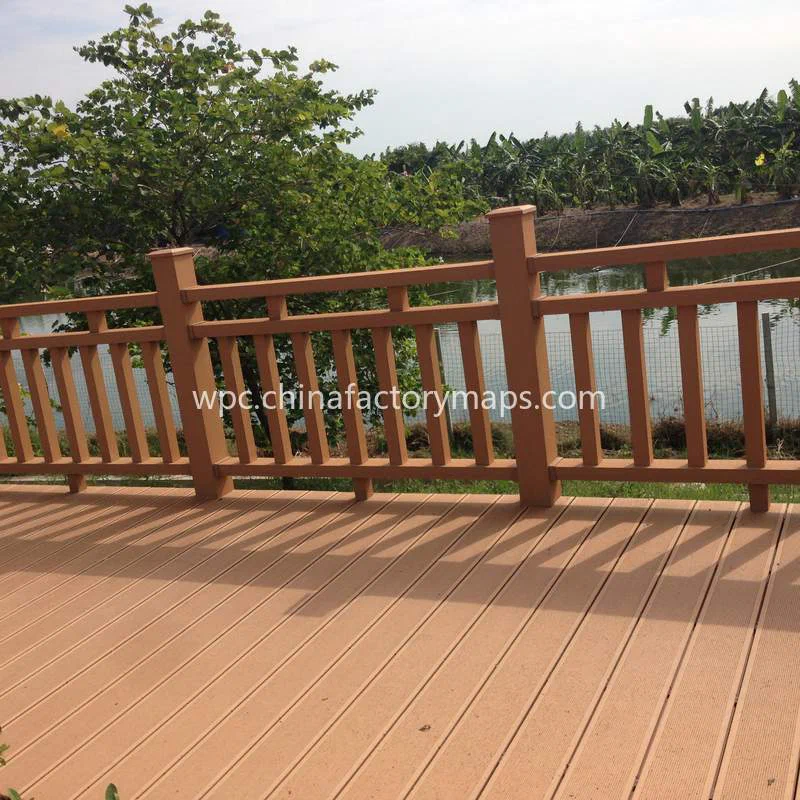
A composite decking gate combines a supporting frame with infill slats made from wood-plastic composite (WPC) or other outdoor-grade materials. The choice between frame and slat construction affects gate weight, rigidity, privacy, thermal movement and hardware requirements. Buyers sourcing from Chinese manufacturers should assess these components separately rather than treating the finished gate as a single material product.
Frame construction: WPC or metal?
The frame carries the mechanical load of the gate. It supports the slats, transfers weight to the hinges and maintains alignment during repeated opening and closing. Two common approaches are a metal supporting frame with WPC infill and a frame constructed primarily from WPC profiles. Each has different engineering requirements. Aluminium frames offer a relatively low-weight supporting structure and are not subject to the same moisture-related deterioration as untreated steel. Steel can provide substantial rigidity, although corrosion protection becomes important in exposed installations. WPC frames offer closer visual consistency with the infill but require careful attention to joint design, reinforcement and fixing points.

A WPC frame should not automatically be treated as equivalent to a metal structural frame. Composite profiles can vary in wall thickness, internal geometry and stiffness. Hollow profiles reduce material weight but may require internal reinforcement or purpose-designed connectors where hinges and latches attach. Solid profiles provide more material around fixing locations, although their additional weight can affect hinge selection. Buyers should request section drawings showing internal cavities, wall dimensions and reinforcement arrangements. The connection between the frame members also matters. Mechanical brackets, internal inserts and suitable fasteners provide more predictable assembly than relying on adhesive joints alone, particularly where the gate experiences repeated movement or wind loading.
Slat construction and infill choices
Slats determine the gate’s appearance, screening performance and exposure to wind. Horizontal slats create a familiar decking-style appearance and can visually match an adjoining terrace. Vertical slats provide another layout, often with a more conventional fence or garden-gate appearance. Closely spaced boards offer greater visual privacy, while wider gaps allow more airflow and reduce the amount of material used. However, a largely solid infill presents a greater wind load than an open arrangement. The frame, hinges, posts and anchoring points must be designed for the intended installation rather than selected independently.
The slats themselves can be hollow or solid WPC profiles. Hollow boards are generally lighter, which can help limit the total gate weight, but their exposed ends and fixing positions need appropriate treatment. Fasteners should not be placed arbitrarily through thin profile walls. Solid boards offer more material for mechanical attachment but increase the load carried by the frame and hinges. Profile dimensions, board orientation and fastening methods should be agreed before production. A gate assembled from standard decking boards may require additional machining, end caps or dedicated connectors to achieve suitable edge finishes. Buyers should also check whether the proposed profiles were developed for vertical gate use or adapted from products intended primarily for horizontal decking.
Thermal movement is a significant consideration in both frame and slat construction. WPC expands and contracts as temperatures change, and long slats can accumulate noticeable movement across their length. The design needs suitable expansion gaps, allowances around frame connections and clearance between the moving gate and fixed posts. Fasteners should hold components securely without unintentionally preventing the movement anticipated by the manufacturer’s installation specifications. A metal frame and WPC infill also respond differently to temperature changes, so rigidly constraining every connection can create stress around fixing points. Ventilation behind and around the profiles helps limit moisture retention. Drainage openings and suitable clearances are important where rainwater could collect inside hollow sections.
Matching construction to sourcing requirements
The choice between frame and slat systems should reflect the installation environment. A lightweight pedestrian gate with an open slat arrangement may suit a relatively simple frame design. A wider entrance gate, a privacy-focused installation or a location exposed to strong winds requires closer attention to structural reinforcement and post connections. Larger gates also place greater demands on hinges because the weight acts at a distance from the supporting post. Adjustable hinges can help with alignment, but they cannot compensate for an undersized frame or poorly anchored posts. Buyers should establish the intended gate width, height, opening direction and expected exposure before requesting manufacturing quotations.

Surface performance deserves separate evaluation. WPC generally resists moisture absorption and insect damage better than untreated natural timber, but it is not indestructible or absolutely waterproof. Prolonged exposure to moisture, poor drainage and unsuitable connections can still create problems. Sustained ultraviolet exposure can also cause colour fading, particularly in products without an effective protective surface layer. Capped or co-extruded profiles may offer additional surface protection, depending on their construction and formulation. However, a capped slat does not eliminate the need for suitable frame engineering, drainage or correct installation. Buyers comparing samples should examine colour consistency, surface finish, edge treatment and the manufacturer’s information on outdoor exposure.
China’s mapped WPC supplier clusters provide several sourcing routes for comparing these construction options. Guangdong has the largest listed cluster, with suppliers in Foshan, Guangzhou and Zhuhai. Anhui includes Xuancheng, Suzhou and Guangde, while Shandong’s mapped locations include Zibo, Linyi and Qingdao. Zhejiang covers Huzhou, Jiaxing and Hangzhou. Shanghai and Jiangsu, including Nanjing, provide additional locations for supplier comparison. These geographic differences matter when planning factory visits, consolidating components or assessing export logistics. Buyers can compare mapped suppliers by province and consider their distance from relevant ports, including Shenzhen Port, Guangzhou Port, Shanghai Port, Ningbo-Zhoushan Port and Qingdao Port. Proximity is a logistics consideration, not proof of manufacturing capability.

Before confirming an order, request a complete construction specification rather than relying on photographs of finished gates. The specification should identify frame material, slat profile, wall thickness, reinforcement, joint details, fastener type, hinge capacity and surface treatment. Ask for drawings showing expansion clearances and the connection between the gate and its supporting posts. Sample evaluation should include checking whether slats remain aligned, whether fasteners have adequate support and whether the latch operates without binding. Where possible, assess a representative assembled section rather than individual loose boards. Packaging also deserves attention because long profiles, exposed corners and finished surfaces can be damaged during handling. These checks help distinguish a gate engineered as a complete assembly from a collection of compatible-looking decking components.
FAQ
Q: Is a metal frame or WPC frame better for a composite decking gate?
A: A metal frame generally provides a more predictable supporting structure, particularly for larger gates. A WPC frame can provide a consistent appearance but needs appropriate reinforcement, joint design and hinge attachment.
Q: Can ordinary WPC decking boards be used as gate slats?
A: They can be suitable if their profile dimensions, fastening requirements and structural characteristics match the gate design. Hollow boards, thermal movement and exposed ends require particular attention.
Featured Suppliers
Verified premium suppliers on our map.
