
Composite Decking Ideas for Coastal Homes and Outdoor Spaces
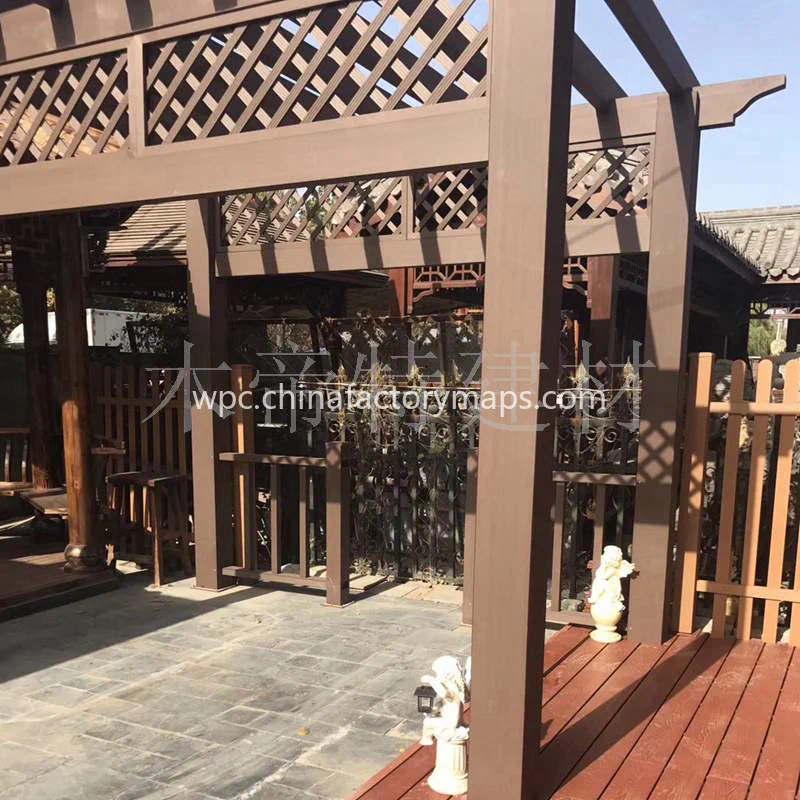
Composite decking for coastal homes must be specified around exposure rather than appearance alone. Salt carried by sea air, strong sunlight, changing temperatures and frequent foot traffic all affect board selection, installation details and long-term performance. Buyers sourcing from China should assess the intended application before comparing factory locations and product ranges.
Decking choices for coastal conditions
For seaside terraces, balconies and outdoor entertaining areas, moisture resistance is an important starting point. Wood-plastic composite (WPC) resists moisture and insect damage better than untreated timber, making it suitable for many exposed outdoor settings. However, it is not indestructible. Salt deposits, standing water and poor drainage can still affect the installation and its components. Buyers should ask manufacturers about the board’s composition, surface finish, drainage requirements and suitability for prolonged coastal exposure. For projects close to the shoreline, sample testing and clear installation instructions are more useful than broad claims about weather resistance.

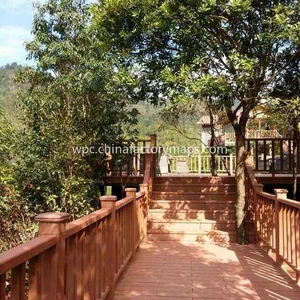
Appearance also influences the specification. Homeowners often compare composite decking ideas pictures to evaluate wood-grain textures, board colours, contrasting borders and different laying patterns. Lighter finishes can reduce the visual prominence of surface dust, while darker boards may absorb more heat in direct sunlight. Colour stability deserves particular attention in exposed coastal locations. Ask suppliers for information about UV protection, expected colour change and available capped or co-extruded surfaces. Sustained UV exposure can cause fading, even in products designed for outdoor use.

Matching the board to the project
Poolside decks, waterfront restaurants and shared residential terraces place different demands on the surface. Wet areas need a finish that provides suitable slip resistance under expected conditions. Busy public spaces also require attention to surface wear, board thickness, span limits and the supporting joist system. In colder locations, freeze-thaw exposure makes drainage and water management especially important. Buyers should request technical information covering installation temperature, expansion gaps, joist spacing and fastening methods. WPC expands and contracts with temperature, so boards need adequate spacing and a ventilated substructure. A visually attractive board cannot compensate for an installation that traps water or restricts movement.

China’s mapped supplier clusters offer several geographic starting points. Guangdong has the largest listed group, with suppliers around Foshan, Guangzhou and Zhuhai. This region is relevant to buyers investigating outdoor products for warm, humid and coastal applications. Zhejiang, including Huzhou and Jiaxing, provides another sourcing area to compare. Anhui, with suppliers around Xuancheng, Suzhou and Guangde, adds further options. The directory also maps producers in Shandong, Jiangsu and Shanghai, allowing buyers to compare regional supply coverage rather than treating China as a single manufacturing location.
Factory location and export planning

Port distance can affect the practical sourcing decision, particularly for container-based orders. Guangdong suppliers can be assessed against Shenzhen Port and Guangzhou Port, while Zhejiang factories can be compared with Ningbo-Zhoushan Port. Shanghai Port and Taicang Port are relevant reference points for suppliers in Shanghai and Jiangsu. Shandong buyers can examine access to Qingdao Port and Rizhao Port. These geographic relationships help narrow a shortlist, but distance alone does not establish freight cost or shipping time. Inland transport, factory capacity, consolidation arrangements and the final destination also matter. Before placing an order, buyers should request physical samples, confirm production specifications and review packaging suitable for international transport.
FAQ
Q: Is WPC decking suitable for coastal homes?
A: Yes. WPC resists moisture and insects, but coastal buyers should also check drainage, salt exposure, UV performance and installation requirements.
Q: Which composite decking finish is suitable for poolside areas?
A: A textured surface with documented slip-resistance performance is a sensible starting point. The final choice should account for wet-use conditions and cleaning requirements.
Q: Which Chinese regions can buyers compare when sourcing outdoor decking?
A: Guangdong, Zhejiang, Anhui, Shandong, Shanghai and Jiangsu are the six mapped supplier regions on the directory.
Related Articles
Featured Suppliers
Verified premium suppliers on our map.
