
Composite Decking Prices per m² for Large Garden Projects
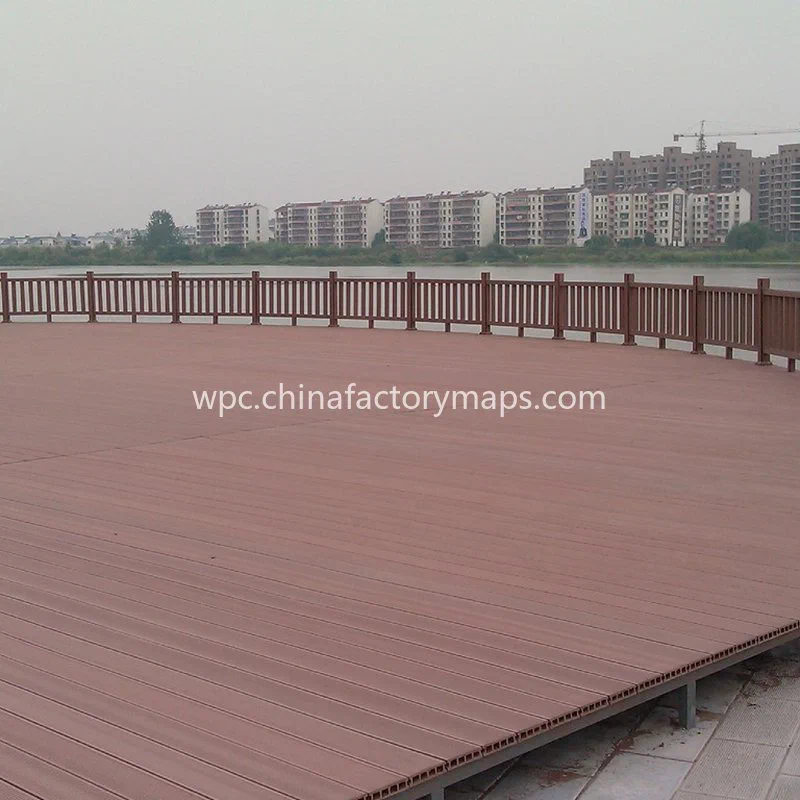
Large garden decking projects require more than a competitive board price. The specification must account for ground conditions, exposure, expected foot traffic and the cost of installing a stable substructure. For overseas buyers comparing composite decking prices per m2, the intended use of the garden is a practical starting point for supplier evaluation.
What large garden projects demand from WPC decking
Garden projects often combine several exposure conditions. Open lawns receive sustained UV, while planting areas and shaded sections retain moisture. Coastal gardens add salt exposure, and sites in colder climates may experience repeated freeze-thaw cycles. These conditions affect board selection. Buyers should request information on the wood-to-polymer ratio, board density, surface treatment and intended outdoor application. For high-UV locations, colour stability data is more useful than a general claim of UV resistance. In coastal settings, moisture resistance and the corrosion resistance of installation fixings also need attention.
Foot traffic changes the specification further. Shared gardens, landscaped developments and large residential compounds may have frequent movement across the same routes. Hollow and solid profiles should be assessed against the project’s support spacing, expected loading and installation method. Surface texture matters around garden entrances, steps and poolside areas, particularly where wet footwear is common. Buyers should also check whether the manufacturer offers matching edge boards, fascia and stair components. Consistent accessories can reduce differences in appearance across a large installation.

Comparing prices and Chinese production regions
A meaningful price comparison separates the board quotation from the complete installed material requirement. Board thickness, profile design, capped or uncapped construction, colour and surface finish all affect the quoted rate. Freight, packaging, fastening systems and replacement allowances also influence landed project cost. A low board price may not represent the lowest material cost once installation requirements are included.

China’s mapped WPC supplier clusters offer several sourcing points for this type of project. Guangdong has the largest listed concentration, with suppliers across Foshan, Guangzhou and Zhuhai. Its position is relevant to buyers assessing shipments through Shenzhen Port and Guangzhou Port. Anhui, including Xuancheng, Suzhou and Guangde, provides another supplier cluster. Shandong’s mapped locations include Zibo, Linyi and Qingdao, making Qingdao Port a relevant logistics reference. Zhejiang suppliers around Huzhou, Jiaxing and Hangzhou can be assessed alongside Ningbo-Zhoushan Port. These geographic relationships help buyers compare factory locations with export routes, although actual transport arrangements depend on the supplier.
For larger orders, sample approval should precede production. Request board samples from the proposed production line, technical drawings, installation instructions and written specifications for colour and dimensions. Confirm tolerances between batches and ask how boards respond to temperature changes. WPC expands and contracts, so the installation requires suitable end gaps and a ventilated substructure. A supplier’s technical guidance should specify the appropriate fixing method and spacing for the selected profile. This information is particularly important when the same product will cover extensive garden areas exposed to different weather conditions.
FAQ
Q: Why can composite decking prices per m² vary between Chinese suppliers?
A: Differences in material composition, profile thickness, surface finish and manufacturing construction affect the quotation. Packaging, accessories and shipment arrangements also change the total purchasing cost.
Q: Which Chinese production regions should buyers compare for large garden decking projects?
A: Guangdong, Anhui, Shandong and Zhejiang are useful starting points among the mapped supplier clusters. Buyers can compare factory locations with nearby export port options when evaluating logistics.
Related Articles
Featured Suppliers
Verified premium suppliers on our map.
