
Composite Decking Squares for Small Urban Courtyards
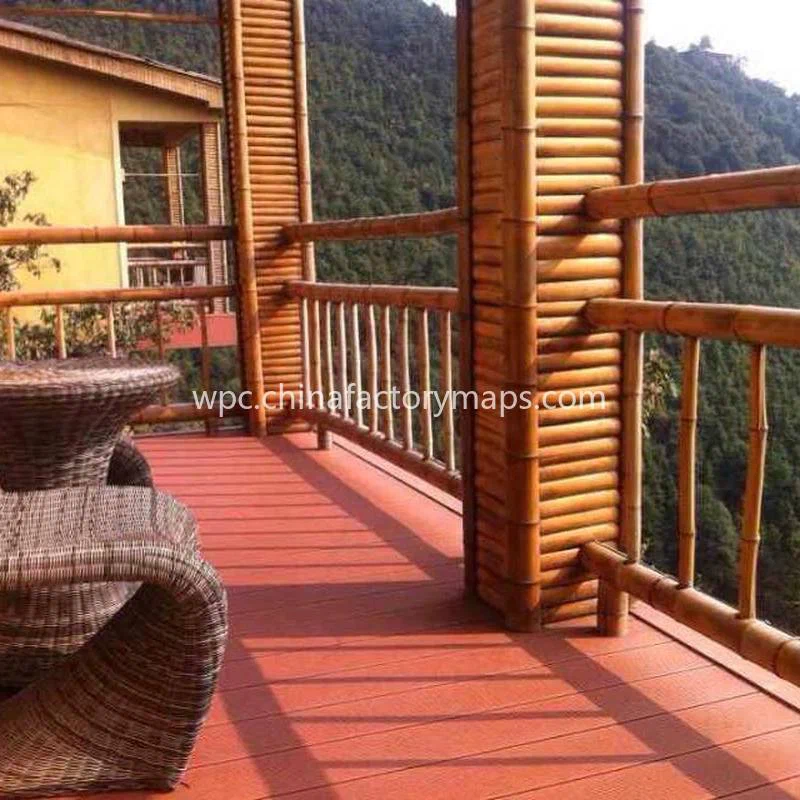
Small urban courtyards place different demands on composite decking than large residential terraces. Restricted floor areas, drainage limitations, close boundary walls and frequent pedestrian use all affect the choice of decking format. For buyers sourcing composite decking squares from China, the key considerations are dimensional stability, surface grip, drainage and suitability for the local climate.
What Small Courtyards Demand from the Product
Square decking modules are useful where a courtyard has an irregular layout or several fixed obstacles. Individual sections can be arranged around planting beds, drainage covers and access points without cutting long boards across the entire surface. This can simplify installation and make individual damaged sections easier to replace. However, module dimensions, locking mechanisms and edge treatments need to be checked before ordering. A buyer should request actual product drawings rather than rely on catalogue photographs.
The substructure deserves equal attention. Small courtyards often have concrete bases, existing paving or limited clearance beneath doors. WPC modules still require drainage and ventilation, even when installed over a hard surface. Water trapped underneath can encourage mould or staining in surrounding materials. Buyers should ask whether the product is designed for direct placement on a prepared base or requires a separate support system. Expansion gaps at walls and fixed edges are essential because composite materials expand and contract with temperature changes.

Foot traffic also changes the specification. Courtyards used as shared access routes, restaurant seating areas or entrances may experience more concentrated wear than private garden spaces. Surface texture should provide adequate grip when wet, while the backing structure and connection points must resist repeated loading. Ask manufacturers for information on load performance, wear testing and recommended installation conditions. A decorative surface alone does not establish suitability for commercial use.
Climate Exposure and Regional Sourcing
Coastal courtyards require particular attention to moisture and salt exposure. WPC resists moisture and insect damage better than untreated timber, but it is not indestructible. Salt deposits, standing water and unsuitable metal fasteners can still affect the installation. Buyers serving coastal projects should request details of the composite formulation, fastener material and cleaning requirements. For high-traffic locations, a textured surface and a secure connection system are more useful than appearance claims alone.
Cold climates introduce another specification issue. Freeze-thaw cycles can expose weaknesses in poorly drained installations, especially where water collects beneath modules or inside connection points. Buyers should check the manufacturer’s temperature range, dimensional stability data and installation instructions for cold-weather conditions. High UV exposure creates a separate concern: colour can fade under sustained sunlight. Samples should be evaluated outdoors where possible, and suppliers should provide information about colour stability and any protective surface layer. Co-extruded products may offer additional surface protection, but performance depends on the actual construction and testing.
China’s mapped supplier clusters provide several sourcing routes for these projects. Guangdong has the largest listed group, with suppliers in Foshan, Guangzhou and Zhuhai. Its concentration makes the province a practical starting point for comparing outdoor WPC product formats and manufacturing capabilities. Anhui, including Xuancheng, Suzhou and Guangde, offers another group of mapped producers. Shandong, with suppliers in Zibo, Linyi and Qingdao, is relevant to buyers comparing northern production locations and access to coastal export routes.
Zhejiang’s mapped suppliers include Huzhou, Jiaxing and Hangzhou, while Shanghai and Jiangsu add further options around Shanghai and Nanjing. These locations can be compared against the directory’s covered export ports, including Shanghai Port, Ningbo-Zhoushan Port, Shenzhen Port, Qingdao Port and Guangzhou Port. Proximity to a port is one sourcing factor, not a guarantee of lower freight cost. Buyers should compare inland transport, shipment consolidation and product specifications together. Before requesting quotations, prepare a clear brief covering module dimensions, intended traffic, climate exposure, substructure, colour requirements and packaging. This gives factories a consistent basis for responding and makes regional comparisons more useful.

FAQ
Q: Are WPC decking squares suitable for courtyards with concrete bases?
A: Yes, provided the base is properly prepared and the installation allows drainage and ventilation. Buyers should confirm whether the selected modules require additional supports.
Q: Which Chinese regions should buyers compare when sourcing courtyard decking?
A: Guangdong, Anhui, Shandong and Zhejiang have the largest mapped supplier groups. Shanghai, Jiangsu and their connections to nearby export ports provide additional sourcing options.
Related Articles
Featured Suppliers
Verified premium suppliers on our map.
