
Composite Floor Decks: What Buyers Should Check Before Ordering
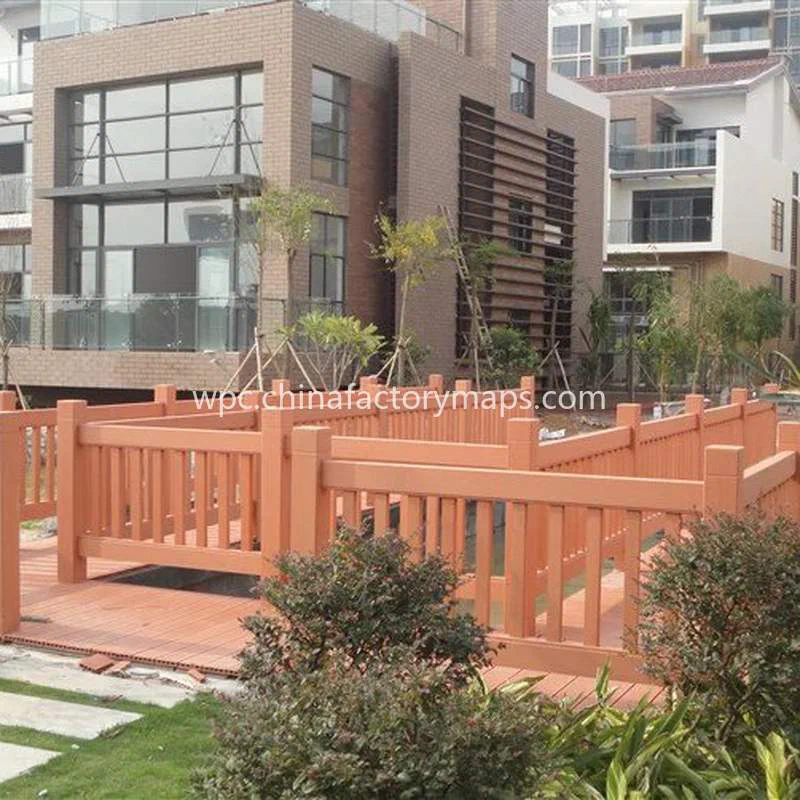
Composite floor decks sourced from China should be assessed as a complete flooring system, not simply as boards with a wood-grain finish. Overseas buyers need to verify the product construction, dimensions, performance claims, installation requirements and factory capabilities before placing an order. Differences between suppliers can affect both the finished appearance and the cost of installation.
Product specifications and material consistency
The first check is the actual composition of the board. Wood-plastic composite (WPC) generally combines wood fibre or wood flour with plastic polymers and additives. However, the proportions, raw material grades and production methods vary between manufacturers. These differences influence board density, stiffness, surface texture, colour consistency and resistance to environmental exposure. A supplier’s general description of its material is not enough to establish product equivalence.
Request a technical datasheet for each proposed model. It should identify the board’s overall dimensions, wall thickness, profile structure, weight, surface finish and intended application. Solid and hollow profiles have different weight and structural characteristics. Hollow boards may reduce material consumption, but their internal geometry and wall thickness affect load performance. Buyers should also establish whether the quoted product is a standard composite board or a capped product with an additional protective surface layer.
Colour deserves separate attention. Digital catalogue images are poor substitutes for physical samples. Request samples from the production range being quoted, and compare the colour, grain pattern and surface texture under natural lighting. Ask whether the colour is produced throughout the material or concentrated in a surface layer. Sustained UV exposure can cause colour fading, and the degree varies with formulation and surface construction. A sample should therefore be treated as a reference for appearance, not proof of long-term outdoor performance.
Manufacturer verification and sourcing locations
China’s mapped WPC supplier base is distributed across several manufacturing regions. Guangdong has the largest listed cluster, with suppliers around Foshan, Guangzhou and Zhuhai. Anhui has another concentration around Xuancheng, Suzhou and Guangde, while Shandong includes suppliers in Zibo, Linyi and Qingdao. Zhejiang, Shanghai and Jiangsu provide additional sourcing options. These geographic differences are useful when building a shortlist, but location alone does not establish manufacturing capability.

The distinction between a factory and a trading company matters when specifications require adjustment. A genuine manufacturer should be able to explain its extrusion process, production equipment, mould availability, raw material purchasing and quality-control procedures. Ask for recent production-floor photographs or a live video walkthrough. Request an explanation of how the factory identifies production batches and handles boards that fail inspection. A supplier that cannot explain its own manufacturing process may be acting as an intermediary. Trading companies can still be useful, particularly for coordinating mixed orders, but buyers should know who actually produces the goods.
The directory’s geographic listings help narrow the search by supplier location and distance to export ports. Guangdong suppliers may be relevant to shipments through Shenzhen Port or Guangzhou Port. Zhejiang suppliers can be assessed against Ningbo-Zhoushan Port, while Shanghai and Jiangsu listings may warrant comparison with Shanghai Port or Taicang Port. Shandong suppliers can be evaluated in relation to Qingdao Port and Rizhao Port. These are starting points for logistics comparisons, not guarantees of the shortest or cheapest shipment route. The actual dispatch location, inland transport arrangements, export handling and shipping schedule all affect the final calculation.
Installation, quality control and order terms
A board that performs well in a sample test can still cause problems after installation. WPC expands and contracts with temperature, so the installation system must allow movement. Buyers should obtain the manufacturer’s recommended expansion gaps, end-to-end spacing, joist spacing, fixing method and ventilation requirements. The substructure needs adequate ventilation and drainage. Installing composite boards tightly together or over an inadequately ventilated framework can lead to movement problems, trapped moisture and premature deterioration. Installation instructions should specify compatible clips, screws and support components rather than leaving installers to select them independently.
Performance claims also need context. WPC generally resists moisture and insect attack better than untreated timber, but it is not indestructible or absolutely waterproof. Prolonged standing water, poor drainage, excessive loading and unsuitable installation can still cause problems. Ask what testing supports claims about slip resistance, bending performance, water absorption and UV exposure. Where fire performance is relevant to the intended project, request the applicable test documentation and confirm that it relates to the exact product construction being purchased. Generic statements about product quality are not a substitute for model-specific evidence.

Before approving bulk production, agree on a written specification covering dimensions, colour, profile, surface finish, packaging and accessories. The purchase agreement should also define acceptable dimensional tolerances, inspection arrangements, defect handling and replacement responsibilities. Confirm whether samples represent the same production formulation and surface treatment as the final order. For repeat projects, retain an approved reference sample and record the relevant production details. This helps identify changes between batches. Packaging should protect board edges and surfaces during handling and container transport, while loading plans should account for board length, weight and the possibility of deformation under poor stacking conditions.
The final supplier comparison should use the complete delivered system rather than the quoted board price alone. Include accessories, packaging, inland freight, port handling, shipping arrangements and any additional components required for installation. A lower board price may not represent a lower project cost if the profile requires special clips or a different support structure. Buyers should also establish production lead times, order consolidation arrangements and the factory’s capacity to maintain consistent specifications across repeat shipments. A well-documented quotation makes these differences easier to compare before a purchase commitment is made.
FAQ
Q: How can an overseas buyer distinguish a WPC factory from a trading company?
A: Ask for evidence of extrusion equipment, production facilities, mould capabilities and internal quality-control procedures. Confirm who manufactures the specific boards and who is responsible for production defects.
Q: Which Chinese supplier locations should buyers compare when sourcing composite floor decks?
A: Guangdong, Anhui, Shandong, Zhejiang, Shanghai and Jiangsu all have mapped suppliers. Compare factory locations against relevant export ports, inland transport requirements and the supplier’s ability to meet the required specifications.
Related Articles

Featured Suppliers
Verified premium suppliers on our map.
