
Composite Railing Caps: Port Access and Container Shipping From China
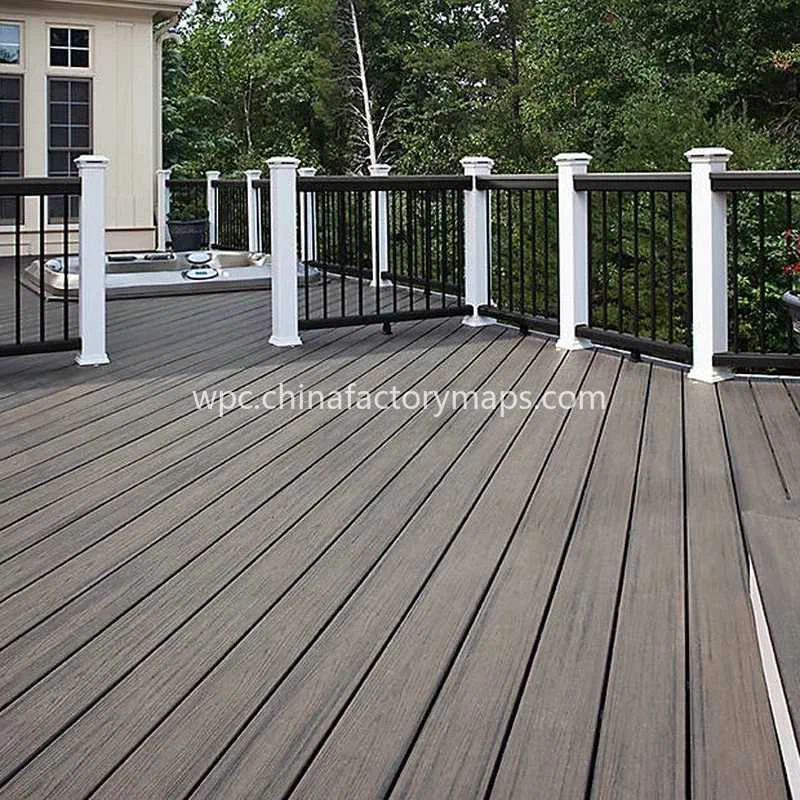
A composite railing cap shipment should be assessed from the factory gate to the destination port, not simply by the distance between the supplier and the buyer. For overseas procurement, the location of the producing factory affects inland transport, container loading, export handling and the risk of damage before the goods reach their destination. Chinafactorymaps.com maps WPC manufacturers by region and proximity to major export ports, helping buyers compare the logistics behind different supplier locations.
Regional production and export port access
Guangdong has the largest mapped concentration, with 22 listed suppliers across Foshan, Guangzhou and Zhuhai. This makes the province an important starting point for buyers comparing WPC production and export arrangements. Shenzhen Port and Guangzhou Port are relevant gateways for manufacturers in this region, although the most suitable option depends on the factory’s actual location, available trucking routes and the export arrangements used by the supplier. A factory in Foshan, for example, should not automatically be assumed to have the same inland transport cost or transit time as one closer to Shenzhen.
Anhui has nine mapped suppliers, including locations in Xuancheng, Suzhou and Guangde. Its position makes port selection a more significant part of procurement planning. Shanghai Port and Taicang Port are relevant export gateways to assess, with Ningbo-Zhoushan Port also worth considering where the factory’s transport network supports that route. Shandong has seven listed suppliers, including Zibo, Linyi and Qingdao. Qingdao Port is a key option for this production cluster, while Rizhao Port may also be relevant depending on the factory’s location and shipping arrangements. These regional differences matter because a lower factory quotation can be offset by longer inland transport.
Zhejiang has six mapped suppliers in Huzhou, Jiaxing and Hangzhou. Buyers assessing these locations can compare access to Ningbo-Zhoushan Port and Shanghai Port. Shanghai itself has three listed suppliers, while Jiangsu has two, including Nanjing. Shanghai Port and Taicang Port are relevant gateways for evaluating these locations. The directory also covers Tianjin Port, Xiamen Port, Beibu Gulf Port and Lianyungang Port, providing a broader reference for buyers comparing Chinese export routes. However, port availability alone does not establish that a particular factory can ship through a given gateway at a competitive cost.
Why port distance matters for railing caps

Composite railing caps have a different shipping profile from some larger WPC products. Their dimensions, cross-sectional shape and packaging determine how efficiently they occupy container space. Although individual caps may not be especially heavy, long profiles can consume substantial loading space. Packaging must also prevent movement and protect exposed edges during handling. The result is that container utilisation can matter as much as the gross weight of a shipment.
For buyers, the relevant calculation starts with the packed dimensions rather than the product dimensions alone. Manufacturers should provide information about bundle length, bundle width, bundle height, gross weight and the number of units packed per bundle. These details help establish how many products can be loaded without exceeding container payload limits or creating an unstable arrangement. Long profiles may leave unused space if the packaging does not match the container’s internal dimensions. In some cases, the limiting factor is container volume rather than weight.
Inland transport adds another consideration. Long packaged profiles require suitable vehicles and careful loading, particularly when multiple bundles are transported together. Every additional handling stage introduces an opportunity for bending, abrasion or damage to protective packaging. A factory located farther from its export port may involve more road transport and intermediate handling before container loading. This does not automatically make the supplier unsuitable, but the additional distance should be reflected in the delivered logistics cost and risk assessment.
Comparing suppliers by the complete shipping route
Factory-to-port distance is useful as a screening measure, not a final purchasing decision. A mapped supplier may appear close to a major port, but the actual route can depend on road access, industrial-zone restrictions, container availability and the location of the export warehouse. Some manufacturers arrange transport directly to the port, while others use freight forwarders or consolidation facilities. Buyers should establish which party is responsible for each stage and whether the quoted export arrangement includes inland trucking, container loading and documentation.
A practical comparison should cover several points:

- Factory address and the nearest suitable container export gateway.
- Road distance and estimated trucking arrangements to that port.
- Packed product dimensions, bundle configuration and gross shipment weight.
- Container type, loading capacity and expected space utilisation.
- Responsibility for packaging, loading, inland transport and export clearance.
- Whether the shipment moves directly from the factory or through a consolidation warehouse.
These details allow buyers to compare suppliers on a consistent basis. For example, a Guangdong manufacturer with access to Shenzhen Port may offer a shorter route than a supplier in another province, but that advantage is meaningful only if the product specification, packing arrangement and freight quotation are also comparable. Likewise, an Anhui supplier with a longer inland route may remain commercially competitive if its production cost and container-loading efficiency compensate for the additional transport.
Transit protection deserves particular attention. WPC expands and contracts with temperature changes, so packaging and storage arrangements should account for dimensional movement. Bundles should be restrained without applying excessive pressure to the profiles. Buyers should also confirm that products are protected against moisture exposure during storage and handling. WPC resists moisture and insect damage, but it is not indestructible. Sustained ultraviolet exposure can also cause colour fading, making appropriate packaging and covered storage relevant before shipment.
Building a landed-cost comparison

The most useful supplier comparison combines the factory quotation with inland logistics and international shipping costs. Buyers should avoid treating the nearest port as an automatic indicator of the lowest total cost. A supplier may have a shorter road route but less efficient packaging, resulting in lower container utilisation. Another may be farther from the port but able to load more units per container. Both factors affect the cost allocated to each finished product.
Requesting a packing list and a preliminary container-loading plan early in the sourcing process can reveal these differences. The documents should identify the shipment’s total quantity, package dimensions, gross weight and loading configuration. Buyers can then ask freight forwarders to compare available export routes through relevant gateways such as Shanghai Port, Ningbo-Zhoushan Port, Shenzhen Port or Qingdao Port. The comparison should use consistent shipment assumptions and distinguish inland trucking charges from port-related costs.

The directory’s regional map supports this first stage of evaluation by showing where mapped manufacturers are concentrated and which export gateways are geographically relevant. It does not establish a factory’s shipping rate, production capacity or current container availability. Those details require direct confirmation with the supplier and logistics provider. For a composite railing cap order, the strongest sourcing decision is based on the complete route, from factory location and packaging design through container loading and port departure.
FAQ
Q: Which Chinese export ports should buyers compare when sourcing composite railing caps?
A: Shenzhen Port and Guangzhou Port are relevant for Guangdong suppliers, while Shanghai Port and Ningbo-Zhoushan Port are important options for assessing suppliers in eastern China. Qingdao Port is a relevant gateway for Shandong manufacturers.
Q: Is choosing the factory closest to an export port always the cheapest option?
A: No. Inland trucking distance is only one part of the landed cost. Container utilisation, packaging dimensions, handling requirements and freight arrangements can make a more distant supplier competitive.
Related Articles
Featured Suppliers
Verified premium suppliers on our map.
