
Design-Led Composite Decking for Multi-Unit Residential Projects
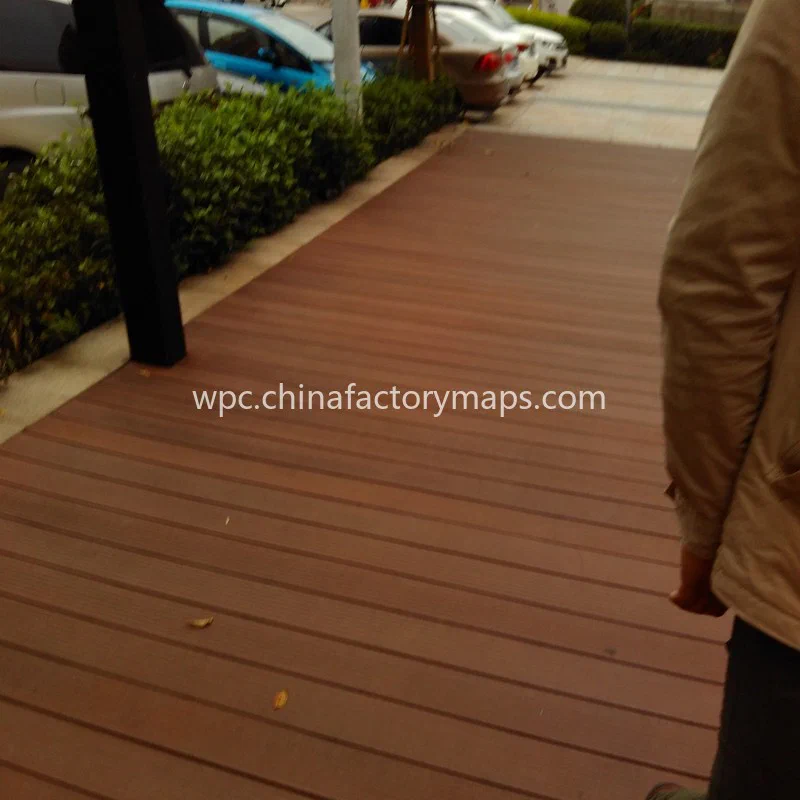
Multi-unit residential decking must serve different users and exposure conditions within the same development. Shared terraces, apartment balconies, rooftop amenity areas and communal walkways place sustained demands on board performance, appearance and installation consistency. For buyers sourcing from China, the specification needs to reflect the building’s location, expected foot traffic and maintenance arrangements rather than relying on a general-purpose outdoor decking description.
Specifying for residential use
Shared residential spaces experience more concentrated foot traffic than many private gardens. Entrance terraces, access walkways and communal seating areas can see regular movement from residents, visitors and maintenance staff. A suitable composite deck board should have documented performance for the intended loading and support arrangement. Buyers should request technical information on board dimensions, thickness, joist spacing, fixing systems and permitted installation spans. Surface texture also matters. An attractive finish must provide adequate slip resistance, particularly around entrances and areas exposed to rain. Samples should be assessed under realistic lighting and wet conditions, rather than selected from catalogue photographs alone.

Balconies and rooftop terraces introduce additional constraints. These areas may have limited drainage capacity, waterproofing membranes beneath the finished surface and restricted access for future repairs. WPC decking expands and contracts with temperature, so installers need to follow the manufacturer’s specified expansion gaps and fixing details. The supporting structure should allow ventilation and water drainage; boards installed over an inadequately ventilated substructure can develop problems even when the material itself resists moisture. Buyers should also establish how the decking system interfaces with thresholds, drains, perimeter edges and access panels. These details are particularly important in multi-unit buildings, where a local installation defect can affect neighbouring properties.

Matching the board to exposure conditions
Coastal developments require particular attention to salt exposure. WPC resists moisture and insect damage, but it is not indestructible, and metal clips, screws and supporting components remain vulnerable to corrosion. Buyers should ask manufacturers to identify suitable fixing materials and provide guidance for coastal installation. Freeze-thaw conditions create a different set of demands. Water trapped around joints or within poorly drained support structures can contribute to installation problems as temperatures fluctuate. Product documentation should explain the intended climate range, drainage requirements and installation tolerances. For developments exposed to high UV levels, colour stability deserves separate consideration. Composite decking can fade under sustained sunlight, so buyers should request weathering information and compare samples after exposure where practical.

Colour and surface design also influence procurement. Large residential developments often require a consistent finish across multiple buildings, phases or common areas. A design board composite decking specification should identify the selected colour, surface pattern, board profile and acceptable batch variation. Buyers should check whether the factory can maintain the same production specification for repeat orders and provide matching accessories. Co-extruded boards may offer an additional protective surface layer, but the buyer should verify the construction and performance claims rather than assume that every capped product offers identical protection. Colour samples, technical sheets and installation instructions should form part of the approval process before bulk production begins.
Sourcing regions and logistics
China’s mapped WPC supplier base is distributed across several manufacturing regions. Guangdong has the largest listed cluster, with 22 suppliers covering Foshan, Guangzhou and Zhuhai. Its concentration makes the province a practical starting point for comparing manufacturers serving building-material applications. Shenzhen Port and Guangzhou Port are relevant export gateways for buyers assessing southern suppliers. Anhui has nine mapped suppliers, including Xuancheng, Suzhou and Guangde. Shandong accounts for seven, including Zibo, Linyi and Qingdao, while Zhejiang has six across Huzhou, Jiaxing and Hangzhou. These regions provide additional sourcing options when product specifications, factory location and export routing are considered together.
Distance to port should be evaluated alongside factory capability. A nearby export gateway can simplify inland transport planning, but it does not establish production quality or guarantee a shorter total delivery schedule. Buyers can compare mapped suppliers against Shanghai Port, Ningbo-Zhoushan Port, Qingdao Port, Taicang Port and other covered gateways to identify practical shipping routes. Before requesting quotations, procurement teams should prepare a consistent specification covering exposure conditions, board dimensions, colour, surface treatment, installation system and expected order continuity. Factory discussions should also establish sample approval procedures, production tolerances, packaging arrangements and documentation available for the destination market. This gives project teams a clearer basis for comparing suppliers against the actual requirements of a multi-unit residential development.

FAQ
Q: Is WPC decking suitable for apartment balconies?
A: Yes, provided the board and support system are specified for the exposure conditions. Drainage, ventilation, expansion gaps and access to underlying waterproofing must be addressed during installation.
Q: What should buyers check when sourcing decking for coastal residential projects?
A: Buyers should examine salt-exposure guidance, corrosion resistance of metal fixings, drainage details and surface slip performance. The manufacturer’s recommendations should cover the complete installation system, not just the boards.
Q: Which Chinese regions are worth comparing for multi-unit residential decking?
A: Guangdong, Anhui, Shandong and Zhejiang all have mapped supplier clusters. Comparing factory locations with nearby export ports can help narrow the sourcing shortlist.
Related Articles
Featured Suppliers
Verified premium suppliers on our map.
