
Extruded vs Molded WPC Panels: Key Manufacturing Differences
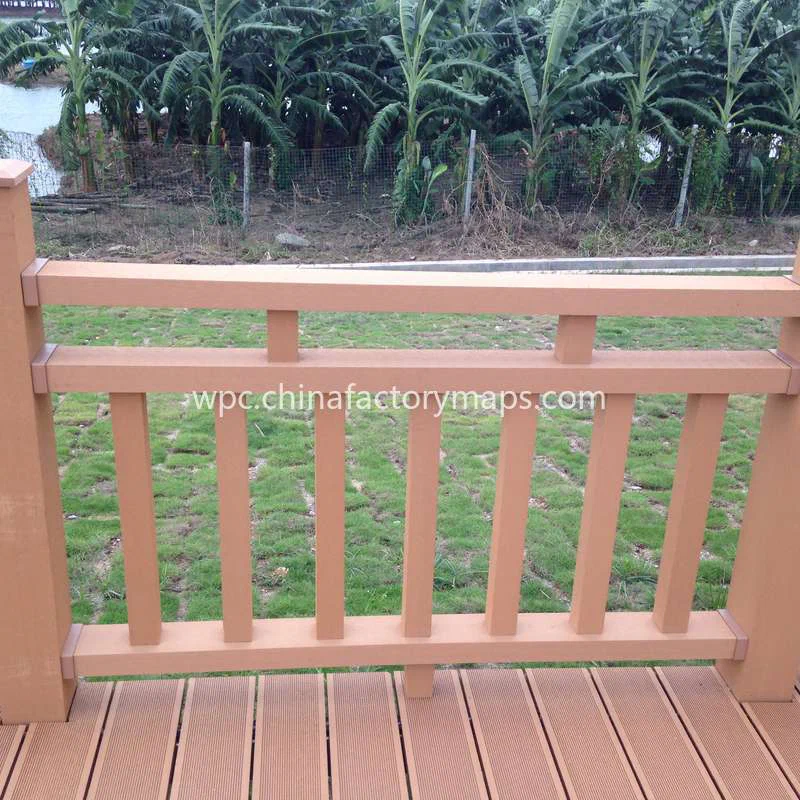
Extruded and molded WPC panels differ in how the material is processed, how their internal structure is formed, and how consistently they can be produced. These differences affect panel dimensions, surface finish, mechanical performance, installation requirements, and suitability for particular applications. For overseas buyers comparing Chinese suppliers, understanding the manufacturing method helps identify which production route matches the intended project.
1. How extrusion and molding shape the panel
Extrusion forms WPC panels by heating and mixing wood fibers or wood flour with thermoplastic polymers and additives, then pushing the compound through a shaped die. The die determines the panel’s cross-sectional profile. Once the material exits, it is cooled, calibrated, and cut to length. This continuous process is suited to products with consistent profiles, including wall panels, hollow boards, solid profiles, and decorative cladding components.
Molding uses a different production approach. A prepared WPC compound is placed into a mold and formed under controlled heat and pressure. The mold defines the product’s geometry, surface texture, and dimensions. Depending on the process, molded panels can accommodate shapes or decorative details that are difficult to produce through a conventional extrusion die. However, production depends on mold design, filling behaviour, and process control. Changes to the product geometry may also require different tooling.
The distinction is structural rather than simply visual. Extruded products generally have a continuous cross-section, meaning their internal geometry remains consistent along the production length. Molded products are shaped within a cavity, allowing more variation across the panel’s surface and overall form. Neither method automatically produces a stronger panel. Performance depends on the formulation, fiber distribution, polymer content, density, processing conditions, and finished dimensions.

2. Performance, installation and application trade-offs
For applications requiring long, repeatable profiles, extrusion is often the more practical option. Wall cladding systems, decorative interior panels, and modular exterior boards benefit from consistent dimensions and predictable connection details. Hollow extrusion profiles can reduce material consumption and product weight, although their wall thickness and internal rib arrangement affect stiffness and resistance to local loading. Solid profiles offer a different balance of mass, rigidity, and fastening requirements.
Molded WPC panels are more relevant when the product specification calls for shaped surfaces, distinctive textures, or complex geometries. They may suit decorative architectural components and panels with integrated design features. The trade-off is that dimensional consistency, edge quality, and internal density need careful evaluation. Buyers should request samples from the actual production process rather than assuming that a visually similar panel will have equivalent mechanical properties.
Both manufacturing methods use materials that respond to environmental conditions. WPC absorbs less moisture than untreated wood and generally resists insect damage, but it is not completely waterproof or immune to deterioration. Temperature changes cause expansion and contraction. Installations therefore require suitable expansion gaps, appropriate fixing details, and a ventilated supporting structure where specified by the system design. Fasteners must accommodate movement without restricting the panel or causing localized stress.

UV exposure is another consideration for exterior applications. Prolonged sunlight can change surface colour, particularly in products without effective UV stabilisation or protective surface layers. Buyers should compare weathering test information, colour specifications, and any available evidence from outdoor exposure. A molded texture does not guarantee better UV performance, just as an extruded profile does not guarantee superior weather resistance. The compound formulation and surface treatment remain important.
3. Factory selection and sourcing considerations in China
Manufacturing capability matters as much as the stated production method. A wpc panel factory should be assessed for its control over raw material preparation, compounding, forming, cooling, dimensional calibration, and finished-product inspection. For extrusion, buyers can examine die configuration, profile consistency, wall thickness, and the stability of production across different batches. For molded panels, attention should go to mold condition, cavity filling, density distribution, surface defects, and dimensional repeatability.
Supplier location can also influence sourcing decisions. The directory currently maps WPC suppliers across Guangdong, Anhui, Shandong, Zhejiang, Shanghai, and Jiangsu. Guangdong has the largest listed cluster, including Foshan, Guangzhou, and Zhuhai. Anhui includes Xuancheng, Suzhou, and Guangde, while Shandong listings include Zibo, Linyi, and Qingdao. Zhejiang suppliers are mapped around Huzhou, Jiaxing, and Hangzhou.
Distance to an export port provides another useful comparison. Suppliers in the mapped regions can be evaluated against relevant shipping gateways, including Shanghai Port, Ningbo-Zhoushan Port, Shenzhen Port, Qingdao Port, and Guangzhou Port. The nearest port geographically is not necessarily the most suitable shipping option. Inland transport arrangements, container availability, export handling, and the factory’s established logistics routes can affect the final shipment plan.
Before requesting quotations, buyers should establish whether the supplier manufactures the specified panel directly or outsources part of the production. The inquiry should identify the forming method, material composition, panel dimensions, density, surface finish, and intended installation environment. Technical drawings and physical samples help verify whether the proposed construction matches the project specification.
A useful supplier comparison also includes production tolerances, batch consistency, packaging protection, and the ability to maintain the same formulation across repeat orders. For exterior panels, request details of thermal movement allowances, fastening recommendations, and UV-weathering performance. These checks provide a more meaningful basis for comparing factories than appearance or nominal panel thickness alone.
FAQ
Q: Are extruded WPC panels stronger than molded WPC panels?
A: Not necessarily. Strength depends on material formulation, density, internal structure, wall thickness, and manufacturing control rather than the forming method alone.
Q: Which manufacturing method is better for exterior WPC wall panels?
A: Extrusion is commonly suited to continuous wall panel profiles and repeatable installation systems. Molded panels may be appropriate for products requiring more complex shapes or decorative surfaces.
Q: What should buyers check before sourcing WPC panels from China?
A: Confirm the manufacturing method, material composition, dimensional tolerances, weathering performance, fastening requirements, and factory production capability. Compare supplier locations and export-port access when assessing logistics.
Featured Suppliers
Verified premium suppliers on our map.
