
Finding WPC Fluted Wall Panel Suppliers by Region and Production Focus
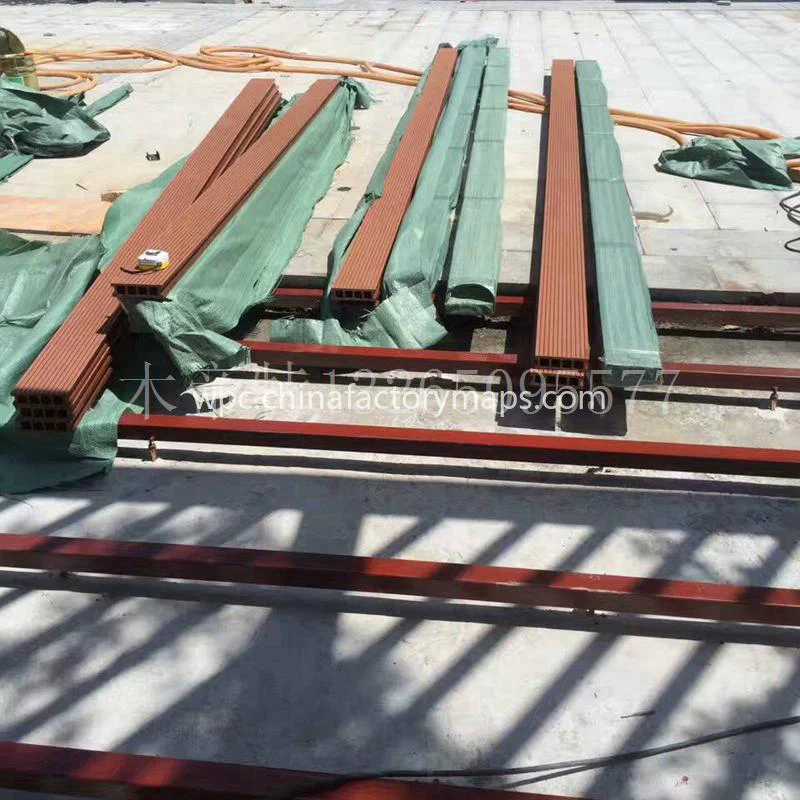
Selecting a wpc fluted wall panel supplier requires more than matching a product photo to a factory listing. Production location can help narrow the search, while a supplier’s manufacturing focus determines whether its capabilities fit the required panel profile, finish and order specifications. ChinaFactoryMaps.com plots Chinese WPC factories by geography and proximity to export ports, giving buyers a starting point for structured supplier screening.
How geography narrows the supplier shortlist
Guangdong has the largest mapped cluster, with 22 listed suppliers, including factories in Foshan, Guangzhou and Zhuhai. Anhui follows with nine, including Xuancheng, Suzhou and Guangde. Shandong has seven, Zhejiang six, Shanghai three and Jiangsu two. These figures describe the directory’s current listings, not the total number of factories operating in each province. A larger cluster offers more listed candidates to compare, but it does not establish that those factories specialise in interior fluted panels or meet a particular buyer’s quality requirements.
Regional clustering is useful when the initial specification is still being refined. Buyers can compare several listed factories within the same area before expanding the search to other provinces. Guangdong may provide a practical starting point for a broad supplier search, while Anhui, Shandong and Zhejiang offer additional groups to investigate. The location itself is only a screening signal. Manufacturing equipment, extrusion capability, surface finishing and experience with the intended application must be confirmed directly with each supplier.

Port distance adds a separate logistics consideration. The directory covers Shanghai Port, Ningbo-Zhoushan Port, Shenzhen Port, Qingdao Port, Guangzhou Port and other major export gateways. A factory near a listed port may reduce inland transport requirements, but straight-line distance alone cannot establish the cheapest or fastest shipping route. Buyers should compare actual road transport, container availability, consolidation arrangements and the final shipping schedule. The nearest port is a useful filter, not an automatic recommendation.
Match production focus to the panel specification

Fluted wall panels are defined by their surface geometry as well as their material composition. Groove spacing, groove depth, panel width, thickness, edge design and joining method affect appearance and installation. A factory that produces general WPC decking or fencing may have relevant extrusion experience, but that does not prove it can manufacture the required wall-panel profile consistently. Ask suppliers for current product specifications, production photographs and samples showing the exact profile under consideration.
Material composition also warrants verification. WPC formulations vary in their proportions of wood fibre, polymer and additives, which can affect stiffness, surface quality, weight and dimensional behaviour. Buyers should clarify whether the panel is intended for interior walls, sheltered exterior applications or exposed facades. Confirm the stated use conditions, installation method and applicable fire-performance requirements for the project. Marketing descriptions alone are not evidence of suitability for a specific building application.
Vetting factories before requesting quotations
Once the map has produced a manageable shortlist, send each candidate the same technical brief. Include drawings or reference samples, target dimensions, colour and surface finish, expected order volume, packaging requirements and destination market. Ask whether the factory extrudes the profiles itself or outsources part of production, and establish which finishing and inspection steps take place on site. These questions help distinguish a manufacturer with relevant process control from a trading company or a factory whose existing product range only partly matches the specification.
Samples should be assessed against agreed acceptance criteria, not appearance alone. Check dimensional consistency, groove definition, surface defects, colour uniformity and the fit between adjoining panels. Discuss batch-to-batch colour variation and how replacement material would be handled if a production lot falls outside the approved standard. WPC expands and contracts with temperature, so the supplier’s installation guidance should specify suitable expansion gaps and a ventilated substructure where required. The material resists moisture and insects, but it is not indestructible; sustained ultraviolet exposure can also fade colour. Confirm maintenance expectations and any project-specific test evidence before approval.
The map directory fits at the beginning of this process, helping buyers organise candidates by province, city and distance to an export port. It does not certify factories, verify production capacity or guarantee shipment performance. Use the geographic shortlist to request comparable documentation, inspect samples and arrange factory audits where warranted. Record the evidence for each candidate, including confirmed manufacturing processes, technical compliance, communication quality and logistics arrangements. Final selection should follow that verification rather than the supplier’s location or listing position.
FAQ
Q: Does a larger regional WPC factory cluster mean better suppliers?
A: No. A larger cluster provides more listed candidates to compare, but buyers must verify product specialisation, manufacturing capability and quality against their own specifications.
Q: How should buyers compare factories located near different export ports?
A: Compare inland transport arrangements, the available shipping route, total logistics costs and expected transit schedules. Port proximity is one input in the decision, not a substitute for a complete shipping assessment.
Featured Suppliers
Verified premium suppliers on our map.
