
Finding WPC Wall Cladding Suppliers for Commercial Building Projects
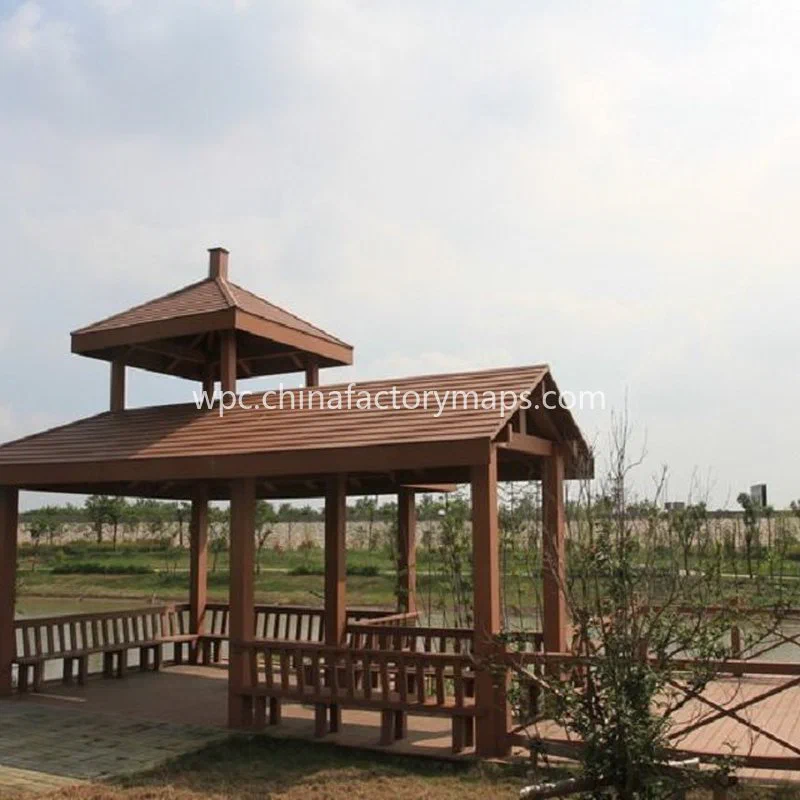
Commercial WPC wall cladding projects require more than a board with a suitable appearance. Exterior facades must withstand local weather, accommodate building movement and meet the installation requirements of the project. Buyers sourcing from China should assess the intended exposure, fixing system and production capabilities before comparing suppliers.
The first specification decision is the building’s exposure. Coastal commercial properties face salt-laden air, high humidity and wind-driven rain. WPC resists moisture and insect damage better than untreated timber, but it is not immune to deterioration. Buyers should ask for details of the wood-to-polymer ratio, surface formulation and water absorption performance. Fixings and supporting components also matter. Corrosion-resistant fasteners are important near the coast, while the substructure must allow drainage and ventilation behind the cladding. A product that performs adequately in an inland commercial building may require a different fixing arrangement and material specification beside the sea. Salt exposure should therefore be treated as a project condition, not simply a general weather-resistance claim.

Temperature variation creates another set of requirements. Facades in regions with cold winters may experience repeated freeze-thaw cycles, particularly where water collects around joints, cut edges or poorly ventilated cavities. WPC expands and contracts with temperature, so board dimensions, installation gaps and fixing details must be assessed together. Buyers should request the manufacturer’s recommended expansion allowances, permitted installation temperature range and guidance on end joints. For buildings exposed to freezing conditions, ask whether the product has been tested for relevant moisture and temperature cycling. A supplier should also explain how its profile accommodates movement without creating excessive gaps or putting stress on fasteners. The installation specification is as important as the board itself. Rigidly fixing a thermally responsive material can lead to distortion or connection failures.
High UV exposure changes the priorities again. Commercial buildings in areas with strong sunlight need cladding with a documented approach to colour stability and surface protection. WPC colours can fade under sustained UV exposure, and the rate of change depends on the formulation, pigments and protective surface layer. Buyers should request UV-weathering test information, clarify whether the product uses a capped or uncapped construction, and ask for photographs of installed material after prolonged outdoor exposure. Initial colour samples are useful for approval, but they do not establish long-term appearance. Large facade elevations also make colour variation between production batches more visible. For projects with phased construction, the procurement specification should address batch consistency, replacement-board availability and the process for confirming colour before mass production. Darker finishes may also absorb more solar heat, increasing the importance of checking thermal movement allowances.

China’s mapped supplier clusters provide several starting points for regional sourcing. Guangdong has the largest listed concentration, with suppliers across Foshan, Guangzhou and Zhuhai. This region is relevant to buyers assessing products for humid conditions, strong sunlight and coastal exposure. Its proximity to Shenzhen Port and Guangzhou Port can also make export planning more direct for certain factory locations. Anhui, with suppliers around Xuancheng, Suzhou and Guangde, offers another sourcing cluster. Buyers comparing factories there should examine facade-specific production experience rather than assuming that a supplier’s decking range demonstrates equivalent wall-cladding capability. Shandong, including Zibo, Linyi and Qingdao, provides a further regional option. Its factories may be relevant to projects where cold-season performance and freeze-thaw considerations carry greater weight. The regional distribution helps narrow the search, but factory-level technical evidence remains necessary.

Zhejiang’s mapped suppliers are concentrated around Huzhou, Jiaxing and Hangzhou, while Jiangsu has listed suppliers around Nanjing. Shanghai also appears as a separate supplier location. These eastern clusters give buyers additional options when comparing manufacturing locations against export routes, including Shanghai Port, Ningbo-Zhoushan Port and Taicang Port. Shandong suppliers can be assessed in relation to Qingdao Port and other covered northern routes, while Guangdong factories can be compared with Shenzhen Port and Guangzhou Port. Port proximity is a useful sourcing filter, but it does not establish the actual shipping cost or transit time. Factory distance, inland transport arrangements, cargo volume and the chosen shipping service all affect the final logistics calculation. Buyers should confirm the factory’s dispatch location rather than relying only on a provincial label. A mapped directory makes these geographic comparisons easier before detailed supplier discussions begin.
Before appointing a wpc wall cladding supplier, buyers should request a project-specific technical submission. It should identify the intended application, board profile, dimensions, surface finish, installation method and supporting framework. Ask whether the factory manufactures the complete cladding system or only the boards, and establish which accessories, trims and fixing components are available. Sample evaluation should cover colour, surface consistency, dimensional tolerances and the quality of cut edges. Technical documents should distinguish between test results for individual material properties and evidence of performance for an installed facade assembly. Fire performance, in particular, should be checked against the building’s applicable regulations and the tested configuration; a generic claim about WPC does not establish compliance. Also confirm production scheduling, packaging protection, batch identification and procedures for handling damaged or defective boards. For larger projects, a pre-production sample approval and inspection before shipment can reduce discrepancies between the approved specification and delivered material.
FAQ
Q: What should buyers prioritize when sourcing WPC wall cladding for coastal buildings?
A: Check moisture performance, corrosion-resistant fixing components, drainage and ventilation provisions, and documented UV-weathering performance. The complete installation arrangement should be suitable for salt-laden air and wind-driven rain.
Q: Which Chinese regions are worth comparing for commercial WPC wall cladding?
A: Guangdong, Anhui, Shandong, Zhejiang, Shanghai and Jiangsu all have mapped supplier locations. The appropriate shortlist depends on the project’s climate requirements, factory capabilities and distance to a suitable export port.
Featured Suppliers
Verified premium suppliers on our map.
