
From China's Decking Factories to Overseas Sites: Shipping Routes and Costs
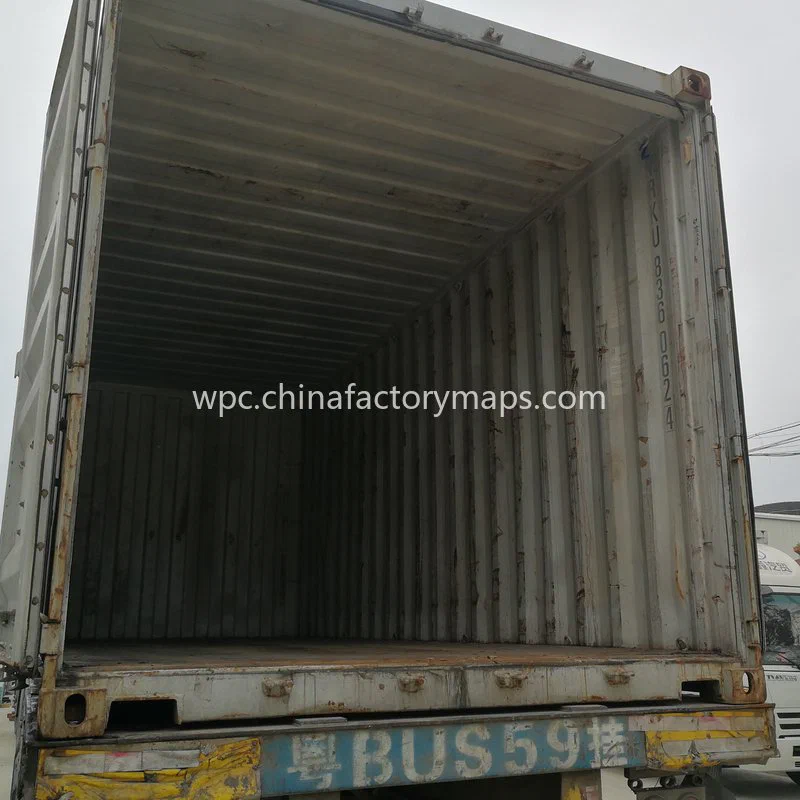
Chinese WPC decking reaches overseas projects through a supply chain that begins at the factory, moves by road or inland transport to an export port, and continues by container vessel to the destination market. For overseas buyers, the distance between a shortlisted factory and its nearest suitable port can affect the landed cost as much as the quoted board price. Comparing production locations with export routes helps identify suppliers whose logistics arrangements suit the order.
Guangdong has the largest mapped supplier cluster, with 22 listed factories across Foshan, Guangzhou and Zhuhai. Shenzhen Port and Guangzhou Port are relevant export gateways for this production region. Their proximity can reduce inland transport requirements, although the actual advantage depends on the factory address, available trucking arrangements and the shipping service selected. Anhui has nine mapped suppliers, including locations in Xuancheng, Suzhou and Guangde. These factories may use different inland routes to reach major export gateways, including Shanghai Port. Shandong’s seven listed suppliers are concentrated in Zibo, Linyi and Qingdao, making Qingdao Port an important point of comparison. Zhejiang has six mapped suppliers in Huzhou, Jiaxing and Hangzhou, with Ningbo-Zhoushan Port and Shanghai Port among the relevant gateways. Shanghai itself has three listed suppliers, while Jiangsu has two in Nanjing. Shanghai Port and Taicang Port are relevant when assessing these locations. The nearest port on a map is not necessarily the port offering the best service. Buyers should compare inland distance with sailing frequency, carrier availability and the final destination route.

WPC decking creates specific container-planning considerations. The boards are relatively heavy and often occupy substantial container space because of their length and packaging requirements. Weight and volume therefore both matter when calculating container utilisation. A container may reach its permitted payload before every available cubic metre is filled, or run out of space before reaching its weight limit. The result depends on board dimensions, profile design, packaging and the container specification. Buyers should request packing details from shortlisted factories, including bundle dimensions, gross weight, loading quantities and the proposed container configuration. Long boards also need suitable support during handling and transport. Poor stacking, excessive movement or inadequate protection can cause chipped edges, surface abrasion and damaged corners. These risks make packaging standards and loading supervision relevant parts of supplier evaluation. A factory closer to a port may reduce inland handling and transport exposure, but distance alone does not establish lower damage risk. Buyers should compare the complete logistics arrangement rather than assuming that the cheapest place to buy composite decking will also deliver the lowest landed cost.

Supplier selection should therefore account for factory location, port access and the full shipping quotation. Ask each factory to identify its usual export port and provide an estimated inland transport arrangement. Then compare the port-to-destination freight, local handling charges, documentation costs and any additional charges that apply to the shipment. The same factory may offer different routing options, while two factories in the same province may have very different transport costs because of their precise locations. The mapped directory helps narrow this comparison by showing supplier clusters alongside major export gateways, including Tianjin Port, Xiamen Port, Beibu Gulf Port, Rizhao Port, Lianyungang Port and Yingkou Port. These ports may be relevant to particular production or shipping arrangements, but their suitability must be confirmed against the factory’s actual dispatch route and the buyer’s destination. Before placing a bulk order, request a written breakdown of factory-to-port transport, container loading, export handling and ocean freight. Also confirm who is responsible for loading, cargo insurance and claims if boards arrive damaged. Finally, check the product specification independently: WPC expands and contracts with temperature, requires suitable installation gaps and a ventilated substructure, and can experience colour fading under sustained UV exposure. Transport savings should not come at the expense of product suitability or installation requirements.

FAQ
Q: Which Chinese export ports are relevant when sourcing WPC decking?
A: Relevant gateways include Shanghai Port, Ningbo-Zhoushan Port, Shenzhen Port, Qingdao Port and Guangzhou Port. The appropriate choice depends on the factory’s location and the destination shipping service.
Q: Does choosing a factory near an export port guarantee lower shipping costs?
A: No. Shorter inland transport can reduce some costs, but container utilisation, handling charges, carrier availability and ocean freight also affect the final landed cost.
Related Articles
Featured Suppliers
Verified premium suppliers on our map.
