
How China's Composite Deck Flooring Industry Is Evolving
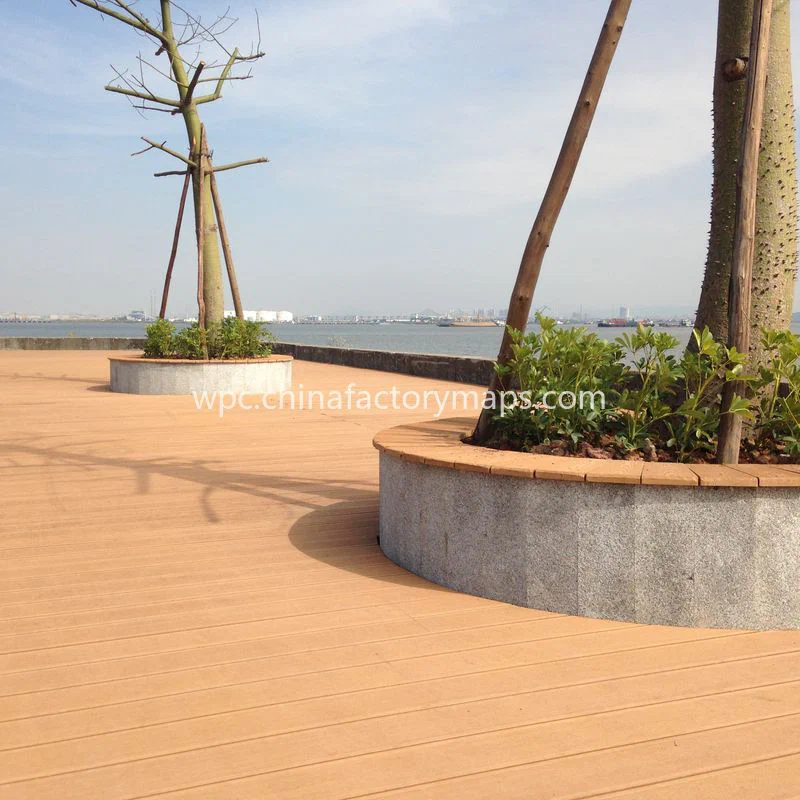
China’s wood-plastic composite manufacturing sector is changing in ways that affect how overseas buyers evaluate suppliers, compare specifications and plan shipments. The composite deck flooring segment remains closely tied to outdoor construction, but sourcing decisions increasingly depend on product design, production consistency and factory location rather than board appearance alone.
From basic boards to differentiated products

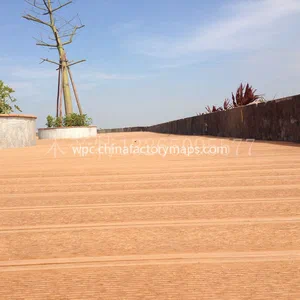
Chinese WPC manufacturers supply decking for residential terraces, commercial outdoor areas, balconies and other exterior applications. Within this segment, product differentiation is becoming a more important consideration. Buyers may encounter conventional solid or hollow profiles alongside capped boards, textured surfaces and products designed to resemble natural timber. These options serve different installation requirements and price positions, so a catalogue comparison alone rarely establishes which product is suitable.
Surface treatments and profile design also influence how a board performs after installation. Embossing affects appearance and underfoot texture, while the composition of the outer layer can influence resistance to staining and weather exposure. Co-extruded products, which use an additional protective outer layer, are one example of manufacturers offering alternatives to standard WPC profiles. Buyers should confirm the construction of the board rather than assume that similar-looking products share the same performance characteristics. Product development matters, but documented specifications and representative samples remain necessary to assess consistency.
Factory geography and export logistics
The location of a supplier is another practical factor in Chinese WPC sourcing. Chinafactorymaps.com currently maps 49 suppliers across six provincial-level areas: Guangdong, Anhui, Shandong, Zhejiang, Shanghai and Jiangsu. Guangdong has the largest listed cluster, with suppliers including those in Foshan, Guangzhou and Zhuhai. Anhui includes locations such as Xuancheng, Suzhou and Guangde, while Shandong’s mapped locations include Zibo, Linyi and Qingdao. These clusters give buyers a starting point for comparing production locations without assuming that every factory serves the same product category or export market.

Port access can affect inland transport costs, shipment planning and the time required to move finished boards from a factory to a vessel. The relevant comparison depends on the actual factory address, available freight routes and the export port used for a particular order. Shanghai Port and Ningbo-Zhoushan Port may be relevant to suppliers in eastern China, while Shenzhen Port and Guangzhou Port are important reference points for sourcing in Guangdong. Qingdao Port is another option to assess for suppliers in Shandong. Distance on a map is useful, but it does not replace a freight quotation or confirmation of the factory’s normal export arrangements. Buyers should compare total delivered logistics costs rather than selecting a supplier on geographic proximity alone.
What buyers are checking more closely
As product options expand, purchasing teams need to distinguish between claims made in a catalogue and performance supported by technical information. WPC contains wood-based material and polymers, and its behaviour depends on the formulation, profile geometry and manufacturing process. Boards resist moisture and insect damage better than many untreated wood products, but they are not indestructible. Prolonged ultraviolet exposure can fade colour, and temperature changes cause expansion and contraction. Installation therefore requires appropriate gaps, a ventilated substructure and fastening methods compatible with the manufacturer’s specifications.
Before placing a bulk order, buyers should request current technical data, installation instructions, colour samples and details of quality-control procedures. Questions about batch consistency, profile dimensions, surface finish and packaging can help establish whether a supplier is equipped for repeat orders. It is also useful to clarify whether the factory manufactures the product itself or sources some items from other producers. A map listing establishes a geographic starting point, not independent verification of production capacity, certification or product performance. For buyers comparing Chinese WPC suppliers now, the strongest sourcing process combines location screening with direct technical checks and a clear understanding of export logistics.
FAQ
Q: Which Chinese regions should buyers compare when sourcing WPC decking?
A: The directory maps suppliers in Guangdong, Anhui, Shandong, Zhejiang, Shanghai and Jiangsu. Buyers can compare individual factory locations alongside product specifications and access to export ports.
Q: What should buyers verify before ordering composite decking from China?
A: Confirm product composition, dimensional tolerances, surface finish, colour consistency, installation requirements and quality-control procedures. Obtain a freight quotation based on the factory’s location and the intended export route.
Related Articles
Featured Suppliers
Verified premium suppliers on our map.
