
How China's Composite Decking Board Industry Is Shifting
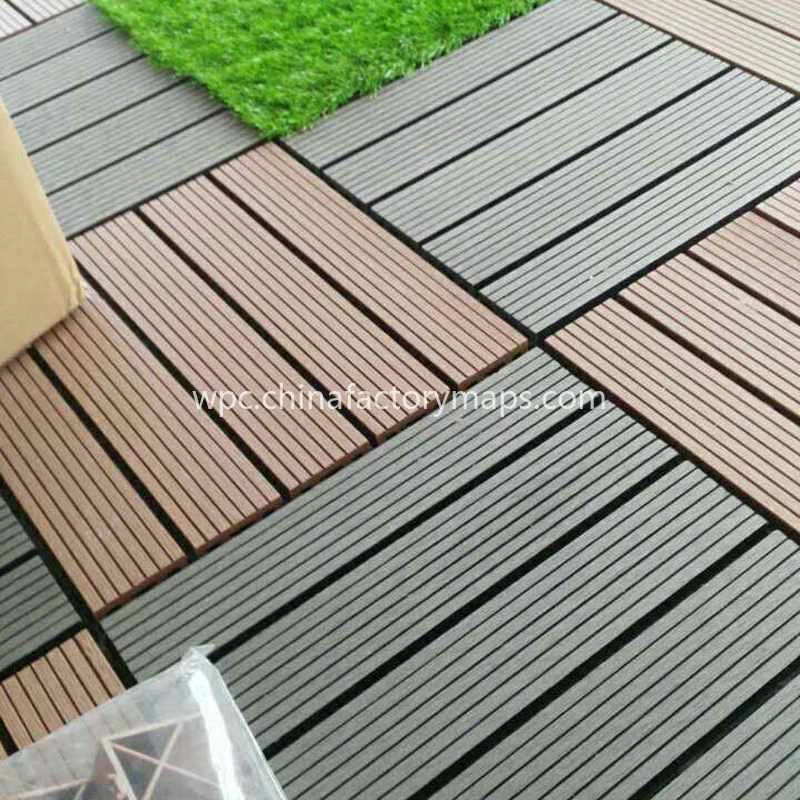
China’s composite decking manufacturing segment is showing a shift in how factories compete, organise production and approach overseas buyers. The changes are visible in product development, regional supplier distribution and export logistics. For importers sourcing composite decking boards, the main consideration is no longer simply finding a factory that can produce a familiar profile. It is understanding which suppliers are equipped to meet changing technical requirements and deliver consistently to the intended market.
A shift from basic profiles to more specialised products
One noticeable change in Chinese WPC manufacturing is the move towards more differentiated decking products. Basic wood-plastic composite boards remain part of the market, but buyers increasingly encounter suppliers offering variations in surface texture, board structure, colour and protective finishes. These differences matter in projects where appearance, slip resistance and exposure conditions influence material selection. Co-extrusion products, for example, add a protective outer layer around a composite core. This construction can improve resistance to staining and surface wear, although performance depends on the materials and manufacturing process used. The shift creates a wider selection for importers, but it also makes direct product comparisons more important. Two boards with similar dimensions may have different compositions, surface characteristics and installation requirements. Buyers should request technical specifications and samples rather than treating product photographs as sufficient evidence of equivalence.
Another development concerns the relationship between production capability and product consistency. A factory’s ability to manufacture a particular profile does not necessarily establish that it can maintain the same dimensions, colour and surface finish across repeated orders. Differences in raw material preparation, extrusion conditions and cooling can affect the finished board. This is particularly relevant for overseas distributors supplying contractors who expect replacement stock to match earlier deliveries. Buyers should examine how suppliers control production batches and whether they retain reference samples or documented specifications. Colour consistency deserves particular attention, especially where projects involve large deck areas or multiple delivery schedules. Sustained exposure to ultraviolet light can also cause colour fading, so initial appearance should not be confused with long-term colour stability. Manufacturers offering several finishes may be attractive, but the practical value lies in their ability to reproduce the selected specification reliably.
Regional manufacturing and export access
The mapped supplier base shows that Chinese WPC production is distributed across several manufacturing regions rather than concentrated in one industrial centre. Guangdong has the largest listed cluster, with suppliers around Foshan, Guangzhou and Zhuhai. Anhui forms another significant group, including Xuancheng, Suzhou and Guangde. Shandong and Zhejiang also have established representation, while Shanghai and Jiangsu account for smaller mapped clusters. This distribution gives overseas buyers different starting points for supplier searches. Guangdong may be a practical region to investigate for buyers comparing factories around the Pearl River Delta, while Anhui offers another concentration worth considering when assessing inland manufacturing options. The number of mapped suppliers does not establish which province produces the best boards. Factory-level capabilities, product specifications and commercial terms remain more useful selection criteria than regional reputation alone.
Transport access is another factor influencing supplier comparisons. A factory’s location relative to an export port can affect inland transport arrangements, shipment planning and the number of logistics steps involved before cargo reaches the vessel. The directory covers major gateways including Shanghai Port, Ningbo-Zhoushan Port, Shenzhen Port, Qingdao Port and Guangzhou Port, alongside Tianjin Port, Xiamen Port, Taicang Port, Beibu Gulf Port, Rizhao Port, Lianyungang Port and Yingkou Port. These options provide a geographic basis for comparing potential suppliers. However, the nearest port on a map is not automatically the most economical export route. Buyers should confirm the factory’s actual dispatch arrangements, available freight services, container handling options and destination-port requirements. Inland distance is one useful screening measure, not a substitute for a complete shipping quotation.
What the shift means for overseas buyers

The growing range of product constructions makes technical verification more important during supplier qualification. WPC decking responds to temperature changes through expansion and contraction. Correct installation therefore requires suitable expansion gaps and a ventilated substructure. Moisture and insect resistance are useful characteristics, but they do not make the material indestructible or eliminate the need for appropriate drainage and installation practices. Buyers should ask manufacturers for installation guidance covering joist spacing, fixing systems, board-end clearances and recommended substructure arrangements. These details can expose differences between suppliers that might otherwise appear similar in a catalogue. Samples should also be assessed for surface texture, dimensional accuracy and finish quality. Where decking is intended for poolside or other exposed applications, the suitability of the surface and the manufacturer’s supporting test information deserve particular attention. Product selection should reflect the conditions of the intended installation rather than a general claim of outdoor suitability.
The sourcing process is also becoming more dependent on matching factory capability to the buyer’s actual business model. A distributor purchasing repeat container loads has different requirements from a contractor sourcing material for a single project. Distributors may place greater emphasis on production continuity, packaging, repeat-order consistency and the availability of several profiles. Project buyers may prioritise technical documentation, sample approval and delivery coordination. Before requesting quotations, importers should establish the required board dimensions, surface finish, colour range, intended application and expected order pattern. They should then compare suppliers against the same specification. This reduces the risk of treating different products as equivalent simply because they share a general WPC description. Factory location and port access can narrow the initial shortlist, but production checks and clear contractual specifications should determine the final selection.

For buyers sourcing from China now, the practical shift is towards more structured supplier evaluation. A broader product range creates opportunities to specify boards more closely, but it also increases the need to distinguish between standard extrusion, co-extrusion and other constructions. Regional mapping helps identify where factories are located and how their positions relate to export infrastructure. It does not replace factory verification, sample testing or shipment planning. Importers who compare suppliers using consistent technical and logistical criteria are better placed to identify a suitable manufacturing partner. The strongest sourcing decision is based on demonstrated production capability and a specification that can be maintained across future orders.
FAQ
Q: Which Chinese provinces have the largest mapped WPC supplier clusters?
A: Guangdong has the largest listed cluster, followed by Anhui, Shandong and Zhejiang. Shanghai and Jiangsu also have mapped suppliers.
Q: Does choosing a factory near an export port guarantee lower shipping costs?
A: No. Inland distance is only one part of the calculation. Freight availability, container handling, transport arrangements and destination requirements also affect total shipping costs.
Q: What should buyers check before ordering composite decking boards?
A: Buyers should review material construction, dimensions, surface finish, colour consistency and relevant technical documentation. Installation requirements, including expansion gaps and substructure ventilation, should also be confirmed.
Related Articles

Featured Suppliers
Verified premium suppliers on our map.
