How China’s Composite Decking Industry Is Adapting to Global Trends
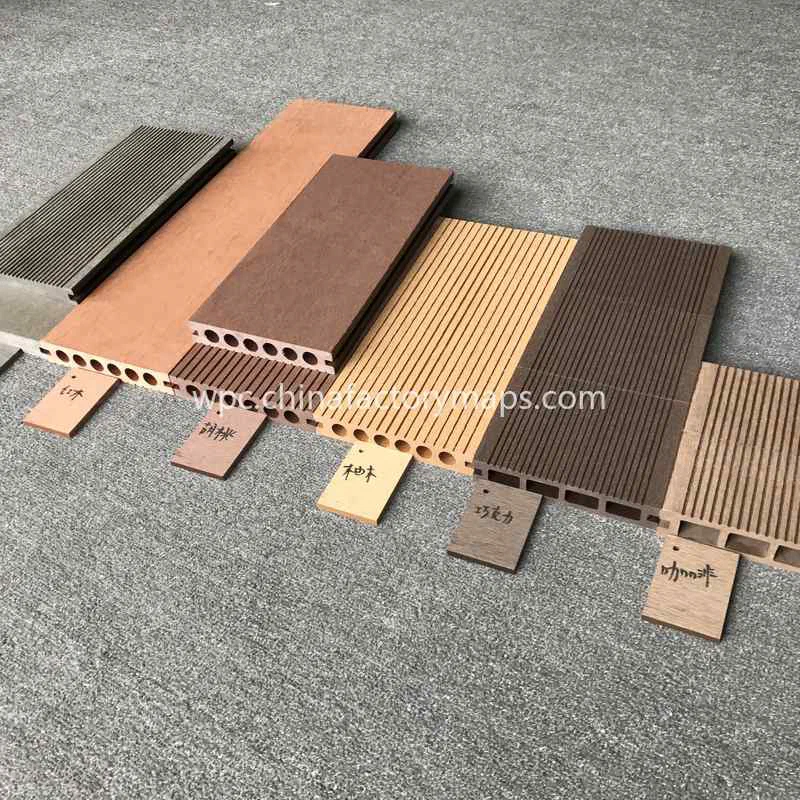
China’s wood-plastic composite (WPC) decking industry is evolving in response to global market demands. Manufacturers are adjusting their production methods, materials, and export strategies to align with shifting priorities, including sustainability, durability, and design versatility. These changes are significant for buyers seeking competitive options for composite decking decks.
Material Innovations and Sustainability
Sustainability remains a key driver in WPC manufacturing. Many Chinese factories are increasing their use of recycled plastics and reclaimed wood fibers, reducing environmental impact while maintaining product quality. Co-extrusion processes are gaining prominence for their ability to enhance durability and color retention, meeting customer expectations for longer-lasting outdoor decking. Buyers sourcing from regions like Zhejiang and Guangdong will find a growing number of suppliers offering eco-conscious options tailored to international standards.

Design Trends and Customization Options
Aesthetic preferences in decking have broadened, prompting manufacturers to offer diverse finishes, textures, and colors. Demand for natural wood-like appearances has pushed innovation in embossing techniques, while contemporary designs are expanding into minimalist and modern styles. Factories in Anhui and Shandong are increasingly equipped for OEM manufacturing, allowing buyers to specify custom designs for garden decking, balcony decking, and poolside applications.
Performance Enhancements for Outdoor Use
Performance improvements are critical as buyers seek decking that withstands diverse climates. UV resistance, anti-slip surfaces, and moisture resistance are now standard features across most product lines. However, some manufacturers are advancing further with fire-resistant properties and heat-resistant materials to address safety and comfort. These upgrades are particularly relevant for export markets with stringent building codes. Suppliers clustered near ports such as Ningbo-Zhoushan and Shanghai are well-positioned to meet these demands efficiently.
Export Logistics and Regional Advantages
Proximity to export ports continues to influence factory selection for overseas buyers. Guangdong suppliers benefit from access to Shenzhen and Guangzhou ports, while Zhejiang manufacturers leverage their proximity to Ningbo-Zhoushan. Buyers targeting bulk orders often prioritize logistical efficiency to minimize shipping costs and lead times. Jiangsu and Shanghai remain attractive for those seeking smaller-scale shipments due to their streamlined access to major export hubs.
Market Implications for Buyers
The ongoing adaptation of China’s composite decking industry reflects broader shifts in buyer expectations. By focusing on sustainability, design versatility, and performance, manufacturers aim to remain competitive in the global market. Buyers sourcing now have opportunities to secure materials that align with these trends, whether for residential projects or large-scale commercial installations.

FAQ
Q: How durable is WPC decking compared to wood? A: WPC decking resists moisture, insects, and UV damage better than wood, but it requires proper installation to avoid warping over time.
Q: Are Chinese WPC manufacturers offering eco-friendly options? A: Yes, many factories now use recycled materials and co-extrusion techniques to reduce environmental impact while maintaining product quality.
Related Articles
Featured Suppliers
Verified premium suppliers on our map.