
How China's Composite Decking Industry Is Responding to Demand
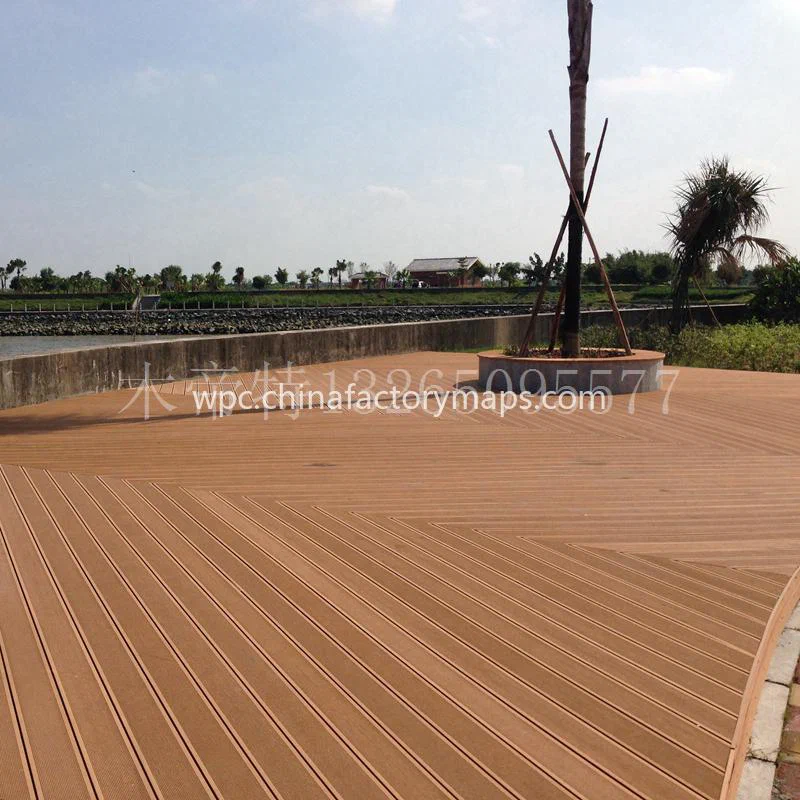
China’s WPC composite decking segment is responding to buyer demand through changes in product specifications, manufacturing priorities and supplier positioning. The shift is not simply toward greater production volume. Buyers are placing more attention on outdoor performance, consistent board quality and the practical requirements of importing from different manufacturing regions.
Changing product priorities in Chinese WPC manufacturing
One noticeable shift is the growing importance of performance specifications. Overseas buyers increasingly assess composite decking against the conditions in which it will be installed, including prolonged sun exposure, rainfall, humidity and temperature variation. This puts greater emphasis on material formulation, surface treatment and dimensional stability. Manufacturers must account for the fact that WPC expands and contracts with temperature. Board profiles, installation gaps and substructure ventilation therefore matter as much as the appearance of the finished product.

Colour retention is another purchasing consideration. Sustained ultraviolet exposure can cause fading, making surface composition and colour consistency relevant during supplier evaluation. Buyers researching composite deck discoloration should distinguish between expected long-term weathering and premature or uneven fading. Co-extruded products, which use a protective outer layer over a composite core, represent one response to this concern. However, their performance still depends on material quality and manufacturing consistency.
A second shift concerns how manufacturers position their product ranges. Rather than treating decking as a single standard product, suppliers may offer different surface textures, board profiles, colours and construction methods for different applications. Residential gardens, balconies, commercial walkways and poolside installations do not share identical requirements. Slip resistance, drainage, surface temperature and maintenance expectations can influence specification decisions. Moisture and insect resistance remain important advantages of WPC, but the material is not indestructible. Buyers should examine technical documentation rather than relying on broad claims about waterproof performance or maintenance-free use.
Regional supplier distribution and sourcing decisions
China’s mapped supplier base shows several distinct manufacturing concentrations. Guangdong has the largest listed cluster, with 22 suppliers across Foshan, Guangzhou and Zhuhai. Anhui follows with nine, including suppliers in Xuancheng, Suzhou and Guangde. Shandong accounts for seven, while Zhejiang has six. Shanghai and Jiangsu have smaller mapped groups, with three and two suppliers respectively. These concentrations give buyers different starting points for comparing production capabilities and logistics.
Port proximity is becoming a practical part of supplier assessment. A factory’s location can affect inland transport arrangements, container positioning and the overall export route. Guangdong suppliers can be assessed against access to Shenzhen Port and Guangzhou Port, while Zhejiang manufacturers may be compared in relation to Ningbo-Zhoushan Port. Shanghai Port is relevant to suppliers in Shanghai and nearby manufacturing areas. Shandong factories can be evaluated against Qingdao Port and other regional export options. The nearest port is not automatically the cheapest route, since shipping schedules, inland freight and destination requirements also influence the final calculation.
For buyers sourcing now, the main implication is that supplier comparisons need to extend beyond catalogue specifications. Factory location, product construction, sample consistency and installation guidance should be reviewed together. Requests for technical information should cover thermal expansion, recommended board spacing, joist requirements, ventilation and cleaning procedures. Samples should also be checked for surface uniformity and dimensional consistency. Where colour stability is important, buyers can request relevant weathering test information and clarify the conditions under which any performance claims apply. These checks help distinguish a suitable manufacturing partner from a supplier whose product description is broader than its documented capabilities.

FAQ
Q: Why are Chinese WPC manufacturers offering more decking specifications?
A: Different outdoor applications require different surface finishes, profiles and performance characteristics. Manufacturers are responding by providing product options suited to varied installation conditions.
Q: Which factors should buyers compare when sourcing WPC decking from China?
A: Compare material construction, colour stability, dimensional tolerances, installation requirements and factory location. Distance to export ports and inland transport arrangements should also be considered.
Related Articles
Featured Suppliers
Verified premium suppliers on our map.
