
How China's Composite Decking Manufacturing Sector Is Evolving
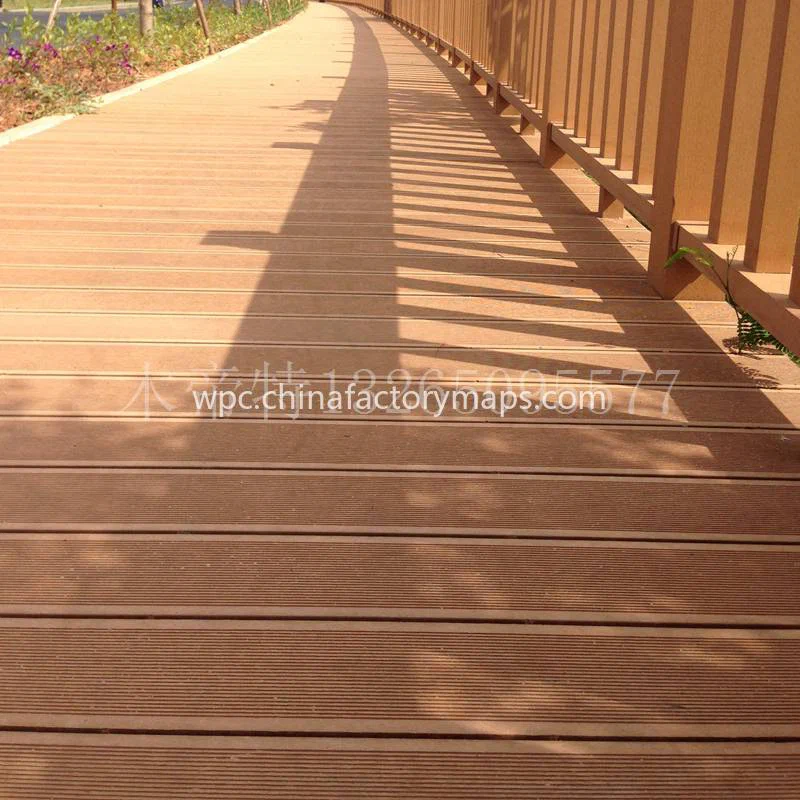
China’s composite decking manufacturing sector is shifting from a market focused primarily on conventional wood-plastic composite boards towards a more differentiated supply base. Manufacturers are paying greater attention to surface finishes, product consistency, extrusion technology and the requirements of overseas distribution channels. For international buyers, these changes affect how suppliers should be evaluated, particularly when comparing production locations, technical capabilities and export logistics. China’s manufacturing base is also geographically distributed, making factory location an important part of the sourcing decision.
One noticeable shift is the growing emphasis on product differentiation. Conventional WPC decking remains an established product category, but buyers increasingly compare more than board dimensions and basic material composition. Surface texture, colour stability, edge profiles, load performance and installation compatibility all influence purchasing decisions. Co-extrusion products are one example of this development. Their additional outer layer is designed to improve surface protection and resistance to staining, moisture and everyday wear, although actual performance depends on the material formulation and manufacturing process. Manufacturers serving different export markets may also offer variations in board profiles, finishes and fastening systems. This creates more opportunities for importers seeking decks with composite decking specifications suited to residential developments, hospitality projects or commercial outdoor spaces. However, a broader catalogue does not automatically indicate stronger production capability. Buyers should establish whether a factory manufactures each profile itself or sources some components from other producers. Sample inspection and production-line verification remain useful when assessing whether advertised specifications can be maintained across repeat orders.

Regional manufacturing patterns provide another indication of how the sector is developing. Guangdong has the largest supplier cluster currently mapped on ChinaFactoryMaps, with 22 listed factories, including businesses in Foshan, Guangzhou and Zhuhai. Its concentration of manufacturing activity makes the province a practical starting point for buyers comparing multiple WPC suppliers. Anhui follows with nine listed suppliers, including locations in Xuancheng, Suzhou and Guangde. Shandong has seven, with mapped locations including Zibo, Linyi and Qingdao, while Zhejiang has six across Huzhou, Jiaxing and Hangzhou. Shanghai and Jiangsu also contribute smaller clusters. These differences matter because sourcing is rarely determined by product specifications alone. A buyer may find several factories offering comparable decking profiles but operating within different industrial and transport networks. Regional concentration can make factory visits and supplier comparisons more manageable, while proximity to established logistics routes can affect the inland movement of finished goods. The mapped distribution is a useful starting point rather than a complete measure of provincial production capacity. Listed supplier counts describe the directory’s current coverage, not the total number of manufacturers operating in each region.

Export logistics are becoming an increasingly relevant part of supplier selection. ChinaFactoryMaps plots factories against their distance to major export ports, allowing buyers to consider transport geography alongside manufacturing location. The relevant port depends on the factory’s position, the shipping service required and the destination market. Shanghai Port and Ningbo-Zhoushan Port are important reference points for buyers assessing suppliers in eastern China. Guangdong manufacturers may be evaluated in relation to Shenzhen Port and Guangzhou Port, while Qingdao Port is relevant to sourcing in Shandong. Other covered gateways include Tianjin Port, Xiamen Port, Taicang Port, Beibu Gulf Port, Rizhao Port, Lianyungang Port and Yingkou Port. Distance alone does not establish the lowest shipping cost. Inland trucking arrangements, container availability, port handling, sailing schedules and the exporter’s established freight relationships also influence the final logistics calculation. Buyers should request quotations based on the actual factory dispatch location rather than assuming that a supplier’s registered city represents its shipping origin. For larger orders, the ability to coordinate production completion with container booking can be as important as the nominal distance to a port.

Technical evaluation is another area where purchasing practices need to become more specific. WPC decking combines wood-based material with polymers and additives, but formulations vary between manufacturers. Differences in recycled content, polymer selection, extrusion conditions and stabiliser packages can affect board density, dimensional consistency, surface quality and long-term outdoor performance. Temperature movement requires particular attention. Composite boards expand and contract with changing temperatures, so installation specifications must account for appropriate gaps, fixing arrangements and a ventilated supporting substructure. Moisture and insect resistance are useful characteristics, but they do not make the material indestructible. Prolonged UV exposure can also cause colour fading, with the degree depending on formulation, pigments and exposure conditions. Buyers should request technical data covering intended applications, dimensional tolerances, installation requirements and relevant performance testing. Where projects involve poolside areas or commercial walkways, surface slip performance deserves separate verification. Fire-performance requirements should also be checked against the regulations applicable to the destination project rather than assumed from general product descriptions. Consistent batch records and retained production samples can help importers investigate differences between initial approvals and subsequent shipments.
The sourcing implications are becoming clearer. Buyers are no longer well served by selecting a factory solely because it offers a familiar WPC decking profile or an attractive initial quotation. A more structured assessment considers production control, material formulation, sample consistency, customisation capability and the factory’s ability to meet export documentation and delivery requirements. It also distinguishes between manufacturers with their own extrusion facilities and trading businesses coordinating production through external plants. Neither arrangement is automatically unsuitable, but the distinction affects communication, quality responsibility and the management of repeat orders. For private-label buyers, confirmation of tooling ownership, packaging arrangements, colour specifications and product identification is particularly important. The directory’s geographic approach adds another layer to this assessment: buyers can identify supplier concentrations, compare factories within the same region and examine their relative positions against covered export ports. The most suitable sourcing partner will depend on the intended market, project specifications and shipment structure. A factory with a technically appropriate product and a workable export route may offer a better procurement fit than a geographically closer supplier whose production arrangements are less transparent.

FAQ
Q: Which Chinese provinces have the largest mapped WPC decking supplier clusters?
A: Guangdong currently has the largest mapped cluster, with 22 listed suppliers, followed by Anhui with nine and Shandong with seven.
Q: Does choosing a factory near an export port guarantee lower shipping costs?
A: No. Inland transport, port handling, container availability and shipping schedules also affect total logistics costs. Buyers should compare quotations using the actual factory dispatch location.
Q: What technical details should buyers check before ordering composite decking?
A: Buyers should verify material formulation, dimensional tolerances, UV performance, surface characteristics and installation requirements, including expansion gaps and substructure ventilation.
Related Articles
Featured Suppliers
Verified premium suppliers on our map.
