
How China’s Plastic Wood Cladding Manufacturing Is Evolving
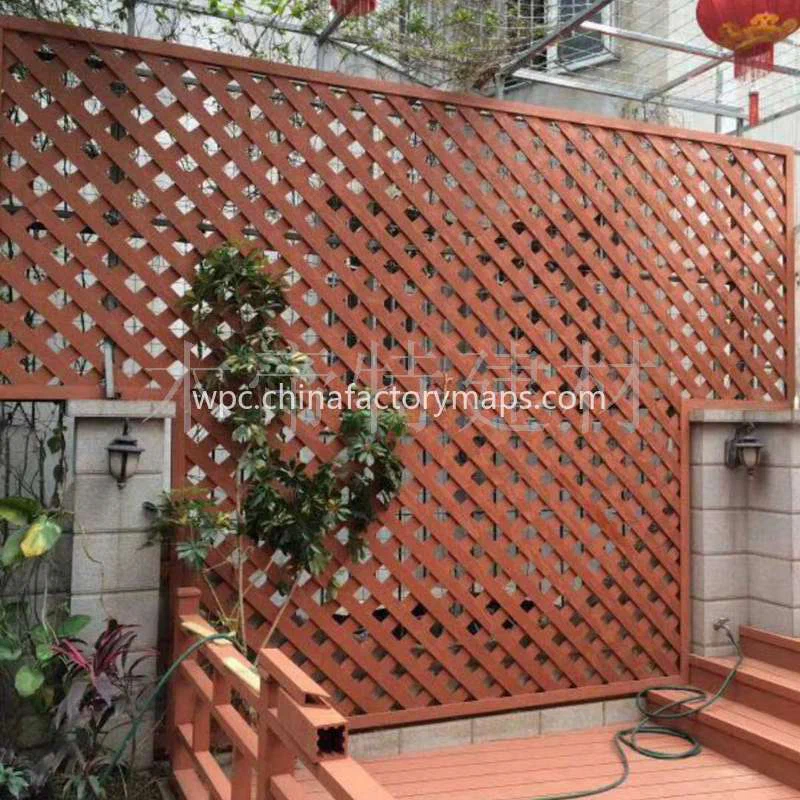
China’s plastic wood cladding manufacturing segment is shifting from a focus on basic board production towards more differentiated products, improved surface finishes and closer attention to installation performance. For overseas buyers, these changes affect how suppliers should be evaluated, particularly when comparing factory locations, production capabilities and export routes.
From basic profiles to more differentiated cladding
Chinese WPC manufacturers have traditionally competed on production capacity and the ability to supply standard profiles in volume. That remains important, but product development is becoming more focused on appearance, surface treatment and application-specific designs. Cladding buyers increasingly need products that reproduce the grain, colour variation and texture of natural timber without relying on solid wood construction.

This has encouraged manufacturers to refine extrusion processes and develop more varied profile options. The plastic wood look cladding category also covers different exterior applications, from residential facades to commercial building finishes and boundary structures. Not every factory serves all these requirements. Some concentrate on standard hollow or solid profiles, while others offer more specialised surface finishes and product configurations. Buyers should distinguish between a manufacturer’s actual production range and products shown in general catalogues.
Production priorities are changing

Another shift concerns the relationship between appearance and material performance. WPC cladding combines wood-based material with polymers and additives, but the formulation and manufacturing process influence the finished product. Manufacturers must account for dimensional movement, moisture exposure, UV ageing and the mechanical demands of exterior installation.
Surface appearance alone is not sufficient evidence of suitability. Colour can fade under sustained sunlight, and boards expand and contract as temperatures change. Moisture and insect resistance are useful properties, but WPC is not indestructible or absolutely waterproof. Installation requirements matter just as much as the board specification. Appropriate expansion gaps and a ventilated supporting substructure are necessary for exterior applications.
For buyers, this makes technical documentation and sample evaluation more relevant during supplier screening. Questions about material composition, profile dimensions, surface treatment, recommended fixing methods and installation tolerances help establish whether a factory can meet the intended application. Consistency between samples and bulk production also deserves attention. A visually convincing sample does not automatically establish manufacturing consistency.

Geographic sourcing and export considerations
The distribution of Chinese WPC factories gives overseas buyers several sourcing regions to compare. Guangdong has the largest mapped cluster, with suppliers listed in Foshan, Guangzhou and Zhuhai. Anhui provides another concentration around Xuancheng, Suzhou and Guangde. Shandong, Zhejiang, Shanghai and Jiangsu also have mapped manufacturers, creating alternatives across eastern and southern China.
Factory location affects more than domestic transport. Export-port access can influence inland freight arrangements, consolidation options and shipping coordination. Guangdong suppliers may be assessed against Shenzhen Port and Guangzhou Port, while manufacturers in Zhejiang and Shanghai can be compared with access to Ningbo-Zhoushan Port and Shanghai Port. Shandong suppliers may warrant comparison with Qingdao Port and other northern export gateways.
A map-based directory helps make these geographic differences visible before commercial discussions begin. Distance to a port is not the same as total logistics cost, however. Road transport, cargo handling, shipment volume and the selected shipping route all affect the final arrangement. Buyers should compare factory locations alongside production suitability rather than treating proximity to a major port as the sole selection criterion.
The sourcing process is also becoming more selective. Instead of comparing factories only by quoted board specifications, buyers can assess product range, manufacturing focus, technical evidence and logistics together. This approach helps separate factories with relevant cladding experience from suppliers whose main business may lie elsewhere in the WPC category.

FAQ
Q: Are Chinese WPC cladding products suitable for exterior building facades?
A: They can be suitable when the formulation, profile design and installation system are specified for exterior exposure. Buyers should check UV performance, thermal movement, ventilation requirements and fixing details.
Q: Which Chinese regions should buyers compare when sourcing WPC cladding?
A: Guangdong, Anhui, Shandong, Zhejiang, Shanghai and Jiangsu all have mapped suppliers. The appropriate region depends on factory capabilities, product requirements and access to suitable export ports.
Related Articles
Featured Suppliers
Verified premium suppliers on our map.
