
How China's Sustainable Composites Industry Is Shifting
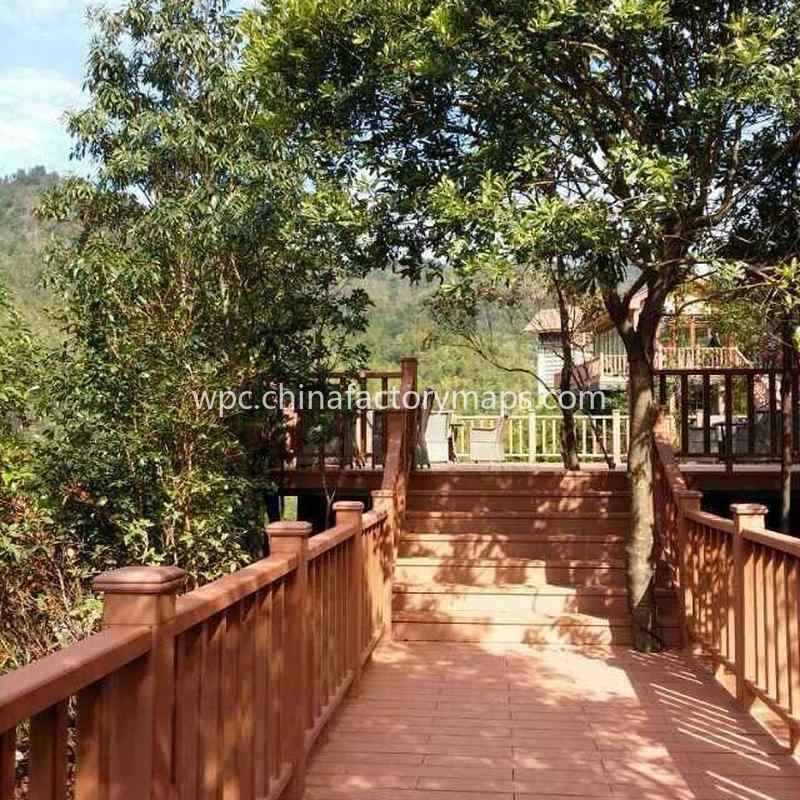
China’s WPC manufacturing sector is showing a shift in how factories position their products, organise production and approach export markets. The sustainable composites segment is becoming more closely connected to material performance, manufacturing consistency and supply-chain requirements. For overseas buyers, these changes affect how suppliers should be compared and where sourcing decisions begin.
A shift from basic production to product differentiation
Chinese WPC manufacturing has developed beyond the production of standard decking boards and fencing profiles. Factories are increasingly competing through differences in product construction, surface finishes, profile design and application-specific specifications. This reflects a more demanding export market, where buyers need materials suited to particular climates, installation conditions and building requirements.

Product differentiation is particularly relevant in outdoor applications. Decking intended for residential gardens has different performance requirements from boards used around swimming pools, commercial walkways or public spaces. Manufacturers must account for slip resistance, surface wear, moisture exposure and dimensional stability. Some production lines also focus on capped or co-extruded profiles, which use an additional outer layer to provide a different surface performance from conventional composite boards.
This shift changes the sourcing process. A factory’s general WPC product range is not enough to establish whether it can meet a particular project specification. Buyers need to examine the actual construction of each profile and distinguish between standard production capabilities and specialised manufacturing options.
Regional manufacturing patterns and export access
China’s mapped WPC supplier base is distributed across several manufacturing regions, with Guangdong currently representing the largest listed cluster. The directory includes 22 suppliers in Guangdong, covering Foshan, Guangzhou and Zhuhai. Anhui follows with nine listed suppliers, including manufacturers in Xuancheng, Suzhou and Guangde. Shandong has seven, while Zhejiang accounts for six.

These regional concentrations provide a useful starting point for understanding sourcing geography. Guangdong offers access to an established industrial area and several export routes, including Shenzhen Port and Guangzhou Port. Buyers considering suppliers in Anhui can compare inland manufacturing locations against their available transport connections. Shandong suppliers can be assessed in relation to Qingdao Port and other northern export routes, while Zhejiang manufacturers have access to the wider port network around Ningbo-Zhoushan.
Shanghai and Jiangsu also form part of the mapped supplier base. Three suppliers are listed in Shanghai and two in Jiangsu, including Nanjing. Their geographical position allows buyers to assess connections with Shanghai Port and Taicang Port.
Distance matters, but it is not the only logistics consideration. A factory located closer to a port may still have a less efficient shipping arrangement than a more distant manufacturer with established inland transport connections. Buyers should compare the factory location, inland freight route, port handling arrangements and intended destination before drawing conclusions about shipping efficiency.
The directory’s geographic approach makes these comparisons more practical. Rather than treating Chinese suppliers as one undifferentiated market, buyers can examine individual manufacturing clusters and their relationship with export infrastructure.
Material performance is becoming a sourcing priority
The technical requirements of WPC products remain central to the industry’s development. Wood-plastic composite combines wood-based material with polymer components, but the finished product’s behaviour depends on its formulation, manufacturing process and profile design. Differences in these factors can affect density, surface quality, dimensional stability and resistance to environmental exposure.
Moisture and insect resistance are established reasons for specifying WPC in outdoor projects. However, composite boards are not indestructible or completely waterproof. Prolonged exposure to environmental conditions can affect their appearance and performance, while sustained ultraviolet exposure can cause colour fading. Temperature changes also cause expansion and contraction, making correct installation clearances essential.
These characteristics place greater responsibility on buyers during technical evaluation. Product samples should be assessed alongside manufacturer specifications, particularly where projects involve significant temperature variation or prolonged outdoor exposure. Installation guidance also matters. WPC decking requires appropriate spacing between boards and a ventilated substructure to accommodate movement and reduce moisture-related problems.
Manufacturers that can provide consistent technical documentation give buyers a clearer basis for comparing products. The relevant question is not simply whether a factory produces composite decking, but whether its materials and production processes are suitable for the intended application.
What buyers should examine when comparing factories
The changing structure of the Chinese WPC sector makes supplier evaluation more specific. Buyers should distinguish between manufacturers with established production capabilities and trading businesses offering products sourced from other facilities. This distinction affects quality control, customisation discussions, production scheduling and responsibility for technical problems.
Several checks help establish whether a supplier is suitable for an export order:
- Product range: Identify whether the factory produces decking, fencing, wall panels or other WPC profiles.
- Production capability: Confirm whether the relevant products are manufactured in-house and whether specialised profiles require external processing.
- Material specifications: Request information about composition, density, profile dimensions and surface construction.
- Quality consistency: Examine samples from production rather than relying exclusively on presentation samples.
- Technical support: Check whether installation instructions address expansion gaps, ventilation and suitable fixing methods.
- Export logistics: Establish the available shipping routes and whether the supplier regularly handles export orders.

These checks become particularly important when comparing factories across different provinces. A manufacturer offering a wider product range may not necessarily have stronger capabilities in every category. Similarly, a supplier with a convenient location does not automatically offer the best technical match.
Buyers should also establish how product changes are managed between sample approval and bulk production. Colour variation, profile tolerances and surface finish can affect the appearance of completed projects. Written specifications provide a reference point when production quantities increase.
For larger orders, consistency between production batches deserves particular attention. A sample demonstrates what a factory can produce under specific conditions; it does not independently establish that every subsequent shipment will match it.
The changing role of location in sourcing decisions
Geographical sourcing is becoming a practical part of supplier assessment rather than a separate logistics exercise. China’s WPC factories operate within different regional industrial environments, and their distance from export infrastructure can influence transport arrangements and communication with freight providers.
The major ports covered by the directory include Shanghai Port, Ningbo-Zhoushan Port, Shenzhen Port, Qingdao Port, Guangzhou Port, Tianjin Port, Xiamen Port, Taicang Port, Beibu Gulf Port, Rizhao Port, Lianyungang Port and Yingkou Port. This range provides buyers with several reference points when comparing manufacturing locations.
The nearest port is not necessarily the appropriate export port. Shipping schedules, container availability, inland transport costs and the final destination all influence route selection. Buyers should therefore treat mapped distance as an initial screening tool rather than a complete freight calculation.
A location-based supplier directory also helps identify alternatives within the same manufacturing region. If one factory cannot meet a technical requirement or production schedule, nearby suppliers may offer comparable product categories without requiring an entirely different sourcing route. That makes regional comparison useful during both initial procurement and supplier qualification.
For overseas buyers, the current shift in Chinese WPC manufacturing means that sourcing decisions require a closer connection between product specifications, factory capabilities and export geography. A supplier’s location establishes where production takes place, but technical verification and production controls determine whether the resulting material meets project requirements.

FAQ
Q: Which Chinese provinces have the largest mapped WPC supplier clusters?
A: Guangdong has the largest listed cluster, with 22 suppliers, followed by Anhui with nine and Shandong with seven. Zhejiang, Shanghai and Jiangsu are also represented in the directory.
Q: What should buyers check before sourcing WPC decking from China?
A: Buyers should verify material specifications, manufacturing capabilities, sample consistency, installation requirements and export logistics. Particular attention should be paid to thermal movement, ventilation, moisture exposure and long-term UV performance.
Related Articles
Featured Suppliers
Verified premium suppliers on our map.
