
How China's WPC Ceiling Panel Manufacturers Are Adapting to Demand
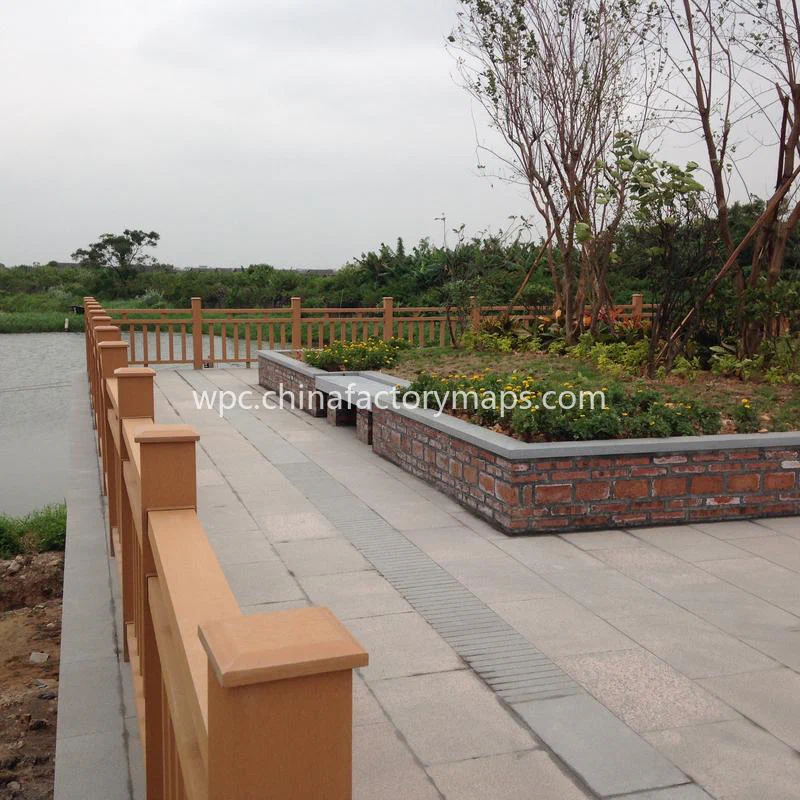
Chinese WPC ceiling panel manufacturers are adjusting product ranges and production priorities as buyers place greater emphasis on interior applications, surface finishes and installation requirements. The shift is changing how factories approach panel design, material formulation and export orders. For overseas buyers, understanding these changes helps distinguish suppliers with relevant manufacturing capabilities from those offering only broad WPC product catalogues.
A shift from general WPC production to interior applications

WPC manufacturing in China has traditionally covered several product categories, including outdoor decking, fencing, wall cladding and decorative panels. Ceiling products are becoming a more distinct part of this manufacturing mix. Rather than treating interior panels as an extension of outdoor product lines, some manufacturers are placing greater attention on profiles, surface textures and dimensions suited to indoor projects.
This change matters because ceiling panels face different performance expectations from decking boards. Appearance consistency, panel weight, dimensional accuracy and the quality of joining systems can carry more importance than resistance to outdoor weather exposure. Buyers sourcing a wpc wall panel for ceiling applications should therefore check whether a factory regularly produces interior panels or simply adapts existing extrusion equipment for occasional orders.
Product range also matters. A supplier may list several decorative panel styles without manufacturing all of them in-house. Buyers should establish which profiles are produced directly, which involve external processing and whether the factory can maintain consistent specifications across repeat orders. These distinctions become important when a project requires multiple rooms, buildings or shipments.

Production priorities are changing
Material formulation is one area receiving closer attention. WPC panels generally combine wood-based material with thermoplastic polymers and additives. The balance affects processing behaviour, surface appearance, stiffness and dimensional stability. Ceiling applications require manufacturers to consider how panels behave under indoor temperature changes and how their profiles perform after installation.
Manufacturers also face a practical production trade-off. More complex surface finishes and decorative profiles can expand the range of available designs, but they may require additional tooling, process adjustments and quality checks. A factory that can produce a standard hollow panel efficiently may not have the same experience with detailed embossed surfaces or specialised joining profiles.
Quality control needs to reflect the intended application. Buyers can request information about panel dimensions, thickness tolerances, profile consistency and surface defects. Samples should be examined under ordinary interior lighting, where differences in colour and texture can become apparent. Where several production batches are expected, confirming how colour and dimensional consistency are controlled is particularly useful.
Packaging deserves attention as well. Ceiling panels can be vulnerable to surface scratches, edge damage and deformation during transport. Export buyers should establish how panels are supported, separated and protected inside cartons or other packaging. A visually acceptable factory sample does not automatically demonstrate that the same finish will arrive in good condition after international shipping.
Regional sourcing and buyer checks
China’s mapped WPC supplier base is geographically concentrated, but its distribution is not limited to one manufacturing centre. Guangdong accounts for the largest listed cluster, with 22 suppliers across locations including Foshan, Guangzhou and Zhuhai. Anhui has nine listed suppliers, including factories in Xuancheng, Suzhou and Guangde. Shandong accounts for seven, with activity around Zibo, Linyi and Qingdao. Zhejiang has six listed suppliers, while Shanghai and Jiangsu account for smaller groups.
These regional differences provide a starting point for supplier searches, not proof of product specialisation. A large cluster can offer more opportunities to compare manufacturing capabilities, but the number of mapped factories does not establish how many produce ceiling panels. Buyers should verify the actual product range, extrusion capacity and experience with interior applications before treating a supplier as a suitable match.
Transport geography adds another consideration. The directory maps factories against export ports including Shanghai Port, Ningbo-Zhoushan Port, Shenzhen Port, Qingdao Port and Guangzhou Port, alongside several other major Chinese ports. A factory’s distance from a port can help buyers assess inland transport requirements, but it does not determine the final shipping cost or transit time by itself. Container availability, trucking arrangements, cargo dimensions and the selected shipping service also influence logistics.

For ceiling panel orders, packaging volume can be as important as product weight. Long profiles may occupy substantial container space, while protective packaging can increase the total shipment volume. Buyers comparing suppliers in different provinces should request packing dimensions and loading information alongside product quotations. This makes comparisons more meaningful than relying on factory location alone.

What buyers should verify before placing orders
The growing distinction between interior and exterior WPC products makes technical verification essential. Ceiling panels are not interchangeable with outdoor decking or facade products simply because they share a wood-plastic composition. Their intended use, profile design and installation conditions need separate assessment.
A useful supplier review should cover the following points:
- Product specifications: Confirm panel width, thickness, length, profile structure and available surface finishes.
- Material composition: Ask about the wood-polymer formulation and whether specifications remain consistent between batches.
- Dimensional stability: Establish how the manufacturer evaluates expansion and contraction under temperature changes.
- Installation requirements: Request guidance on fixing methods, joint details, spacing and supporting structures.
- Quality inspection: Check colour consistency, surface finish, edge condition and dimensional tolerances.
- Export packaging: Review protection against abrasion, crushing and moisture exposure during storage and transport.
- Production arrangements: Confirm which processes take place at the factory and which are outsourced.
Installation guidance should receive particular attention. WPC expands and contracts with temperature, so ceiling systems need suitable expansion allowances and installation spacing. A ventilated supporting structure may also be necessary according to the product design and installation conditions. Moisture resistance does not mean that every WPC panel is waterproof under all circumstances, and sustained UV exposure can cause colour fading. The material is also not indestructible; impact, unsuitable fixing methods and excessive loading can cause damage.
Buyers should request installation documentation before finalising specifications. A panel that looks suitable in a sample may require a different fixing arrangement or support spacing from the one assumed by the project contractor. Confirming these details early reduces the risk of disputes over product performance after delivery.
For overseas sourcing teams, the most useful comparison is between factories with demonstrated experience in the required ceiling profile and those offering WPC products more generally. Geographic mapping helps narrow the search, while direct technical checks establish whether a manufacturer can meet the project’s actual requirements. Production location, export-port access and product capability should be assessed together rather than treated as separate purchasing decisions.
FAQ
Q: Are Chinese WPC manufacturers specialising in ceiling panels?
A: Some manufacturers are developing more specific interior panel ranges, including decorative profiles and finishes. Buyers should verify actual production experience rather than assume every WPC factory offers dedicated ceiling products.
Q: Which factors matter most when sourcing WPC ceiling panels from China?
A: Buyers should check material specifications, dimensional consistency, installation requirements, packaging and factory production capabilities. Factory location and distance to an export port can then help inform the logistics comparison.
Related Articles
Featured Suppliers
Verified premium suppliers on our map.
