
How Chinese Factories Are Expanding Their Composite Pool Decking Range
Chinese WPC manufacturers are broadening their poolside decking ranges beyond standard outdoor boards. The shift is visible in product formats, surface treatments and the way factories approach export orders. For overseas buyers, the main change is a wider choice of specifications, with greater attention to installation conditions and the demands of wet outdoor environments.
The traditional WPC decking range has centred on hollow and solid profiles in wood-effect finishes. These products remain relevant, but poolside applications are encouraging factories to offer more specialised options. Buyers are seeing greater emphasis on surface texture, board dimensions, colour consistency and edge finishing. The objective is to make decking suitable for areas exposed to regular splashing, foot traffic and outdoor cleaning. A product intended for a garden terrace may not automatically meet the requirements of a swimming pool surround. Factories are increasingly treating these as related but distinct applications.
From standard decking to poolside specifications
Surface design is one of the clearest areas of development. Pool surrounds require sufficient grip under wet conditions, so buyers are paying closer attention to embossed textures, brushed finishes and the direction of surface grooves. Anti-slip performance should be assessed using documented test methods rather than appearance alone. A deeply textured board is not automatically safer in every installation. Dirt and residue can also collect in pronounced surface patterns, affecting cleaning requirements. Buyers sourcing composite decking pool products should request technical information on wet-condition slip resistance and clarify whether the stated performance applies to the exact board profile being quoted.

Material construction is another area of differentiation. Standard WPC profiles generally combine wood fibre or wood flour with a polymer matrix and processing additives. Some manufacturers also offer capped or co-extruded products, in which an outer polymer layer surrounds the composite core. This construction can improve resistance to staining, surface moisture and certain forms of weathering, depending on the formulation. It does not make the board indestructible. Pool chemicals, prolonged standing water, surface abrasion and sustained UV exposure still need consideration. Buyers should establish whether the proposed product has been tested for the intended exposure conditions, rather than assuming that all capped decking performs equally.

Regional manufacturing and sourcing considerations
The mapped supplier base shows a concentration in Guangdong, which accounts for the largest listed cluster, with factories across Foshan, Guangzhou and Zhuhai. This gives buyers a substantial regional starting point when comparing poolside decking specifications. Guangdong suppliers may also be relevant where sourcing involves other outdoor building products or coordinated component orders. However, geographical concentration should not be treated as proof of manufacturing capability. A factory producing general WPC wall panels or fencing may not have the same experience with decking profiles designed for wet environments. Product-specific samples and production records provide a more useful basis for comparison.
Anhui and Shandong offer additional sourcing routes. The mapped Anhui cluster includes Xuancheng, Suzhou and Guangde, while Shandong suppliers are represented in Zibo, Linyi and Qingdao. Zhejiang, including Huzhou, Jiaxing and Hangzhou, forms another smaller cluster. These locations give buyers a broader geographic comparison when assessing product ranges and logistics. Shanghai and Jiangsu also appear in the directory. The practical question is not simply which province has the most listed factories, but which suppliers can produce the required profile consistently and support the intended export arrangement. Factory location can narrow the search, but technical fit should determine the shortlist.
Port proximity adds another layer to supplier evaluation. The directory maps factories against export gateways including Shanghai Port, Ningbo-Zhoushan Port, Shenzhen Port, Qingdao Port and Guangzhou Port, alongside other covered ports. For bulky decking orders, inland transport can influence the overall sourcing calculation. Buyers should compare the factory’s actual dispatch route, container-loading arrangements and destination requirements rather than relying on straight-line distance to a port. A nearby port does not necessarily mean a shorter or cheaper shipment. Packaging dimensions, board lengths and container utilisation also affect the final logistics plan.

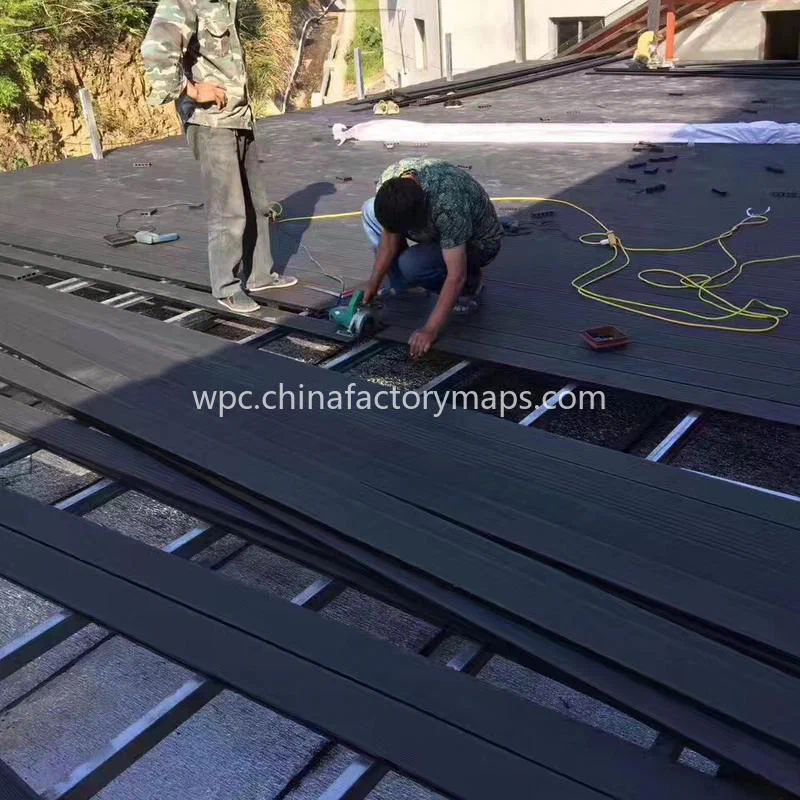
The expanded product range makes specification checks more important. WPC expands and contracts with temperature changes, so installation instructions need to define board-end gaps, side clearances and fixing arrangements. The supporting substructure should allow ventilation and drainage rather than trapping moisture beneath the deck. Buyers should also confirm joist spacing, allowable spans, fastening methods and whether the selected profile is intended for commercial or residential loading conditions. Moisture and insect resistance are useful material characteristics, but they do not remove the need for correct installation. Colour may also fade under sustained UV exposure, making sample approval and outdoor weathering information relevant when colour matching matters.

For buyers sourcing now, the strongest approach is to compare factories against a defined application rather than a broad request for WPC decking. The specification should identify board profile, dimensions, surface finish, colour, capping construction where applicable and expected installation conditions. It should also distinguish between a pool surround, a general outdoor terrace and a commercial leisure facility. Requesting production samples, technical sheets and installation guidance helps reveal whether a supplier’s expanded range reflects established manufacturing capability or simply a wider catalogue. The directory’s geographic and port-distance filters can then help organise the supplier shortlist around practical shipping routes.
FAQ
Q: Is WPC decking suitable for swimming pool surrounds?
A: WPC can be suitable for poolside installations when the product has appropriate wet-condition slip performance and the substructure provides adequate ventilation and drainage. Buyers should verify the specific product’s technical data and installation requirements.
Q: Which Chinese regions should buyers compare when sourcing poolside WPC decking?
A: Guangdong, Anhui, Shandong and Zhejiang are useful starting points within the mapped supplier network. Factory-level product capability and export logistics should take priority over regional supplier counts.
Related Articles
Featured Suppliers
Verified premium suppliers on our map.
