
How Chinese Factories Are Responding to Demand for Grey Composite Decking
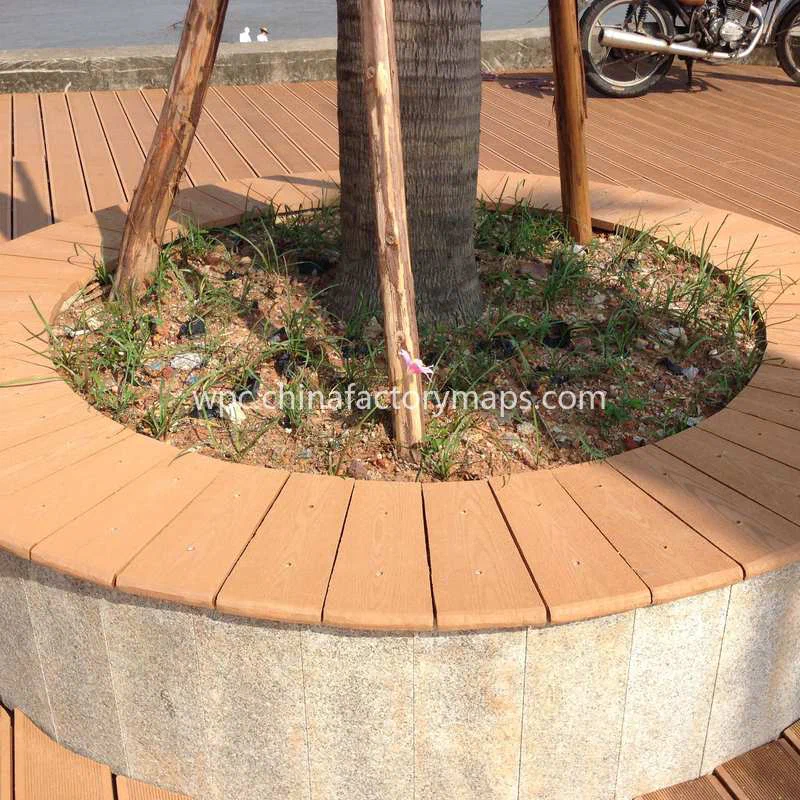
Grey composite decking is becoming a more distinct product category within Chinese WPC manufacturing. Factories are responding to buyer interest in neutral outdoor finishes by adjusting colour ranges, surface textures and production options rather than treating grey as a minor variation of traditional wood tones. For overseas importers, the shift affects how suppliers are compared, where production is concentrated and which technical details deserve attention before an order is placed.
A shift from wood imitation to contemporary colour ranges
Chinese WPC manufacturers have traditionally offered decking in shades designed to resemble natural timber, including brown, reddish brown and darker wood tones. Grey introduces a different design direction. It is commonly specified for contemporary residential developments, commercial terraces, apartment balconies and outdoor areas where a less traditional appearance is preferred. The demand for composite deck grey products also reflects a practical sourcing consideration: buyers increasingly want colour options that can be coordinated with modern building facades, aluminium frames and outdoor furniture.
Manufacturers are responding by offering variations within the grey category rather than relying on a single standard shade. Light grey, charcoal and intermediate tones serve different architectural requirements. Surface finishes matter as much as colour. A brushed or wood-grain texture can soften the appearance of a uniform grey board, while a more consistent finish may suit commercial projects with a contemporary specification. Buyers should distinguish between colour shown in a catalogue and the appearance of an actual production batch. Lighting, surface texture and manufacturing conditions can all affect the finished result. Requesting physical samples is therefore an important part of supplier evaluation.
Regional production and the sourcing implications
The geographical distribution of Chinese WPC factories gives buyers several starting points for identifying suppliers. Guangdong currently represents the largest mapped cluster, with 22 listed suppliers, including factories in Foshan, Guangzhou and Zhuhai. Its concentration makes the province a useful starting point for importers comparing manufacturers and discussing different decking finishes. Anhui follows with nine listed suppliers, including Xuancheng, Suzhou and Guangde. Shandong has seven, with mapped production locations including Zibo, Linyi and Qingdao.
Zhejiang accounts for six listed suppliers, including Huzhou, Jiaxing and Hangzhou. Shanghai has three, while Jiangsu has two, including Nanjing. These clusters provide a geographic framework, not a ranking of manufacturing quality or grey decking specialisation. A factory’s location alone does not establish whether it has the required extrusion equipment, colour consistency controls or experience with a particular surface profile. Buyers should use location to narrow the initial search, then verify the product range and manufacturing capabilities directly. Comparing suppliers across provinces can also reveal differences in product focus and logistical arrangements.
The location of a factory relative to an export port is another relevant factor. The directory maps suppliers against major ports including Shanghai Port, Ningbo-Zhoushan Port, Shenzhen Port, Qingdao Port and Guangzhou Port, alongside Tianjin Port, Xiamen Port, Taicang Port, Beibu Gulf Port, Rizhao Port, Lianyungang Port and Yingkou Port. Port proximity can influence inland transport arrangements, container positioning and coordination with freight forwarders. It does not automatically determine the lowest shipping cost. The final comparison should account for the factory’s actual dispatch location, cargo volume, transport route and export arrangements. For buyers sourcing from several provinces, mapping these distances early can help identify logistical questions before requesting quotations.
What buyers should check before placing an order
Grey decking requires the same technical scrutiny as other WPC profiles. A colour specification does not establish the board’s composition, structural performance or suitability for a particular installation. Buyers should establish whether the product uses a solid or hollow profile, identify the wood and polymer composition, and check the intended application. Surface texture and slip performance also deserve attention, particularly for balconies, poolside installations and commercial outdoor spaces.

Colour stability is a separate consideration. Sustained ultraviolet exposure can cause WPC decking to fade, and grey shades may change in appearance over time. Manufacturers should explain what UV-related additives or surface treatments are used and provide any available test documentation. Co-extruded products may offer an additional protective surface layer, but the construction and performance of that layer need to be verified rather than assumed. Moisture and insect resistance are useful characteristics of WPC, but boards are not indestructible or completely waterproof under every installation condition.

Installation requirements also affect product selection. WPC expands and contracts with temperature changes, so the manufacturer’s specified expansion gaps must be followed. The supporting substructure needs adequate ventilation and appropriate joist spacing. Buyers should request installation instructions alongside technical specifications, especially when sourcing profiles for projects with different climates. Before confirming an order, it is sensible to compare production samples, colour references, dimensional tolerances, packaging details and the supplier’s ability to maintain consistency across repeat batches. These checks help distinguish a factory capable of producing a suitable grey decking specification from one simply listing grey as a catalogue option.

FAQ
Q: Which Chinese provinces have the largest mapped WPC supplier clusters?
A: Guangdong has the largest mapped cluster, with 22 listed suppliers. Anhui follows with nine, while Shandong has seven.
Q: Does grey WPC decking require different installation methods from other colours?
A: The basic installation principles are the same. Temperature-related expansion, ventilation, substructure support and manufacturer-specified spacing must all be considered.
Q: How can overseas buyers compare Chinese grey decking suppliers?
A: Compare product specifications, physical samples, colour consistency, production capabilities and available technical documentation. Factory location and distance to export ports can also help assess logistics.
Related Articles
Featured Suppliers
Verified premium suppliers on our map.
