
How to Compare Chinese Composite Decking Suppliers Before Sampling
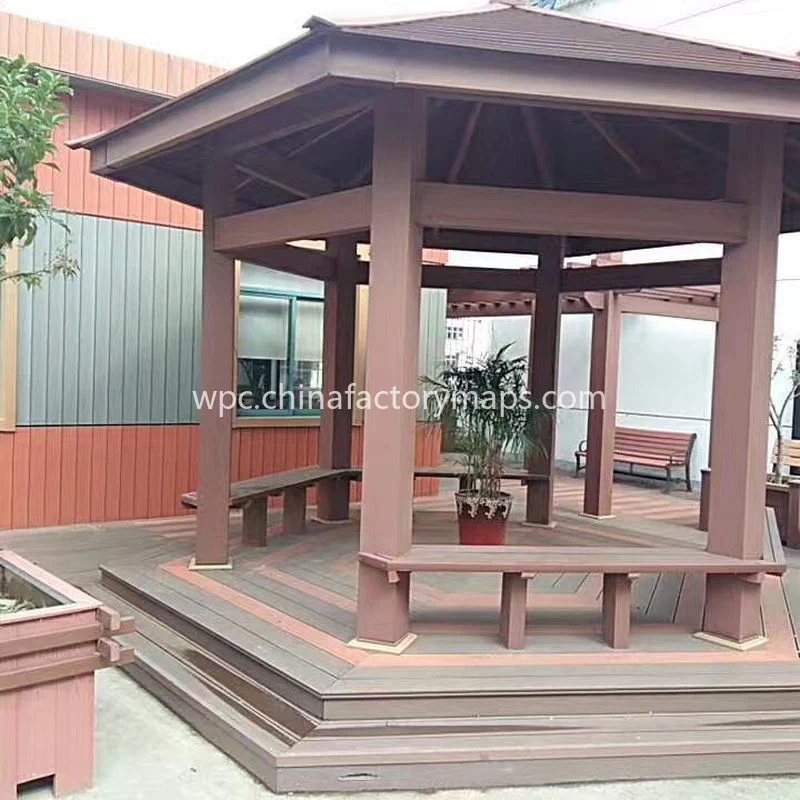
Choosing a Chinese composite decking supplier before requesting samples starts with narrowing the field by geography, then checking whether each factory can produce the board specification required for the project. Factory location affects port access, shipping arrangements and the practical scope of supplier verification. A geographic directory provides a useful first filter, but location alone cannot establish manufacturing capability or product quality.
1. Use supplier geography to narrow the shortlist
China’s WPC manufacturing suppliers are not concentrated in one province. The mapped supplier base on ChinaFactoryMaps.com covers six provincial-level areas, with Guangdong accounting for the largest listed cluster, followed by Anhui and Shandong. Zhejiang, Shanghai and Jiangsu provide additional sourcing options. These concentrations give buyers a starting point for comparing factories operating in different manufacturing regions.
Guangdong has 22 listed suppliers, including factories in Foshan, Guangzhou and Zhuhai. Its position in southern China makes it relevant for buyers comparing access to Shenzhen Port and Guangzhou Port. Anhui has nine listed suppliers, including Xuancheng, Suzhou and Guangde. Shandong has seven, including Zibo, Linyi and Qingdao. These locations offer different geographic relationships to the northern and eastern export network.
Zhejiang has six listed suppliers across Huzhou, Jiaxing and Hangzhou, while Shanghai has three and Jiangsu has two, including Nanjing. Buyers can compare these locations against Shanghai Port, Ningbo-Zhoushan Port and Taicang Port when assessing export routes. The objective is not to assume that a factory closest to a port is automatically the best choice. It is to reduce the initial search to suppliers whose locations make commercial and logistical sense.

A regional cluster can also indicate where further supplier research is worthwhile. Several listed factories within one province create opportunities to compare product specifications and manufacturing claims without starting an entirely new geographic search. However, cluster membership does not prove that factories share production capabilities, raw material sources or quality standards.
2. Compare location, production and export arrangements
Distance to an export port is one useful sourcing variable, but it needs context. A factory’s actual transport arrangement may involve a local collection point, inland trucking, container handling and a separate port forwarding service. The shortest straight-line distance on a map does not necessarily produce the shortest transit time or lowest total logistics cost.

ChinaFactoryMaps.com plots suppliers geographically alongside their distance to the nearest covered export port. The directory includes Shanghai Port, Ningbo-Zhoushan Port, Shenzhen Port, Qingdao Port and Guangzhou Port, as well as Tianjin Port, Xiamen Port, Taicang Port, Beibu Gulf Port, Rizhao Port, Lianyungang Port and Yingkou Port. Buyers can use these reference points to identify regional candidates before requesting freight quotations.
Port proximity should be checked against the factory’s actual shipping arrangements. Ask which port is normally used for export, whether the supplier handles customs documentation, and whether finished boards are transported directly from the production site or through an intermediary warehouse. Requesting the factory’s usual loading port is particularly important when comparing suppliers in different provinces.
Production location also deserves independent verification. A trading company may operate from a commercial address while manufacturing takes place elsewhere. Buyers should establish whether the listed location is the production facility, a sales office or a warehouse. A factory address, production photographs and a live video inspection can help establish the distinction. Where practical, an independent factory audit provides stronger evidence.
The directory is most useful at this stage as a geographic screening tool. It helps buyers identify which suppliers merit further investigation rather than treating every map listing as an equally verified manufacturing operation.
3. Vet the product before requesting samples
Once the geographic shortlist is established, the next step is to compare the actual composite decking specifications. WPC boards vary in their formulation, surface construction, profile, dimensions and intended application. A supplier’s general description of composite decking is not enough to establish whether its products meet a project’s requirements.

Request a technical specification sheet covering the following points:
- Core composition, including the stated proportions and types of wood fibre, polymer and additives.
- Board dimensions, wall thickness and profile construction.
- Solid or hollow construction, including internal reinforcement where applicable.
- Surface treatment, embossing and available colour options.
- Whether the board uses standard extrusion or co-extrusion with a protective outer layer.
- Recommended joist spacing, fixing method and expansion gaps.
- Applicable test reports and the standards under which testing was conducted.
The distinction between standard and capped co-extruded decking matters. A co-extruded surface can provide additional protection against staining, moisture exposure and surface wear, depending on its construction. It does not make the board indestructible or eliminate the need for correct installation. Buyers should ask how the cap layer is bonded to the core and whether the supplier has relevant performance test data.
Installation requirements also reveal whether a supplier understands the product beyond its appearance. WPC expands and contracts with temperature changes. Boards need suitable expansion gaps, while the supporting substructure must allow ventilation and drainage. Moisture and insect resistance are useful material characteristics, but they do not remove the risk of damage from poor installation or prolonged environmental exposure. Sustained UV exposure can also cause colour fading.
4. Compare samples on consistent terms
Sample requests should follow technical screening, not replace it. Sending requests to every mapped supplier creates unnecessary work and makes meaningful comparisons harder. A smaller group of factories with clear production information is a better starting point.
Ask shortlisted suppliers to provide samples representing the exact product construction under consideration. If the project requires capped decking, a sample of standard solid WPC board is not an adequate substitute. Similarly, a hollow profile should not be compared directly with a solid board without accounting for differences in weight, construction and intended application.
Use the same evaluation criteria for each sample:
- Dimensional consistency and visible manufacturing defects.
- Surface finish, colour uniformity and embossing quality.
- Edge quality, profile accuracy and internal wall construction.
- Resistance to scratching and staining under comparable test conditions.
- Available performance reports for UV exposure, slip resistance and relevant mechanical properties.
Colour comparisons should take place under consistent lighting. Surface appearance can differ between indoor lighting and outdoor daylight, and a small sample cannot establish long-term colour stability. Request test information where sustained sun exposure is a major project consideration.
Price comparisons need the same discipline. The best composite decking for the price is not necessarily the board with the lowest quoted unit cost. Board dimensions, material composition, surface construction, packaging and shipping terms all affect the comparison. Buyers should request quotations against an identical specification and clarify whether the quoted price covers the same product configuration.
The sample stage should also establish whether the supplier can reproduce the tested specification in bulk production. Ask how production batches are checked and whether retained samples or inspection records are available. A good sample is evidence of one supplied piece, not proof that every subsequent shipment will match it.
5. Use the map as the first stage of supplier qualification

A map-based directory fits into the sourcing process before direct factory communication. Buyers can filter the mapped Chinese WPC supplier base by province and compare geographic relationships to covered export ports. This provides a practical way to create a regional shortlist without relying entirely on supplier advertising or broad marketplace search results.
The next stage is independent qualification. For each shortlisted factory, confirm its operating address, manufacturing role, product range and export experience. Request business documentation where appropriate, together with technical data and evidence of production facilities. If a supplier cannot explain its board construction or provide consistent specifications, its geographic position should not keep it on the shortlist.
A comparison record helps prevent different suppliers from being assessed against different standards. Useful fields include factory location, nearest mapped port, stated export port, board construction, dimensions, surface type, available test documentation, sample status and quotation basis. Keeping these details together makes regional and technical differences easier to identify.
Buyers should also distinguish between the directory’s geographic information and claims made directly by suppliers. A mapped location helps identify where a business is situated. It does not independently certify its production capacity, product performance or legal status. Those matters require separate checks.
A sensible sequence is to shortlist by geography, verify the manufacturing address, compare technical specifications, review export arrangements and then request samples. This reduces the number of suppliers requiring detailed evaluation while keeping product suitability at the centre of the decision.
FAQ
Q: Does the Chinese WPC supplier cluster with the most listings necessarily offer better composite decking?
A: No. A larger cluster provides more suppliers to compare, but manufacturing capability, product specifications, quality controls and export arrangements must be assessed individually.
Q: Should buyers choose the factory closest to an export port?
A: Not automatically. Port distance is one logistics factor; inland transport costs, the factory’s usual shipping arrangements, product suitability and overall quotation terms also matter.
Related Articles
Featured Suppliers
Verified premium suppliers on our map.
