
How to Shortlist WPC Composite Suppliers in China
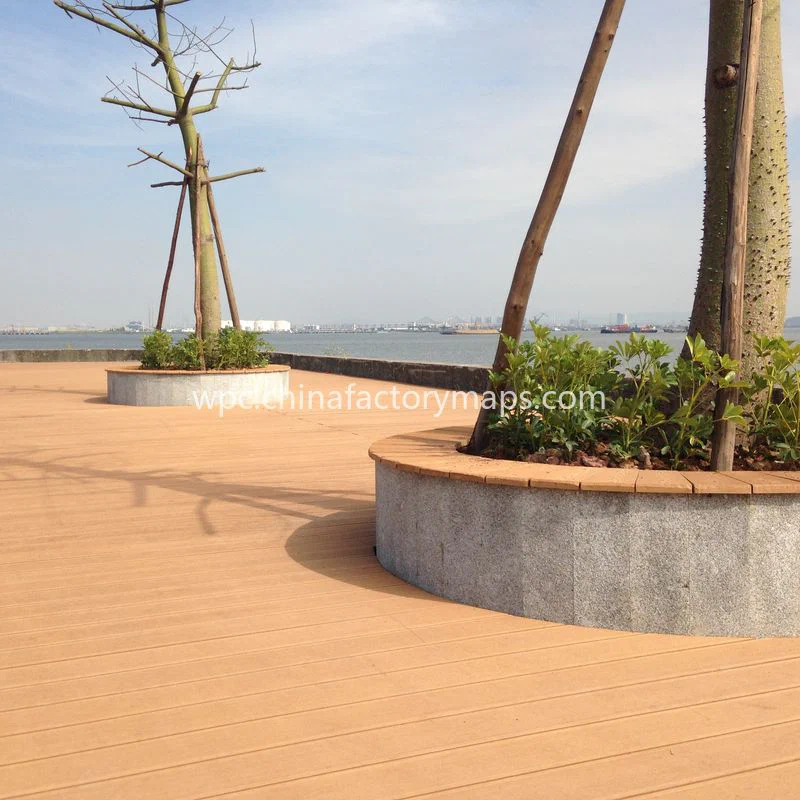
Shortlisting WPC composite suppliers in China starts with matching factory locations to product requirements, export routes and production capabilities. Geographic clustering helps buyers narrow the search, but a supplier’s province alone does not establish manufacturing quality or suitability. A structured shortlist combines location research with technical checks and direct factory verification.
1. Use Geography to Narrow the Supplier Search
China’s WPC manufacturing suppliers are distributed across several provinces, with different concentrations of listed factories. Guangdong has the largest cluster in the directory, with 22 listed suppliers, including factories in Foshan, Guangzhou and Zhuhai. Anhui follows with 9, including Xuancheng, Suzhou and Guangde. Shandong has 7, while Zhejiang has 6. Shanghai and Jiangsu account for smaller groups.
These concentrations provide a practical starting point. Buyers sourcing outdoor decking, fencing or wall panels can first identify factories within the regions represented by the relevant supplier clusters. A concentrated manufacturing area may offer more opportunities to compare production capabilities, product specifications and export arrangements without searching across the entire country. However, supplier density does not automatically indicate better quality or lower prices.

The map also makes geographic differences easier to assess. A buyer can identify factories near other potential suppliers, compare their locations and consider the distance to an export port. For example, a search focused on Guangdong can include Foshan and Guangzhou, while a wider search may extend to Anhui or Zhejiang. This creates a manageable initial shortlist before individual factory enquiries begin.

2. Understand What Factory Location Signals
A factory’s location provides useful logistical information, but it should not be treated as proof of manufacturing capability. The distance between a production site and its likely export port can affect inland transport arrangements, container collection and shipment coordination. These considerations become more important when sourcing bulky products such as WPC decking boards, fence panels and exterior cladding.
Port proximity is one factor in the sourcing calculation. The directory covers Shanghai Port, Ningbo-Zhoushan Port, Shenzhen Port, Qingdao Port, Guangzhou Port, Tianjin Port, Xiamen Port, Taicang Port, Beibu Gulf Port, Rizhao Port, Lianyungang Port and Yingkou Port. Buyers can use these locations to assess possible export routes against the geographical position of each supplier.
A nearby port does not necessarily mean a shorter or cheaper overall shipping arrangement. The actual route depends on the factory’s inland transport access, the exporter’s logistics arrangements, container availability and the destination market. Buyers should request the proposed port of loading and clarify whether the quoted transport arrangement includes delivery from the factory to the port.
Regional clusters also provide a useful way to compare sourcing alternatives. Guangdong suppliers may be considered alongside factories in other mapped provinces rather than evaluated in isolation. The same applies to suppliers in Shandong, Zhejiang and Anhui. The objective is to identify practical alternatives, not to assume that one manufacturing region is universally preferable.
3. Verify Product and Factory Capabilities
Once geography has narrowed the field, technical vetting becomes the main selection task. WPC products can differ considerably in material composition, manufacturing process, board structure and intended application. A supplier offering composite decking may not have the same production capabilities as one specialising in fencing or interior and exterior wall panels.
Start by establishing exactly what the factory manufactures. Confirm whether it operates its own production facilities or purchases finished products from another manufacturer. Trading companies can be legitimate sourcing partners, but buyers should distinguish them from factories when assessing production control, lead times and technical responsibility.
Product specifications should be documented rather than discussed only through general descriptions. Relevant checks include:
- Material composition and the type of wood fibre or plastic used.
- Board dimensions, thickness and profile tolerances.
- Solid or hollow construction.
- Surface finish, texture and available colours.
- Co-extrusion structure, where applicable.
- Intended installation environment and application.
- Available samples and technical documentation.

For buyers searching for wpc kompozit products, terminology should also be clarified during supplier enquiries. Different suppliers may use overlapping descriptions for composite wood, plastic lumber and wood-plastic decking. Matching the actual product structure and application is more useful than relying on catalogue terminology.
Performance claims require particular attention. WPC generally resists moisture and insect damage better than untreated natural wood, but it is not indestructible or completely waterproof in every installation condition. Sustained ultraviolet exposure can cause colour fading. Temperature changes also cause expansion and contraction, making appropriate board spacing and a ventilated supporting structure important.
4. Compare Export Readiness and Commercial Conditions
Factory capability is only one part of supplier suitability. Export experience, documentation and order handling should be assessed separately. Buyers should ask whether the supplier regularly handles overseas orders, what export documentation it can provide and which port it normally uses for shipments to the relevant destination.
Commercial comparisons should use equivalent specifications. A quotation for a hollow decking board cannot be compared directly with one for a solid board simply because their dimensions appear similar. Surface treatment, material formulation, packaging and loading arrangements can also affect the final purchasing cost.
Request quotations using a common specification sheet. This makes differences easier to identify and reduces the risk of selecting a supplier based on an incomplete headline price. Minimum order quantities, production lead times, sample costs and payment terms should be confirmed directly rather than assumed from regional norms.
Buyers should also establish how production changes are handled. Confirm who approves colour samples, how dimensional tolerances are recorded and whether the supplier can maintain consistency between repeat orders. For larger projects, packaging and batch identification matter because replacement boards may need to match material supplied in an earlier shipment.
5. Build the Shortlist Around Verifiable Evidence
Chinafactorymaps.com provides a geographic starting point for this process. Its directory plots 49 mapped WPC suppliers across Guangdong, Anhui, Shandong, Zhejiang, Shanghai and Jiangsu. Buyers can use the map to filter the initial search by province, examine the location of individual suppliers and consider their distance from the export ports covered by the platform.
The directory is not a manufacturer, sales agent or quality certification body. A mapped listing should therefore be treated as a starting point for independent verification. It does not establish that a factory owns its production equipment, meets a particular technical standard or currently has capacity for a proposed order.
A practical shortlist can be developed in stages:

- Identify suppliers in regions relevant to the required product and shipping route.
- Compare factory locations with the nearest practical export ports.
- Confirm manufacturing status and the actual production address.
- Request technical specifications, samples and comparable quotations.
- Check product performance claims and supporting documentation.
- Clarify order terms, production capacity and export arrangements.
- Arrange an independent factory inspection or pre-shipment inspection where appropriate.
The final comparison should record both technical and logistical findings. A supplier with a convenient location may still be unsuitable if its production process does not meet project requirements. Likewise, a technically capable factory may require additional inland transport planning. Keeping these factors separate makes the selection process more transparent and gives purchasing teams a clearer basis for supplier approval.
FAQ
Q: Which province should buyers search first for WPC composite suppliers in China?
A: Guangdong has the largest mapped cluster, with 22 listed suppliers. Buyers should also consider Anhui, Shandong and Zhejiang when comparing manufacturing locations and export routes.
Q: Does choosing a factory near an export port reduce shipping costs?
A: It can reduce inland transport distance, but total shipping costs also depend on container arrangements, port selection and destination routing. Buyers should request the actual proposed port of loading and inland transport costs.
Q: How can buyers verify that a listed WPC supplier is a manufacturer?
A: Request its production address, factory information, equipment details and evidence of manufacturing operations. Samples, technical documentation and an independent factory inspection can provide further verification.
Related Articles
Featured Suppliers
Verified premium suppliers on our map.
