
Made in China Portals: Comparing Solid and Hollow Composite Profiles
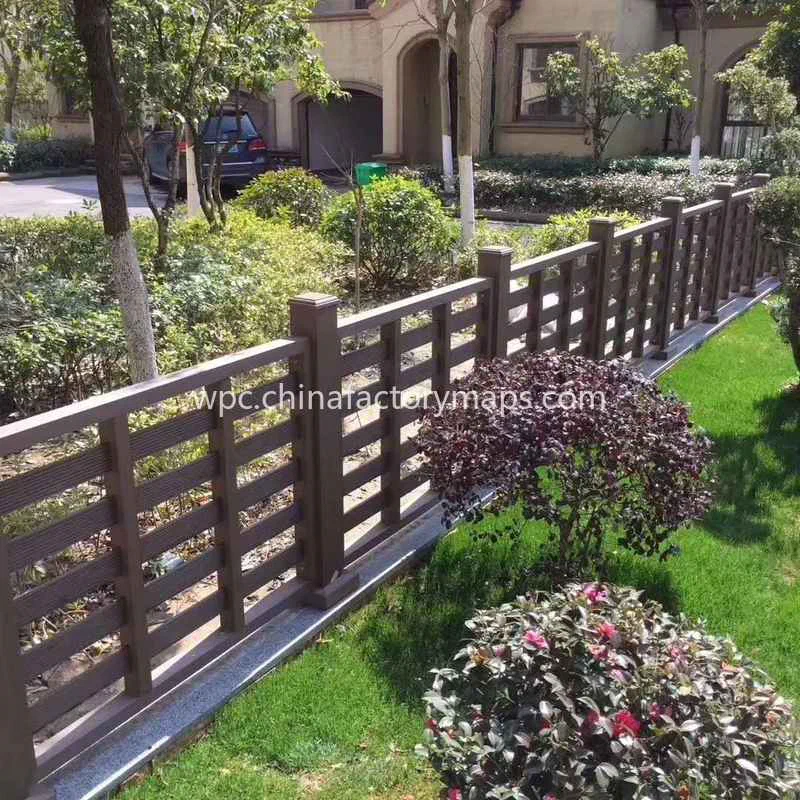
Solid and hollow WPC profiles differ in their internal structure, weight and mechanical performance. For overseas buyers sourcing from Chinese manufacturers, these differences affect installation requirements, intended applications and shipping considerations. The choice should reflect the demands of the finished product rather than profile appearance alone.
Construction and material differences
Solid WPC profiles have a dense cross-section with no continuous internal cavity. This construction generally provides greater mass per metre and better resistance to localised impact than comparable hollow profiles. Solid boards are often specified for applications where the exposed surface may experience heavier foot traffic or concentrated loads. However, their additional material content increases weight, and the supporting substructure must still follow the manufacturer’s span and fastening specifications.
Hollow WPC profiles contain internal chambers that reduce material consumption and overall weight. Their cross-section may use rectangular, circular or multi-chamber cavities, depending on the extrusion design. This makes hollow profiles useful for decking and cladding projects where reduced weight is a consideration. Performance depends on wall thickness, chamber geometry and the quality of the surrounding material. A thin-walled hollow board should not be assumed to offer the same impact resistance or screw-holding performance as a solid alternative.
Application, installation and performance
For outdoor decking, solid profiles can suit areas exposed to heavier use, particularly where board edges and fastening points require additional material. Hollow profiles are commonly considered for residential terraces, balconies and projects with less demanding loading conditions. Neither construction removes the need for correct joist spacing, drainage and ventilation. WPC expands and contracts with temperature changes, so installers must allow the specified gaps at board ends and fixed structures. Hollow chambers also need appropriate drainage provisions rather than being treated as sealed waterproof spaces.

Moisture resistance is one reason buyers specify WPC instead of untreated timber, but the material is not indestructible. Prolonged exposure to standing water, poor drainage or unsuitable installation can affect long-term performance. Both solid and hollow profiles can experience colour fading under sustained ultraviolet exposure. Surface formulation, pigments and protective co-extruded layers influence weathering behaviour. Fastening methods also matter: screws, clips and edge-fixing systems must match the profile design. Buyers comparing quotations through a made in china portal should request cross-section drawings, wall-thickness details and installation specifications rather than relying on product descriptions alone.
Factory location adds another consideration. The mapped supplier base includes Guangdong, Anhui, Shandong, Zhejiang, Shanghai and Jiangsu. Buyers can compare production locations against export routes through Shanghai Port, Ningbo-Zhoushan Port, Shenzhen Port and Qingdao Port, among others. Solid profiles generally involve greater weight per unit of length, while hollow profiles may reduce material weight but require attention to packaging and protection against crushing. The most useful sourcing comparison considers profile construction, application suitability and transport arrangements together.

FAQ
Q: Are solid WPC profiles stronger than hollow profiles?
A: Solid profiles generally offer better resistance to localised impact, but actual performance depends on material formulation, dimensions and manufacturing quality.
Q: Are hollow WPC profiles suitable for outdoor decking?
A: Yes. They are commonly used in residential outdoor applications when the profile design, support spacing, drainage and fastening system are appropriate.
Q: What should buyers request when comparing Chinese WPC factories?
A: Request cross-section drawings, dimensional tolerances, material specifications, fastening guidance and export packaging details.
Related Articles
Featured Suppliers
Verified premium suppliers on our map.
