Plastic Wood for Minimalist Outdoor Furniture Designs
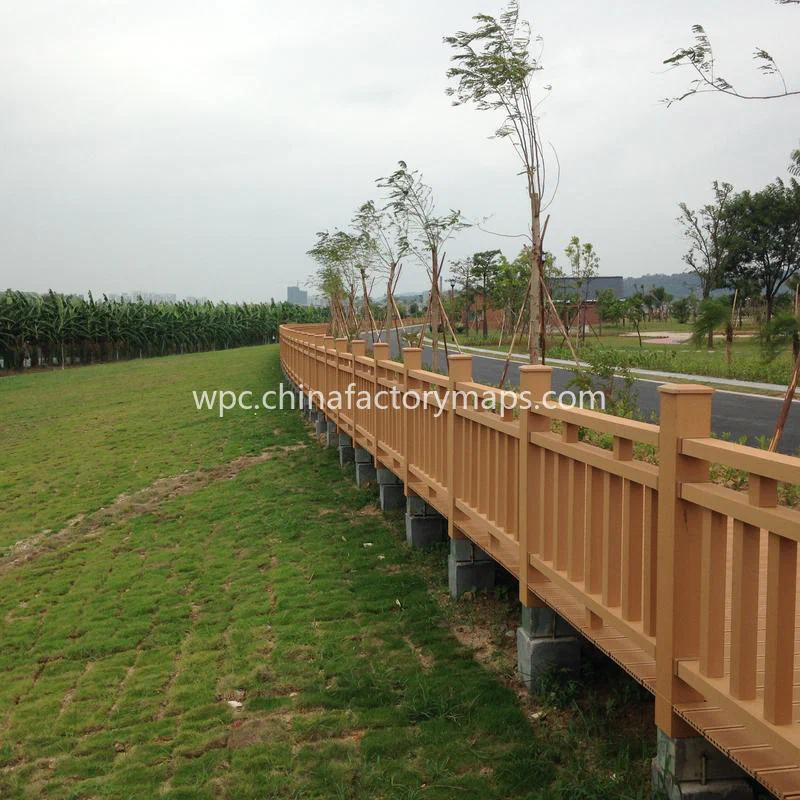
Plastic wood, or wood-plastic composite (WPC), is increasingly a material of choice for minimalist outdoor furniture designs. Its ability to mimic the appearance of natural wood while offering improved resilience makes it well-suited for demanding external conditions. This article examines the specific requirements for outdoor furniture applications, the material properties to prioritize, and the regions in China that specialize in production for these use cases.
Material Properties for Outdoor Furniture
Minimalist outdoor furniture often features clean lines and open forms, exposing the material to weather conditions without excessive structural cover. For installations in coastal areas, salt-resistant properties are critical to prevent corrosion of embedded fasteners or structural components. WPC inherently resists moisture and pests, but its composite nature means buyers should verify the formulation’s durability in saline environments. Regions such as Guangdong, home to suppliers near coastal hubs like Shenzhen and Guangzhou ports, have experience tailoring WPC products for these settings.
UV resistance is another key consideration, especially for projects in high-sunlight regions. Sustained exposure to sunlight can cause fading and surface wear on WPC furniture. Co-extruded decking boards, often used in construction-grade applications, offer a higher resistance to UV degradation and may be adapted for furniture manufacturing. Zhejiang suppliers near Ningbo-Zhoushan Port frequently work with co-extrusion technology, making this region a potential sourcing option for UV-stable materials.
Freeze-Thaw and Heavy Traffic Scenarios
Outdoor furniture used in colder climates must withstand freeze-thaw cycles that can cause expansion and contraction. WPC expands and contracts with temperature, but formulations with higher wood content may be more prone to dimensional instability under repeated freeze-thaw exposure. Buyers sourcing materials for such climates should specify WPC grades with balanced polymer ratios and ensure adequate gapping in the furniture design. Anhui, particularly Xuancheng and Guangde, hosts manufacturers with experience producing WPC suitable for varying temperature ranges.

Heavy traffic and frequent use, especially in commercial settings like outdoor cafes or public spaces, demand abrasion-resistant surfaces. WPC designed for decking applications often includes anti-slip textures and reinforced surfaces, features that may align well with furniture use in high-traffic zones. Shandong suppliers, located near export ports such as Qingdao, typically cater to bulk orders for abrasion-resistant composite decking and may provide reliable options for furniture-grade material.
Regional Variations in Production Expertise
China’s WPC production expertise varies by region, reflecting both material specializations and proximity to export logistics. Guangdong suppliers dominate the southern cluster, producing a wide range of WPC products, including furniture components and decking boards. Their location near major export ports like Shenzhen and Guangzhou facilitates efficient shipping, particularly for buyers targeting markets in Southeast Asia and Oceania.
Zhejiang and Shanghai regions focus on high-performance composites, including co-extruded WPCs with enhanced UV stability and color retention. These regions frequently serve buyers in Europe and North America, where outdoor furniture must meet stringent aesthetic and environmental standards. Shandong, Anhui, and Jiangsu, with their proximity to northern ports like Qingdao and Lianyungang, are positioned to supply bulk orders for weather-resistant WPC, suited to colder climates and heavy-duty applications.
Design and Installation Considerations
The minimalist design ethos prioritizes visual simplicity, but this often means structural simplicity as well. WPC furniture must balance aesthetic appeal with functional strength, especially for cantilevered or open-frame designs that rely on the material’s rigidity. Buyers should communicate specific load-bearing requirements to suppliers and opt for higher-density formulations when structural integrity is critical. Suppliers in Shanghai and Jiangsu, known for precision manufacturing, may be better equipped to meet these detailed specifications.

Installation challenges also affect sourcing choices. Furniture designed for modular assembly benefits from pre-drilled panels and uniform dimensions, reducing on-site adjustments. Suppliers specializing in OEM manufacturing, particularly those in Guangdong and Anhui, can provide custom-cut components tailored to minimalist designs. Buyers specifying quick-assembly furniture should prioritize suppliers experienced in meeting dimensional tolerances.
Sourcing Strategy for Buyers
When sourcing WPC for minimalist outdoor furniture, buyers should first assess the environmental conditions of the target location. Coastal salt, high UV exposure, temperature fluctuations, and heavy traffic all demand specific material properties. Regional production expertise and proximity to export ports can streamline logistics, with Guangdong, Zhejiang, and Shandong offering diverse capabilities for different project needs. Clear communication of design specifications, including UV resistance, dimensional stability, and abrasion resistance, ensures suppliers can deliver material optimized for the application.
FAQ
Q: Can WPC be used for furniture in coastal areas? A: Yes, WPC resists moisture and pests, but buyers should specify salt-resistant formulations for long-term durability in saline environments.
Q: What should be prioritized in WPC furniture for high-sunlight regions? A: UV resistance is critical to prevent fading and surface degradation. Co-extruded WPC formulations are often a better choice.
Featured Suppliers
Verified premium suppliers on our map.