
Poly Composite Materials for Humid Climate Building Projects
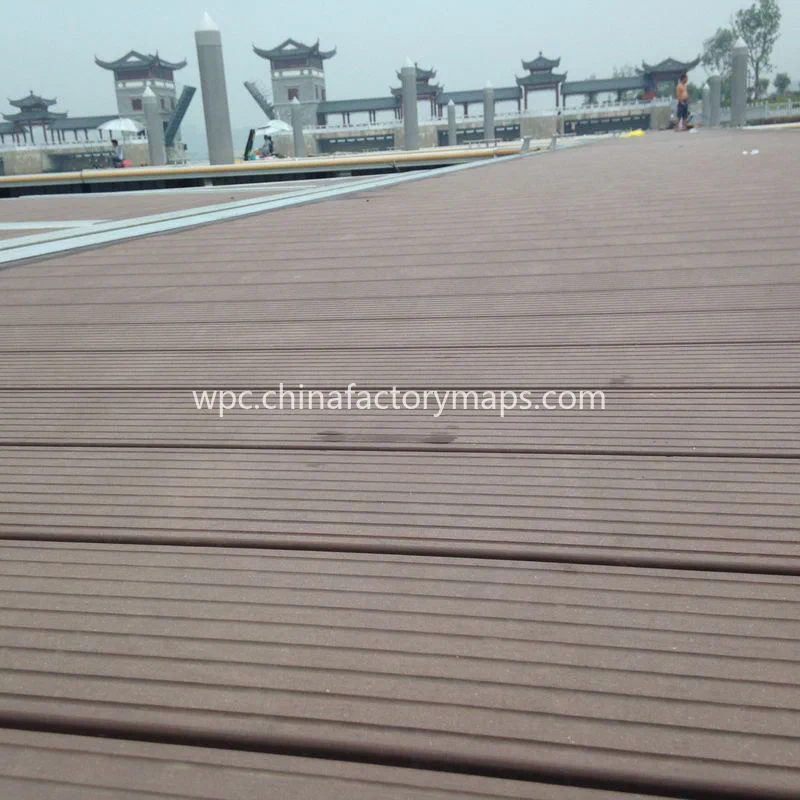
Humid-climate building projects place specific demands on poly composite products, particularly where outdoor surfaces face persistent moisture, coastal salt, strong sunlight or seasonal temperature changes. For overseas buyers sourcing from China, material formulation, board construction and installation requirements should be assessed against the actual site conditions rather than relying on general product descriptions.
Humidity affects building materials over long periods. In coastal developments, decking, balcony flooring and exterior cladding are regularly exposed to rain, condensation and salt-laden air. Wood-plastic composite resists moisture absorption and insect damage better than untreated timber, making it suitable for these applications. However, resistance does not mean immunity. Prolonged exposure to standing water, poorly designed drainage or unsuitable fasteners can still cause problems. Buyers should request information about the wood-to-plastic ratio, core composition, surface treatment and intended exposure conditions. For coastal projects, corrosion-resistant fixing systems also deserve attention, since metal components may deteriorate even when the boards remain serviceable.

Temperature variation creates another specification requirement. Composite boards expand and contract as temperatures change, and this movement becomes important on large terraces, public walkways and exposed building façades. Installation specifications should identify the required end gaps, side clearances, fastening arrangements and substructure ventilation. Freeze-thaw conditions require additional scrutiny. Water trapped around joints or beneath boards can contribute to installation damage when temperatures fall below freezing. Buyers should ask manufacturers whether the proposed product has been evaluated for repeated temperature cycling and whether its installation instructions address drainage and cold-weather conditions. A board intended for a mild coastal climate should not automatically be specified for a project with freezing winters.
UV exposure and surface performance matter on buildings with open terraces, waterfront promenades and poolside areas. Sustained sunlight can gradually fade composite colours, particularly on exposed surfaces with limited shade. Buyers should request information on UV stabilisers, colour-retention testing and expected changes in appearance over time. High foot traffic introduces a separate concern. Public access decks and commercial outdoor flooring need an appropriate surface texture and resistance to wear. Anti-slip performance should be supported by relevant test information, preferably under wet conditions. For projects involving pools or frequently washed surfaces, the drainage design and slip characteristics should be considered together. A textured finish alone does not establish safe performance.

China’s mapped supplier clusters provide several starting points for regional sourcing. Guangdong has the largest listed group, with suppliers in Foshan, Guangzhou and Zhuhai. Its coastal manufacturing environment makes the region relevant when comparing products intended for humid and salt-exposed projects. Anhui, including Xuancheng, Suzhou and Guangde, represents another substantial supplier cluster. Shandong’s listed manufacturers around Zibo, Linyi and Qingdao may be relevant to projects requiring consideration of colder seasonal conditions. Zhejiang, with suppliers around Huzhou, Jiaxing and Hangzhou, adds another sourcing option. Shanghai and Jiangsu, including Nanjing, complete the mapped locations. Regional presence does not prove that a factory has experience with a particular climate. Buyers should compare actual product specifications, project references and testing records.

Transport planning should be considered alongside technical suitability. A factory’s distance from an export port can affect inland freight arrangements, consolidation and shipment scheduling. The directory maps suppliers against major export gateways including Shenzhen Port, Guangzhou Port, Shanghai Port, Ningbo-Zhoushan Port and Qingdao Port. Other covered ports include Tianjin Port, Xiamen Port, Taicang Port, Beibu Gulf Port, Rizhao Port, Lianyungang Port and Yingkou Port. The nearest port is not necessarily the most practical shipping route, so buyers should confirm the factory’s regular export arrangements and the available inland transport options. Before placing an order, request product samples, installation drawings, test documentation and written confirmation of the intended application. These checks help establish whether a supplier’s boards are appropriate for the project’s exposure conditions and expected service demands.
FAQ
Q: Is WPC suitable for buildings in humid coastal climates?
A: Yes. WPC resists moisture and insect damage, but drainage, ventilation, fixing materials and exposure conditions still determine long-term performance.
Q: What specifications matter most for composite decking in freeze-thaw climates?
A: Buyers should check temperature-cycle testing, dimensional movement, drainage requirements, ventilation and the manufacturer’s recommended installation gaps.
Q: Which Chinese regions can buyers explore when sourcing WPC for humid-climate projects?
A: Guangdong, Anhui, Shandong and Zhejiang have the largest mapped supplier clusters, with additional suppliers listed in Shanghai and Jiangsu.
Related Articles
Featured Suppliers
Verified premium suppliers on our map.
