
Shipping Composite Deck Tiles From China to Overseas Projects
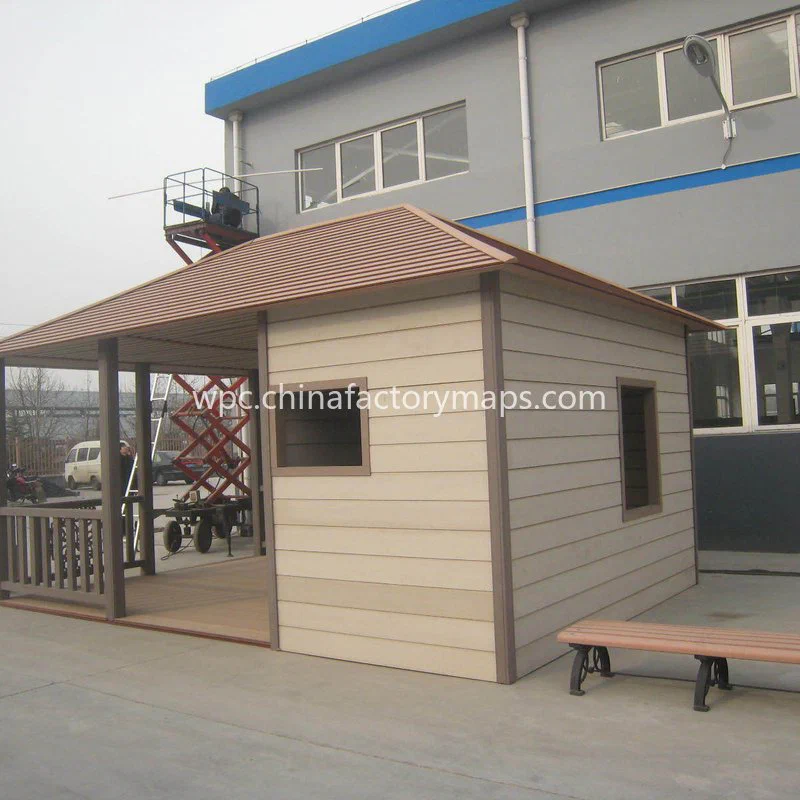
Shipping composite deck tiles from China involves more than comparing factory quotations and ocean freight rates. The supplier’s location, the distance to the export port, and the way tiles fit into a shipping container all affect the delivered cost and condition of the goods. Chinafactorymaps.com plots WPC factories by geographic location, helping overseas buyers assess these factors before choosing a supplier.
How factory location shapes the export route

China’s mapped WPC suppliers are concentrated in Guangdong, Anhui, Shandong, Zhejiang, Shanghai, and Jiangsu. Each region offers a different starting point for export planning. Guangdong has the largest listed cluster, including Foshan, Guangzhou, and Zhuhai, while Anhui’s suppliers include locations around Xuancheng, Suzhou, and Guangde. Shandong includes Zibo, Linyi, and Qingdao; Zhejiang covers Huzhou, Jiaxing, and Hangzhou. Shanghai and Jiangsu, including Nanjing, account for the remaining mapped suppliers. These locations should be evaluated against the ports that can serve each factory by road or other inland transport.
For Guangdong factories, Shenzhen Port and Guangzhou Port are natural starting points for route comparisons. Suppliers in the Shanghai area and nearby parts of Jiangsu and Zhejiang may be assessed against Shanghai Port, Ningbo-Zhoushan Port, and Taicang Port. Shandong manufacturers can compare access to Qingdao Port and Rizhao Port, while the best route for an inland Anhui factory depends on its exact location and available freight arrangements. These are practical starting points, not fixed assignments: a factory’s nearest port is not necessarily the port offering the best sailing schedule or total freight cost. Buyers should request the intended loading port and inland transport arrangement before comparing quotations.
Why port distance matters for composite deck tiles
Composite deck tiles create a shipping problem that combines weight, volume, and packaging constraints. Their individual modules may be compact, but a large project order can occupy substantial container space. Depending on the tile design and composition, the shipment may reach a practical weight limit before the container is full, or exhaust usable space while remaining below its weight limit. Packaging dimensions, pallet arrangements, stacking limits, and protective materials determine how efficiently the load can be consolidated.
The distance from factory to port affects the inland leg of the journey. A supplier located close to a suitable export terminal may reduce trucking distance and handling, although the advantage can disappear if the port has less convenient sailings or the shipment requires additional transfers. Longer inland journeys can also introduce extra loading and unloading, increasing the number of opportunities for cartons to be crushed, edges to be chipped, or tile surfaces to be scratched. WPC resists moisture and insect damage better than untreated wood, but that does not make it immune to transport damage. Packaging and handling remain important.
Buyers sourcing composite tiles for decking should therefore compare the complete route rather than treating the factory gate price as the main measure. Ask suppliers for carton dimensions, gross and net shipment weights, pallet details where applicable, and a proposed container loading plan. Confirm whether the quoted transport covers factory collection, delivery to the port, export handling, and ocean freight, or only selected stages. These details help reveal whether a lower-priced factory creates higher inland logistics costs or a less efficient container load. The same information also supports a more meaningful comparison between suppliers in different provinces.

Comparing suppliers by port access and shipment risk
A map-based directory helps narrow the search before freight quotations are requested. Buyers can identify factories within a producing region, compare their distance to relevant ports, and build a shortlist that balances product suitability with logistics. The nearest mapped port is a useful screening measure, but it should not replace a route quotation based on the factory’s actual address, cargo volume, destination, and required shipping date.
Before confirming an order, buyers should check several shipment details:

- Confirm the precise factory address and the proposed export port, rather than relying on a province-level location.
- Request packing specifications and estimated container utilization for the actual tile model and order quantity.
- Establish who arranges inland haulage, export documentation, terminal handling, and any transfer between facilities.
- Ask how cartons are protected against compression, abrasion, and exposure to rain during inland transport and loading.
- Compare expected transit arrangements, sailing frequency, and transshipment requirements alongside the quoted freight cost.
- Agree on inspection procedures and responsibility for documenting damage before dispatch and when cargo arrives.
The product itself also affects shipment planning. Tile thickness, backing structure, surface finish, and interlocking design can change packing density and the risk of edge damage. Samples and approved packaging specifications give buyers a reference for checking production and dispatch. Once the tiles reach the project site, installation requirements still matter: WPC expands and contracts with temperature, so suitable gaps and a ventilated substructure are necessary. Prolonged ultraviolet exposure can fade colour, and moisture resistance should not be mistaken for absolute waterproofing. These characteristics belong in product evaluation, even when the immediate purchasing decision concerns freight.
FAQ
Q: Which Chinese ports should buyers compare when sourcing WPC deck tiles?
A: The relevant options depend on factory location. Common comparisons include Shenzhen Port and Guangzhou Port for Guangdong, Shanghai Port and Ningbo-Zhoushan Port for parts of the Yangtze River Delta, and Qingdao Port for Shandong suppliers.
Q: Is a factory near an export port always the cheaper option?
A: No. Shorter inland transport may reduce trucking and handling costs, but ocean freight rates, sailing schedules, container availability, and transshipment can change the total delivered cost.
Q: What shipping information should buyers request before placing an order?
A: Request carton dimensions, shipment weight, pallet details, a container loading plan, the proposed export port, and a breakdown of inland and port charges. Confirm packaging protection and the process for recording transport damage.
Featured Suppliers
Verified premium suppliers on our map.
