
Shipping WPC Kuai Products from China: Ports and Transit Planning
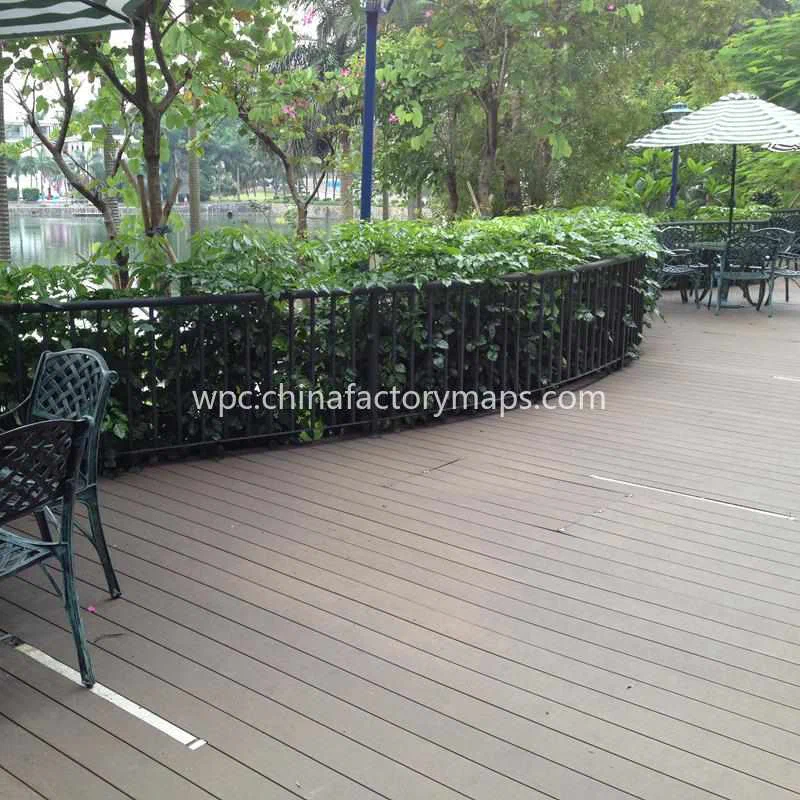
Shipping WPC products from China involves more than selecting a factory and booking a container. For buyers sourcing wpc kuai products, the factory’s location, available export ports and inland transport distance all affect shipping costs, container utilization and the condition of goods on arrival.
Regional Production Clusters and Export Ports
China’s mapped WPC manufacturing suppliers are concentrated in several provinces, with Guangdong accounting for the largest cluster. Foshan, Guangzhou and Zhuhai provide access to Shenzhen Port and Guangzhou Port, making these locations relevant for buyers comparing factories in southern China. Supplier locations in Anhui, including Xuancheng, Suzhou and Guangde, require a different transport assessment. Their inland position makes the distance to an appropriate export port an important part of the sourcing calculation.
Shandong suppliers around Zibo, Linyi and Qingdao can be assessed against Qingdao Port and Rizhao Port. Zhejiang manufacturers in Huzhou, Jiaxing and Hangzhou have access to Ningbo-Zhoushan Port and Shanghai Port. Shanghai-based suppliers can also be evaluated against Shanghai Port, while Jiangsu manufacturers around Nanjing may consider Shanghai Port or Taicang Port. These are practical starting points, not fixed shipping routes. Actual routing depends on factory access, freight arrangements, carrier schedules and the exporter’s logistics network.
Why Port Distance Matters for WPC Shipments
WPC decking boards and other long-profile products create particular container-planning requirements. Their weight and dimensions both matter. A container may reach its permitted payload before all available volume is occupied, or it may run out of usable space while remaining below the weight limit. Product length, packaging configuration and stacking arrangements determine how efficiently the cargo fits.
Inland transport adds another consideration. Longer factory-to-port journeys can increase handling exposure, transport costs and the possibility of packaging damage. Scratches, chipped edges, crushed corners and deformation can become more likely when products are repeatedly loaded or transferred. This is especially relevant for long boards and finished surface profiles that need consistent protection throughout the journey.
Temperature also affects WPC. The material expands and contracts as conditions change, so packaging and loading arrangements should account for movement rather than treating the products like dimensionally stable metal components. Buyers should confirm how boards are bundled, supported and protected against moisture during inland transport and port handling. Export packaging should also prevent excessive pressure on exposed edges and finished surfaces.
Evaluating Factory-to-Port Logistics

Port proximity should be included in supplier comparisons alongside product specifications and production capability. A factory closer to a port may reduce inland transport requirements, but the shortest distance does not automatically produce the lowest delivered cost. Container availability, road access, cargo consolidation, handling arrangements and the selected shipping service can change the calculation.

Before confirming an order, buyers should request the factory’s normal export port, estimated inland transport arrangements and proposed container-loading plan. Ask for the dimensions and gross weight of packaged products, the number of boards or panels per bundle, and the expected container utilization. Compare these details across shortlisted suppliers using the same shipment assumptions.
The ChinaFactoryMaps directory helps buyers identify mapped WPC production clusters and compare their geographic relationships with major export ports. This provides a starting point for evaluating logistics before requesting freight quotations. Final port selection should be confirmed with the supplier and freight forwarder, using the actual cargo dimensions, shipment volume and destination requirements.
FAQ
Q: Which Chinese ports are relevant for WPC exports?
A: Major options include Shanghai Port, Ningbo-Zhoushan Port, Shenzhen Port, Qingdao Port and Guangzhou Port. Taicang Port, Rizhao Port and other listed ports may also be relevant depending on factory location and shipping arrangements.
Q: Does choosing a factory near an export port reduce shipping costs?
A: It can reduce inland transport distance and handling requirements. However, total logistics costs also depend on container utilization, freight rates, cargo handling and available shipping services.
Q: What should buyers check before shipping WPC decking boards?
A: Confirm packaged dimensions, gross weight, bundle configuration, container loading arrangements and protective packaging. Account for temperature-related expansion and contraction during storage and transport.
Related Articles
Featured Suppliers
Verified premium suppliers on our map.
