
Shortlisting Chinese Suppliers for Composite Deck Board Lengths
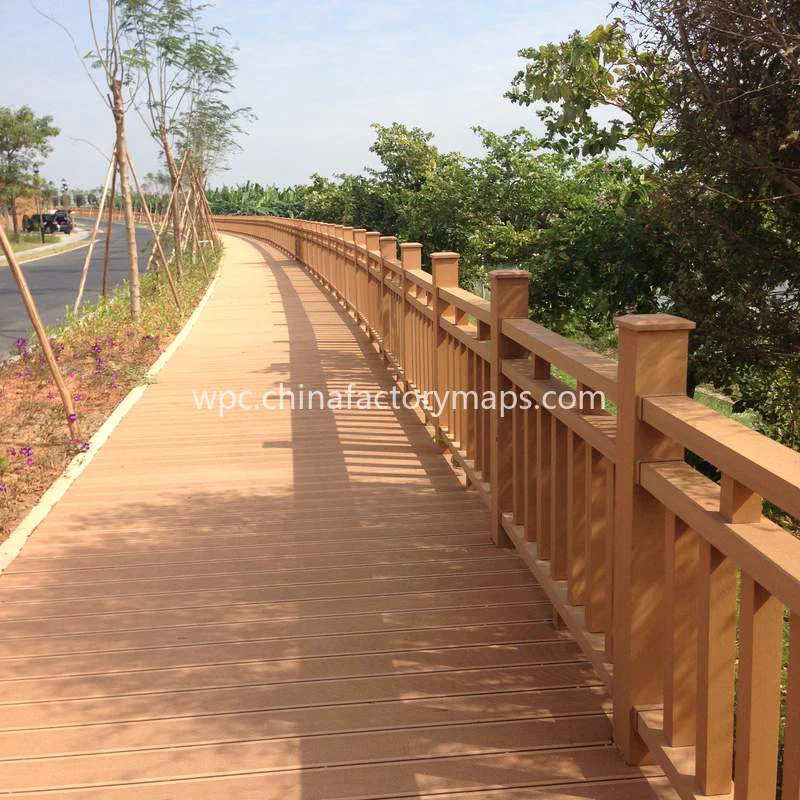
Selecting a Chinese supplier for composite decking board lengths starts with more than comparing product dimensions. Factory location can narrow the shortlist by indicating access to manufacturing clusters, transport infrastructure and export ports. Buyers also need to establish whether a supplier can produce the required lengths consistently and pack them for international shipment.
Geography provides a useful first filter. Guangdong has the largest mapped supplier cluster, with 22 listed factories across Foshan, Guangzhou and Zhuhai. Anhui follows with nine, including suppliers in Xuancheng, Suzhou and Guangde. Shandong has seven mapped suppliers, while Zhejiang has six. Shanghai and Jiangsu have smaller groups. These concentrations help buyers identify areas where several potential suppliers can be compared within the same regional search. Cluster membership does not establish production quality, however. It is a starting point for supplier discovery, not a substitute for factory verification.

Port proximity adds another practical consideration. A factory in Guangdong may be assessed against Shenzhen Port or Guangzhou Port, while suppliers in Zhejiang can be compared with access to Ningbo-Zhoushan Port. Shanghai Port is relevant when reviewing factories in Shanghai, Jiangsu or nearby areas. Shandong suppliers may warrant comparison against Qingdao Port or Rizhao Port. The nearest port on a map is not automatically the best shipping route. Actual road distance, inland transport arrangements, container availability and the supplier’s established export procedures all affect logistics. Buyers should request the factory’s loading location and confirm which port it normally uses for outbound shipments.

Product and production checks should follow the geographic shortlist. For composite decking board lengths, request the available standard dimensions, maximum production length, length tolerances and cutting options. Confirm whether different lengths can be included in one order and whether production runs maintain consistent colour, profile and dimensional accuracy. Samples should be checked against the proposed production specification. Buyers should also review the core formulation, surface treatment, UV performance and relevant test documentation. WPC expands and contracts with temperature, so installation guidance must specify suitable board gaps and a ventilated substructure. Moisture and insect resistance are useful properties, but the material is not indestructible, and sustained UV exposure can cause colour fading. The directory supports this process by allowing buyers to compare mapped factories by province, city and distance to export ports before contacting shortlisted suppliers. Location narrows the search; direct technical and commercial checks determine whether a factory is suitable.

FAQ
Q: Does a larger supplier cluster mean better manufacturing quality?
A: No. A larger cluster provides more suppliers to compare geographically, but quality must be assessed through samples, production records and technical documentation.
Q: Should buyers always choose the factory closest to an export port?
A: No. Inland transport costs, established shipping routes and container arrangements also matter. Compare the complete logistics route rather than straight-line distance.
Related Articles
Featured Suppliers
Verified premium suppliers on our map.
