
Shortlisting Chinese Suppliers for WPC Balcony Flooring
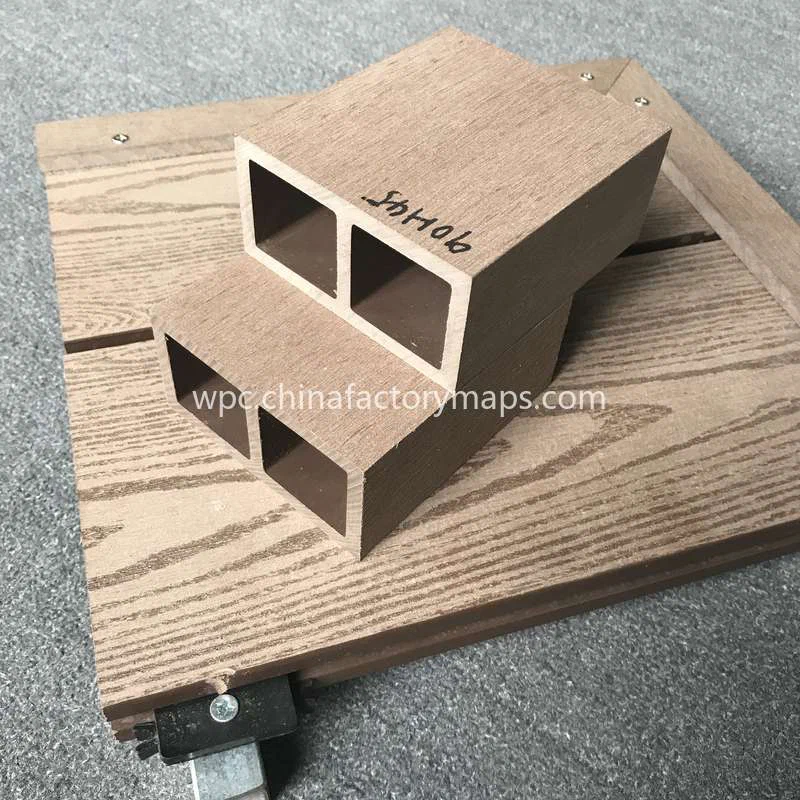
Selecting a Chinese supplier for WPC balcony flooring starts with narrowing the search by production location and export access. Factory geography can help identify relevant manufacturing clusters, estimate the logistics involved, and organise supplier enquiries. For buyers sourcing wpc boden balkon products, the next step is to establish whether a factory’s actual capabilities match the requirements of a balcony installation.
Using geography to narrow the supplier list

China’s mapped WPC suppliers are concentrated in several eastern and southern manufacturing areas. Guangdong has the largest listed cluster, with 22 suppliers, including factories in Foshan, Guangzhou and Zhuhai. Anhui has nine listed suppliers, including locations in Xuancheng, Suzhou and Guangde. Shandong accounts for seven, with suppliers in Zibo, Linyi and Qingdao, while Zhejiang has six across Huzhou, Jiaxing and Hangzhou. Shanghai and Jiangsu account for smaller groups.
These clusters provide a practical starting point, not a quality ranking. A concentration of factories may indicate an established regional manufacturing base and make it easier to compare several potential suppliers in the same area. However, nearby factories can have different production equipment, material formulations and quality-control procedures. Cluster membership should therefore be treated as a geographical filter rather than evidence that a supplier meets a particular specification.
Export access adds another layer to the comparison. A factory’s distance from Shanghai Port, Ningbo-Zhoushan Port, Shenzhen Port, Qingdao Port or Guangzhou Port can influence inland transport arrangements and the overall shipping route. Other covered ports include Tianjin Port, Xiamen Port, Taicang Port, Beibu Gulf Port, Rizhao Port, Lianyungang Port and Yingkou Port. The nearest port is not automatically the best shipping option. Buyers should compare the actual route, available services and inland collection arrangements before making a decision.
What to verify during supplier screening
Balcony flooring has requirements that differ from some larger outdoor decking applications. The available installation area may be limited, drainage conditions can vary, and the supporting structure must accommodate the building’s existing layout. Supplier enquiries should establish whether the factory produces flooring intended for balcony use or mainly manufactures boards for other applications. Product dimensions, board profiles, surface finishes and available installation systems should be requested in writing.

Material composition also deserves attention. WPC products generally combine wood-based material with polymers and additives, but the proportions and manufacturing methods vary. Ask for the product’s technical data, including dimensions, weight, stated load performance, surface characteristics and applicable test reports. If anti-slip performance or UV resistance matters to the project, request supporting test information rather than relying on catalogue descriptions. Samples can help assess surface texture, colour consistency and visible manufacturing defects, although they cannot replace technical testing.
Environmental exposure must be considered. WPC expands and contracts as temperatures change, so the installation system needs suitable expansion gaps. The substructure should allow ventilation and drainage rather than trapping moisture beneath the boards. WPC resists moisture and insect damage better than untreated timber in many applications, but it is not indestructible or absolutely waterproof. Sustained UV exposure can also cause colour fading. Buyers should ask how the manufacturer specifies installation clearances, substructure spacing and expected outdoor performance.
A factory assessment should cover more than the product catalogue. Confirm whether the supplier manufactures the boards directly or outsources important production stages. Ask about production capacity, order scheduling, packaging, inspection procedures and export experience. Request clear information about sample approval and how production batches are checked against approved specifications. Where several factories are being considered, use the same questions and document format for each. This makes differences easier to identify and reduces the risk of comparing suppliers on inconsistent information.
Applying the map to the sourcing process
ChinaFactoryMaps provides a geographical directory of 49 mapped WPC suppliers across the listed provinces and cities. Buyers can use the map to identify clusters, filter potential factories by location and compare their proximity to covered export ports. This is particularly useful during the first screening stage, when the objective is to reduce a broad supplier pool to a manageable shortlist.
A practical workflow begins by identifying the intended delivery market and likely shipping route. The buyer can then compare relevant factory clusters, select suppliers in suitable locations and record their distance from potential export ports. Once the geographical shortlist is established, technical enquiries and sample requests should determine which factories merit further consideration. The map supports supplier discovery; it does not independently verify manufacturing capability, product performance or commercial terms. Those checks remain part of the buyer’s due diligence.
FAQ
Q: Does a supplier’s location indicate the quality of its WPC balcony flooring?
A: No. Location identifies manufacturing clusters and potential logistics advantages, but product quality must be assessed through specifications, samples and factory verification.
Q: Should buyers always choose the factory closest to an export port?
A: No. Inland transport costs, shipping services and the complete logistics route should be compared before selecting a supplier.
Related Articles
Featured Suppliers
Verified premium suppliers on our map.
