
Shortlisting Composite Decking Suppliers by Factory Location and Port Access
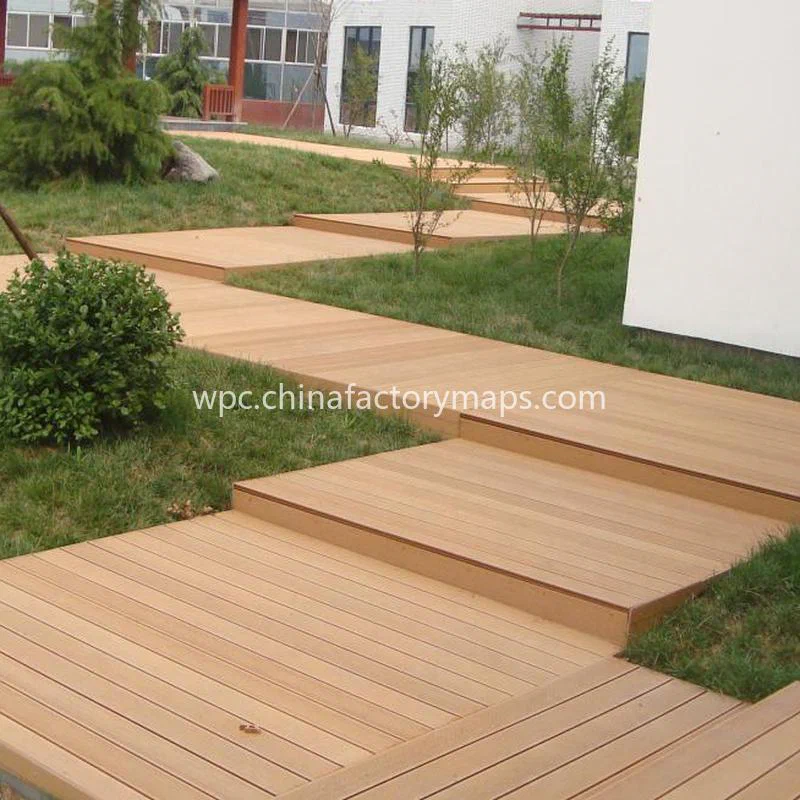
Selecting composite decking suppliers by factory location helps buyers reduce a broad sourcing search to a manageable shortlist. Chinafactorymaps.com plots WPC factories geographically, allowing overseas buyers to compare supplier clusters and assess proximity to major export ports. The location is a starting point for supplier evaluation, not proof of manufacturing quality or shipping performance.
How factory geography narrows the shortlist
A factory’s province helps establish an initial sourcing area, while its city provides a more precise point for comparing transport routes. Guangdong has the largest mapped cluster, with 22 listed suppliers across Foshan, Guangzhou and Zhuhai. Anhui follows with nine, including suppliers in Xuancheng, Suzhou and Guangde. Shandong has seven, Zhejiang six, Shanghai three and Jiangsu two. These figures describe the directory’s current coverage, not the total number of WPC manufacturers operating in China. Buyers can begin with regions that suit their logistics requirements, then compare individual factories within those areas. A concentrated supplier search also makes it easier to arrange several factory visits during one trip. However, a larger cluster does not automatically mean better production capability, more competitive quotations or shorter lead times.
The product specification should remain consistent as the geographic shortlist takes shape. Composite decking varies by formulation, board profile, surface finish, colour, dimensions and manufacturing method. Some products use capped construction, while others have an uncapped surface. Buyers sourcing composite decking decks for residential or commercial projects should distinguish the required product from general WPC wall panels, fencing or other outdoor profiles. A factory listed under the broader WPC category may not manufacture the particular decking system required. Before requesting detailed quotations, confirm that each candidate produces the relevant board type and can supply matching accessories, such as clips, fasteners and compatible substructure components. This prevents a convenient location from becoming the main reason for retaining an unsuitable supplier.
Reading supplier clusters and port access

Cluster membership provides useful context, but it should not be treated as a technical qualification. Suppliers operating in the same province may serve different markets, use different production processes and have different levels of export experience. Buyers can use a cluster to identify alternatives when a shortlisted factory cannot meet the specification or production schedule. Guangdong offers a broad group of mapped candidates around Foshan, Guangzhou and Zhuhai. Anhui provides another group across Xuancheng, Suzhou and Guangde, while Shandong’s listed locations include Zibo, Linyi and Qingdao. Zhejiang’s suppliers include Huzhou, Jiaxing and Hangzhou. Shanghai and Jiangsu provide smaller mapped groups. The practical next step is to compare each factory’s actual address and transport options rather than assuming that suppliers in one province share the same logistics advantages.
Port proximity deserves separate attention. The directory covers Shanghai Port, Ningbo-Zhoushan Port, Shenzhen Port, Qingdao Port, Guangzhou Port, Tianjin Port, Xiamen Port, Taicang Port, Beibu Gulf Port, Rizhao Port, Lianyungang Port and Yingkou Port. A map can help buyers identify which listed factories appear closer to relevant export gateways, but straight-line distance does not establish road transit time, inland freight cost or sailing availability. Actual performance depends on the factory’s dispatch location, road conditions, cargo arrangements, terminal procedures and the destination market. A factory near a port may still require extra handling or an indirect route. Request the proposed loading port, the usual inland transport arrangement and the basis of the freight quotation. Compare these details against the same destination and shipment assumptions for every shortlisted supplier.
What to verify before requesting samples

Once geography has reduced the field, technical and commercial checks should determine which suppliers remain under consideration. Ask for the product datasheet, cross-sectional profile, core formulation information where available, dimensional tolerances and test reports relevant to the intended application. Claims about slip resistance, UV performance, fire behaviour or weather resistance should be supported by documentation applicable to the exact product. Confirm whether reported results apply to capped or uncapped boards and whether the test specimen matches the proposed production specification. Samples help assess surface texture, colour consistency, edge finish and dimensional accuracy, but a small sample cannot establish long-term outdoor performance on its own. Buyers should also ask about batch consistency, production capacity for the required order and the process for handling defective or damaged boards.
Installation requirements are another part of product suitability. WPC decking expands and contracts as temperature changes, so board spacing and perimeter gaps must follow the manufacturer’s installation instructions. The supporting substructure needs appropriate ventilation and drainage; boards should not be treated as a waterproof structural layer. Although composite materials generally resist moisture and insect damage better than untreated timber, they are not indestructible. Sustained ultraviolet exposure can cause colour fading, and performance varies with formulation, surface construction and exposure conditions. Ask suppliers for installation guidance covering joist spacing, fastening methods, ventilation and allowable spans. These details help buyers assess whether the proposed boards fit the project and whether the product documentation is adequate for contractors to install them correctly.
Using the map in a practical sourcing workflow
Chinafactorymaps.com is most useful during the early stages of supplier discovery. Start by identifying the required decking profile and target delivery market, then filter the mapped factories by geographic area and compare their proximity to relevant ports. Build a shortlist across one or more clusters instead of relying on a single convenient location. Contact each candidate to verify its factory address, manufacturing role and product range; a trading company or sales office should not be assumed to be the production site. Next, collect comparable quotations based on the same board specification, accessories, packaging, order quantity and delivery terms. Ask for sample availability, production lead time, loading port and supporting test documentation. Where the order justifies further checks, arrange a factory audit or independent inspection before production and shipment. The map helps organise the search, while direct verification establishes whether a supplier can meet the commercial and technical requirements.
FAQ
Q: Does a factory near an export port always offer lower shipping costs?
A: No. Inland transport distance is only one factor; handling, routing, cargo volume and port arrangements also affect total logistics costs. Compare quotations using the same shipment details and delivery terms.
Q: Can a mapped WPC supplier be assumed to manufacture composite decking?
A: No. Directory listings identify potential suppliers, but buyers should confirm the factory’s manufacturing role, specific decking range and ability to meet the required technical specification before placing an order.
Related Articles
Featured Suppliers
Verified premium suppliers on our map.
